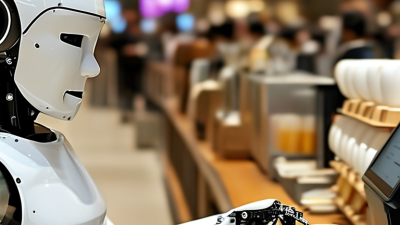
China Top 10 Commercial Robot Coffee Shop Suppliers
China’s commercial robotics sector is reshaping how coffee is prepared, served, and monitored. This guide examines the China Top 10 Commercial Robot Coffee Shop Suppliers, focusing on practical performance rather than attractive demonstrations. A robot arm may pour espresso precisely, yet a reliable shop also needs stable refrigeration, fast payment processing, simple cleaning, and responsive technical support.
The keyword Robot Coffee Shop Commercial represents more than automated brewing. It includes robotic workstations, beverage software, remote monitoring, safety systems, and service design. Suppliers differ widely in installation quality, customization, production capacity, and after-sales coverage. Some systems fit a compact mall kiosk. Others support airports, office buildings, hotels, and high-volume retail spaces. Small details matter. Can staff refill beans without special tools? Can technicians access replacement pumps locally? What happens during a network failure?
As robotics researcher Henrik Christensen explains, “Automation creates value only when it improves the entire operation, not one impressive task.” This principle guides the comparison. However, the market still has weak points. Published uptime figures may lack independent verification. Demonstration videos rarely show cleaning at closing time. A polished robot does not automatically create a profitable coffee business. Buyers should request live trials, maintenance records, safety documentation, and customer references before signing contracts. This ranking offers a useful starting point, not a final verdict. Supplier capabilities change quickly, and real-world performance can vary between locations.
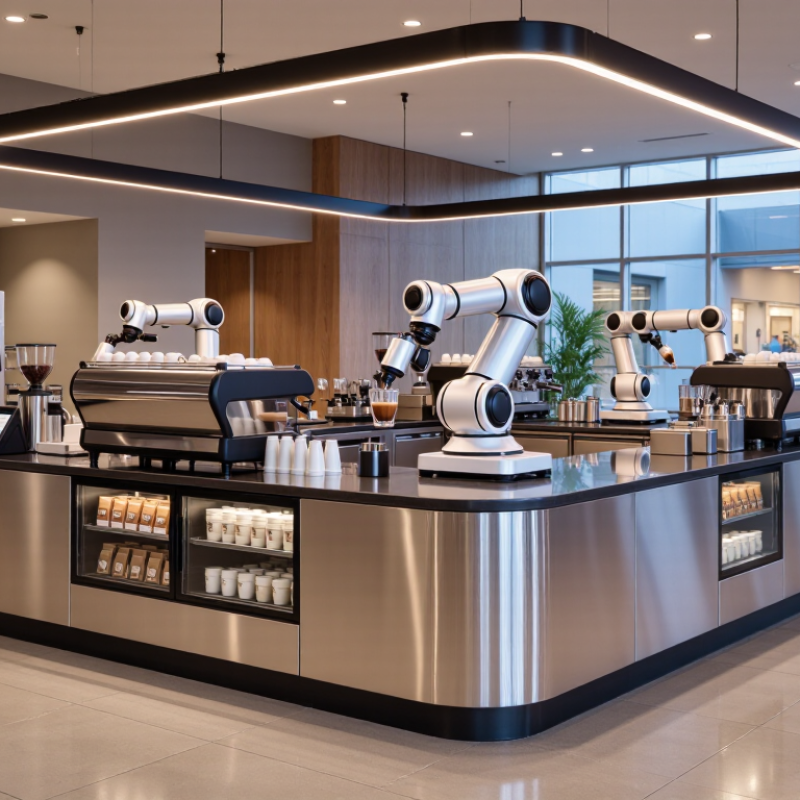
China’s Robot-Coffee Context: IFR Recorded 276,288 Robot Installations in 2023
China’s commercial robot coffee market sits within a much larger automation ecosystem. The International Federation of Robotics recorded 276,288 industrial robot installations in China during 2023. World Robotics 2024 states that this represented approximately 51% of global installations. The same report placed China’s robot density at 470 units per 10,000 manufacturing employees. These figures do not measure coffee shops. They show the country’s mature automation base.
That distinction matters.
For a top-ten supplier review, buyers should examine beverage consistency, cleaning access, payment integration, and maintenance response. A reliable unit should document extraction temperature, dispensing accuracy, and daily capacity. The China Robot Industry Alliance’s industry reporting also separates industrial robots from service robots, making direct market comparisons risky. A factory installation cannot prove successful retail operation.
A glossy demonstration can hide slow replenishment or difficult sanitation. That is where rankings become imperfect. Suppliers with transparent test records deserve more confidence than suppliers sharing only videos. Buyers should request pilot data from busy locations, including failure rates, service intervals, and ingredient waste. Local technicians also matter, especially when a shop operates overnight. Commercial robot coffee equipment is not fully autonomous in practice. Human inspection remains necessary. That weakness should be stated clearly, not polished away.
Top 10 Chinese Commercial Robot Coffee Shop Suppliers by Core Capabilities
China’s top ten commercial robot coffee shop suppliers are increasingly differentiated by core capabilities, not simple machine pricing. The strongest suppliers combine robotic drink preparation, automated grinding, milk control, cup handling, payment integration, and remote fleet monitoring. Their systems can operate in compact kiosks, office lobbies, transport hubs, and university buildings.
The International Federation of Robotics reported more than 205,000 professional service robots sold worldwide in 2023. China also accounted for 51% of global industrial robot installations that year, showing a deep manufacturing and automation base. However, industrial strength does not automatically prove beverage reliability. Suppliers must demonstrate stable extraction, accurate temperature control, fast cleaning cycles, and food-contact material compliance. Small details matter. A blocked milk line can stop an entire kiosk.
The best ten suppliers usually show capability in five areas: modular hardware, software connectivity, recipe consistency, preventive maintenance, and scalable customization. Computer vision can verify cup placement and detect spills. Cloud dashboards can identify grinding errors before operators arrive. Experience still matters more than impressive demonstrations. Independent testing, service response records, and documented hygiene procedures deserve greater weight than marketing claims. No ranking is flawless. A low purchase price may hide expensive maintenance, while excessive automation can complicate repairs. Buyers should compare uptime data, ingredient waste, average serving time, and technician coverage before selecting a long-term partner.
China Top 10 Commercial Robot Coffee Shop Suppliers by Core Capabilities
Industry capability benchmark across the ten core areas most relevant to commercial robot coffee-shop deployments in China. Scores are normalized on a 0–100 scale and represent capability importance for supplier evaluation rather than individual company results.
Higher scores indicate greater importance in evaluating commercial robot coffee-shop suppliers, including automation, beverage consistency, operational efficiency, and after-sales support.
Supplier Technology Comparison: Automation, 24/7 Operation, and 60-Second Service
China Top 10 Commercial Robot Coffee Shop Suppliers
China’s leading commercial robot coffee suppliers compete through automation, uptime, and service speed. Their systems can grind beans, dose milk, brew drinks, and manage orders with limited staff intervention. A well-designed station stores recipes digitally and controls extraction time within narrow limits. This supports consistent flavor across busy locations. However, advertised automation should be checked against real service records, not showroom demonstrations. Ask for production data, maintenance logs, and customer references. Practical evidence matters.
Twenty-four-hour operation requires more than a robot arm and a payment screen. Suppliers should provide remote monitoring, fault alerts, spare parts, and clear cleaning procedures. Some systems can continue basic service when one module fails. Others stop completely. That difference affects revenue during overnight hours. Safety sensors, temperature controls, and ingredient tracking also deserve close inspection. Local electrical, hygiene, and accessibility requirements must be confirmed before installation.
A sixty-second service target sounds impressive. It depends on queue length, drink complexity, payment speed, and ingredient availability. Simple black coffee may meet the target, while milk-based drinks often take longer. Operators should test peak-hour performance with realistic orders. No system is flawless. Cloud outages, clogged lines, or an empty milk container can interrupt service. Suppliers that explain these weaknesses clearly appear more reliable than those promising perfect automation. A careful comparison should weigh speed against recovery time, service support, and the total cost of ownership.
Commercial Metrics: Capacity, Footprint, Pricing, Maintenance, and Payback
Capacity and footprint should lead supplier comparisons, not glossy demonstrations. Compact systems commonly target 60–120 cups per hour, while occupying roughly 10–25 square metres. Actual output falls when customers request ice, alternative milk, or customised sweetness. The International Federation of Robotics reported 541,302 industrial robot installations worldwide in 2023, showing stronger automation adoption. However, coffee service requires food-safe handling, fast cleaning, and stable temperature control. Industrial robot data alone cannot prove café performance.
Pricing needs a complete operating model. Indicative commercial quotations may range from USD 80,000 to 250,000, excluding rent, fit-out, ingredients, and local installation. A reliable comparison should include hourly throughput, labour reduction, remote monitoring, spare-part access, and planned downtime. Maintenance is often underestimated. Operators should request daily cleaning times, monthly technician visits, warranty limits, and response targets. Small details matter.
Payback depends on location more than machinery. For example, 90 cups daily, a USD 3.50 average ticket, and 30% gross margin create about USD 2,835 monthly gross profit before rent and financing. A USD 150,000 investment would then require more than four years for simple payback, assuming no downtime. That estimate is imperfect. The National Coffee Association’s Spring 2024 report found that 67% of American adults drank coffee during the past day, but Chinese traffic patterns differ greatly. Supplier claims should therefore be tested through a 30-day pilot, with actual sales, cleaning hours, failed orders, and technician response recorded.
Compliance Checklist: HACCP, GB Food-Safety Standards, and Data Security
China’s commercial robot coffee shop suppliers should be assessed through a practical compliance checklist, not impressive automation features alone. HACCP controls should cover bean storage, water treatment, milk handling, brewing, and cup dispensing. Each critical control point needs records, responsible staff, and corrective actions.
Ask suppliers for equipment-cleaning schedules, temperature logs, maintenance reports, and ingredient traceability procedures. The machine should support hygienic surfaces and easy disassembly. GB food-safety standards also matter. Check compatibility with GB 2760 for food additives, GB 4806 for food-contact materials, and applicable drinking-water requirements. Request current test reports, not verbal assurances. Documents can expire.
Data security deserves equal attention. A robot coffee shop may collect payment details, camera footage, device identifiers, and customer preferences. Suppliers should explain encryption, access permissions, software updates, backup controls, and data-retention periods. Contracts should identify who controls the data and how incidents are reported under applicable Chinese data-protection requirements.
In supplier audits, small gaps often create larger risks. A clean-looking kiosk may still hide poorly documented milk temperatures or unrestricted remote access. Staff training should include hand hygiene, allergen communication, emergency shutdowns, and manual service procedures. The checklist is never perfect. Review it after equipment changes, customer complaints, or a failed sanitation record.
China Top 10 Commercial Robot Coffee Shop Suppliers - Compliance Checklist: HACCP, GB Food-Safety Standards, and Data Security
| Supplier Reference | HACCP Plan | Food-Safety Standards to Verify | Critical Control Points | Traceability & Recall | Food-Contact Materials | Personal-Information Controls | Cybersecurity Controls | Evidence Required Before Approval |
|---|---|---|---|---|---|---|---|---|
| Supplier 01 | Document review required | GB 31654-2021; GB 2760-2024; GB 7718-2011 | Milk chilling, brewing temperature, cleaning and sanitation | Batch records, supplier lots and recall procedure | GB 4806.1-2016 conformity declarations | PIPL notice, consent, minimization and retention schedule | MFA, encryption, patching, access logs and incident response | HACCP manual, test reports, privacy policy and penetration-test summary |
| Supplier 02 | Document review required | GB 31654-2021; GB 2760-2024; GB 29921-2021 where applicable | Water quality, ice handling, ingredient dosing and temperature control | One-step-back/one-step-forward supplier traceability | GB 4806 series declarations and migration-test reports | Consent management, deletion requests and processor agreements | Secure API, TLS, role-based access and vulnerability management | Water reports, cleaning logs, material certificates and data-flow map |
| Supplier 03 | Document review required | GB 31654-2021; GB 14881-2013; GB 2760-2024 | Thermal processing, cross-contamination prevention and allergen control | Ingredient lot IDs linked to production and sales records | Food-grade seals, tubing, containers and elastomers | PIPL compliance assessment and privacy-impact review | Secure boot, signed firmware, backup and recovery testing | Process-flow diagram, allergen matrix, firmware policy and recovery records |
| Supplier 04 | Document review required | GB 31654-2021; GB 14934-2016; GB 4806.1-2016 | Disinfection, utensil hygiene, foreign-body prevention and waste handling | Electronic records with retention and audit trail | Non-toxic, corrosion-resistant and cleanable surfaces | Purpose limitation, masking and restricted administrator access | Network segmentation, firewall rules and security monitoring | Sanitation SOPs, swab-test results, audit logs and network diagram |
| Supplier 05 | Document review required | GB 31654-2021; GB 2760-2024; GB 28050-2011 where nutrition claims apply | Recipe validation, additive limits and label-data accuracy | Recall contact tree and customer notification workflow | Packaging and dispensing components tested for intended use | Order, payment and loyalty-data separation | Tokenization, secrets management and log-integrity controls | Recipe records, label review, recall drill and security architecture |
| Supplier 06 | Document review required | GB 31654-2021; GB 19300-2014 where relevant; GB 2760-2024 | Allergen separation, cleaning verification and ingredient expiration | FEFO controls and automated expiry alerts | Food-contact hoses, pumps, gaskets and storage bins | Data-subject request handling and third-party disclosure register | Endpoint protection, vulnerability scans and remote-access approval | Allergen procedures, expiry-control screenshots and vendor register |
| Supplier 07 | Document review required | GB 31654-2021; GB 14934-2016; GB 4806 series | Cleaning-in-place cycles, microbial monitoring and temperature alarms | Time-stamped records exportable for regulatory inspection | Migration testing for plastics, coatings and silicone components | Privacy-by-design review for cameras, screens and mobile applications | Camera access restrictions, retention limits and secure updates | CIP validation, microbial results, migration reports and camera policy |
| Supplier 08 | Document review required | GB 31654-2021; GB 2760-2024; GB 7718-2011 | Ingredient receiving, storage conditions and dispensing accuracy | Supplier qualification and certificate-expiry tracking | Material composition, supplier declarations and intended-use limits | Data inventory, lawful basis and cross-border-transfer assessment | China Cybersecurity Law, Data Security Law and PIPL assessment | Supplier files, certificates, data inventory and legal assessment |
| Supplier 09 | Document review required | GB 31654-2021; GB 14881-2013; GB 14934-2016 | Personnel hygiene, hand-contact prevention and service-area sanitation | Incident-based product hold and withdrawal process | Cleanability, drainage and resistance to repeated sanitation | Staff access reviews and employee privacy training | Security awareness, phishing controls and incident escalation | Hygiene training, withdrawal drill, access review and incident plan |
| Supplier 10 | Document review required | GB 31654-2021; GB 4806.1-2016; GB 2760-2024 | Final-product inspection, equipment alarms and corrective actions | Digital batch history and documented corrective-action records | Food-contact conformity, migration testing and maintenance controls | Retention, deletion, anonymization and breach-notification procedures | Backup encryption, disaster recovery and independent security testing | Inspection plan, maintenance logs, deletion records and recovery test |
Related Posts
-
10 Best Robot Cafe Solutions for Global Buyers
-
China Best Robotic Coffee Bar Supplier and Manufacturer
-
What Is a Robotic Coffee Bar and How Does It Work?
-
7 Best Robot Cafe Solutions for Global Buyers in 2026
-
2026 Best Robot Coffee Vending Machine for Global Buyers?
-
What Makes the Best Robot Barista a Game Changer in Coffee Shops