7 Best Robot Cafe Solutions for Global Buyers in 2026
The Robot Cafe is moving from novelty to a practical option for hotels, shopping centers, airports, and workplace dining. In 2026, global buyers need more than attractive automation. They need reliable equipment, clear service workflows, and evidence that the solution fits local operating conditions. A robotic barista may pour coffee consistently, yet performance depends on water quality, ingredient storage, software stability, and trained support staff.
This guide introduces seven robot cafe solutions for international buyers. Each option deserves review through measurable criteria, including beverage capacity, footprint, installation needs, cleaning routines, payment integration, and after-sales service. A compact kiosk may suit a railway station with limited floor space. A larger robotic counter may perform better in a busy mall with peak morning demand. Certification, electrical standards, data handling, and food-safety requirements also require careful verification in each market.
The details matter.
Real-world deployment is rarely perfect. Some systems promise impressive speed but provide limited maintenance documentation. Others offer strong hardware but depend on distant technicians and slow spare-parts delivery. These weaknesses should not be hidden. Buyers should request demonstrations, service-level terms, warranty coverage, and references from comparable locations before making a decision. The best solution is not always the most futuristic one. It is the system that delivers safe, repeatable service under ordinary pressure, including rush hours, staff absences, and minor technical faults. This overview provides a practical framework for comparing leading options while recognizing that local testing remains essential.
Robot Cafe Technology: Definition, Scope, and Core Functions
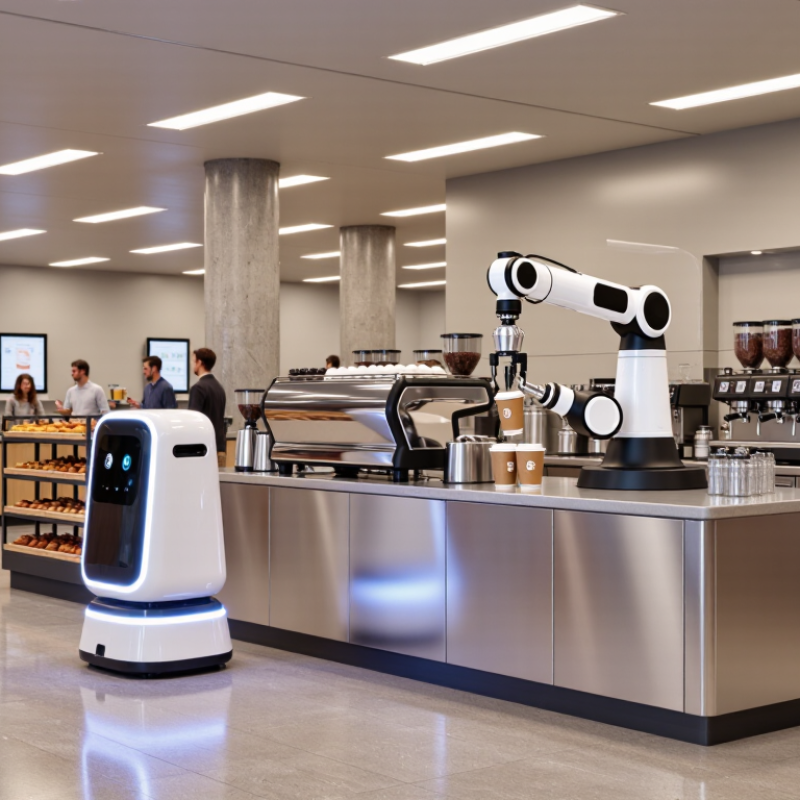
Robot cafe technology refers to integrated systems that automate selected cafe tasks. It combines robotic equipment, ordering software, payment tools, sensors, and human supervision. The aim is not to remove every worker. It is to make service more consistent during repetitive operations. Typical tasks include drink preparation, ingredient dispensing, cup handling, cleaning alerts, and customer notifications. In practice, reliability matters more than theatrical movement.
Its scope varies by site and business model. A compact kiosk may only automate coffee extraction and payment. A larger cafe may connect inventory control, queue management, temperature monitoring, and remote diagnostics. Global buyers should examine local power standards, language support, hygiene procedures, accessibility, and service availability. These details often affect operating costs more than the robot itself. They also influence installation time and staff training.
Core functions usually include order capture, recipe control, robotic motion, quality checks, and operational reporting. Sensors can detect missing ingredients, unusual temperatures, or blocked equipment. Software may record preparation times and stock levels for managers. Human staff still need to handle exceptions, customer concerns, and sanitation tasks. The technology is not flawless. A polished demonstration can hide slow recovery after a spill or network failure. Buyers should request live testing, maintenance records, cleaning instructions, and failure-response procedures before approving a 2026 deployment.
How to Evaluate Robot Cafe Solutions for Global Buyers in 2026
7 Best Robot Cafe Solutions for Global Buyers in 2026
Evaluating a robot cafe solution requires more than watching a polished demonstration. Buyers should measure drink consistency, service speed, cleaning time, and daily uptime. Request trial data from a real operating site, not only laboratory results. A reliable system should handle peak periods, ingredient changes, and basic staff interventions without frequent specialist visits.
Check compatibility with local power standards, payment systems, languages, and food safety requirements. Ask for documented certifications and clear maintenance procedures. Remote diagnostics can reduce downtime, but local technical support remains important. Review the total cost, including installation, software, training, spare parts, and scheduled servicing. A low purchase price may hide expensive interruptions.
Tips: Create a scorecard before comparing suppliers. Record average order time, failed orders, cleaning minutes, and recovery time. Test the system with actual cups, ingredients, and customer traffic. Speak with existing operators when possible. No scorecard is perfect. I would also leave space for human judgment, because a quiet machine may still frustrate staff during a busy morning. Protect customer data through limited access, secure updates, and written retention policies. A short pilot can reveal practical weaknesses that a sales presentation misses.
Seven Leading Robot Cafe Solutions and Their Main Applications
For global buyers in 2026, robot cafe solutions should match location, menu, labor model, and local safety requirements. Seven solution types stand out. Robotic barista stations suit offices, airports, and hospitals, where repeatable coffee service matters. Robotic arm kitchens handle simple bowls, noodles, or pastries in controlled back-of-house areas. Autonomous dessert stations fit malls and cinemas, serving ice cream, waffles, or prepared drinks with limited supervision. These systems need clear cleaning routines, temperature records, and emergency stops.
Self-service kiosks linked to robotic pickup units work well in campuses, transport hubs, and busy food courts. They reduce ordering queues and support multiple languages, but accessibility must be tested in person. Mobile serving robots are useful for table delivery in hotels, restaurants, and large events. Their value depends on floor width, lift access, and reliable staff handoff. Modular container cafes can operate at construction sites, exhibitions, and temporary retail spaces. They offer faster installation, although weather protection and utility connections require careful planning.
Hybrid human-robot cafes combine automated brewing or cooking with trained employees. This model suits premium venues, complex menus, and locations needing personal service. Buyers should request live demonstrations, maintenance response times, spare-parts plans, and data protection details before signing. A strong pilot measures queue time, drink accuracy, cleaning labor, downtime, and customer acceptance. The numbers may disappoint. That is useful. A shiny robot cannot fix weak demand, poor site design, or an oversized menu. Regional certification, payment rules, and food hygiene procedures also need local review. Good procurement remains practical, not theatrical.
7 Best Robot Cafe Solutions for Global Buyers in 2026 - Seven Leading Robot Cafe Solutions and Their Main Applications
| Robot Cafe Solution | Typical Main Applications | Common Capabilities | Key Buying Considerations |
|---|---|---|---|
| Automated espresso and coffee kiosk | Transport hubs, office buildings, campuses, and other locations with steady takeaway demand | Automated order handling and drink preparation; may combine an espresso machine, grinder, milk system, and payment terminal | Check menu flexibility, ingredient replenishment, cleaning access, payment compatibility, and local food-safety requirements. |
| Robotic barista arm | Showcase cafes, shopping centers, event venues, and hospitality spaces where visible automation is part of the customer experience | A programmed robotic arm can handle selected preparation or handoff tasks when integrated with suitable coffee equipment and safety controls | Assess the full system integration, operating area, guarding, cleaning procedures, and the range of tasks actually automated. |
| Automated tea and specialty-drink station | Food courts, hotels, convenience locations, and markets with demand for tea, iced drinks, or customizable beverages | Can automate measured dispensing, mixing, and selected finishing steps; some configurations support multiple recipes | Review temperature control, allergen management, ingredient storage, recipe changeover, and the cleaning needs of liquid-handling parts. |
| Automated fresh-food and snack kiosk | Offices, campuses, hospitals, and travel locations seeking food alongside coffee and other beverages | May combine refrigerated storage, order selection, and automated retrieval or dispensing for packaged items | Confirm temperature monitoring, stock rotation, restocking workflow, product-size limits, and applicable rules for selling food. |
| Self-service smart beverage kiosk | High-footfall public spaces and unattended or lightly staffed retail locations | Typically combines a touchscreen or digital ordering interface with automated payment and beverage dispensing | Check accessibility, language and currency support, payment security, network requirements, and procedures for resolving failed orders. |
| Mobile service robot for cafe floors | Restaurants, hotel cafes, and larger venues where drinks or dishes need to be transported between service areas | Can assist with delivery, table service, or internal transport; usually works alongside staff rather than replacing food preparation | Evaluate navigation in the actual floor plan, safe operation around guests, elevator integration if needed, and charging logistics. |
| Integrated robotic cafe system | New-format cafes, retail concepts, and multi-location operators combining automated preparation with digital ordering | Links selected equipment, ordering, payment, and operational monitoring through an integrated setup | Request a clear scope of automation, system-integration details, service coverage, spare-parts plans, and data-security documentation. |
Capabilities vary by configuration and site. Buyers should validate throughput, product quality, labor requirements, safety, maintenance, and local regulatory compliance with suppliers before deployment.
Cost, Performance, Integration, and Regional Market Comparison
Robot café solutions in 2026 differ less by their screens than by how well they handle daily service. A compact drink station may suit a hotel lobby, while a high-capacity setup fits transport hubs with steady foot traffic. Compare purchase price with staffing, cleaning, ingredient storage, and service costs. A lower quote can hide expensive maintenance or limited local support.
Performance depends on more than advertised speed. Ask suppliers for measured serving times during busy periods, drink consistency records, and realistic uptime data. Regional needs also vary: buyers in humid climates should check refrigeration and moisture protection; sites with limited floor space may need a narrow footprint. Integration matters, too. Confirm compatibility with local payment methods, inventory systems, and building utilities before installation. These details can delay a launch.
Tips: Request a live demonstration using your menu and expected peak-hour volume. Ask who responds when a machine stops, and how quickly. Get the answer in writing. Pilot one unit before scaling. Even careful estimates can miss cleaning time or customer hesitation, so leave room to revise the plan.
Deployment Requirements, Safety Standards, and Buyer Considerations
Choosing among the seven best robot cafe solutions in 2026 requires more than comparing speed and appearance. Deployment begins with site measurements, power capacity, floor strength, ventilation, and staff circulation. A coffee robot may need a dedicated service lane, washable surfaces, drainage access, and a clear emergency stop zone. The International Federation of Robotics reported 4.28 million industrial robots operating worldwide in 2023, showing strong automation growth. Yet cafe environments remain unusually demanding because customers stand close to moving equipment.
Safety documentation should reference ISO 10218, ISO/TS 15066, ISO 13482, and relevant local electrical and food-contact rules. Risk assessments must test pinching points, hot liquids, unexpected restarts, and cleaning procedures. The World Health Organization estimates that contaminated food causes about 600 million illnesses annually, so temperature logging, allergen separation, and hand-contact controls deserve serious attention. Ask suppliers for test records, maintenance intervals, cybersecurity procedures, and technician response times. Small details matter.
A fast demonstration is not proof of reliable deployment. Real queues expose weaknesses. Buyers should request a live trial during peak service, with ordinary staff and realistic cleaning delays. Total cost must include installation, software updates, spare parts, training, and downtime. My concern is simple: many comparisons still reward novelty over recoverability. A robot that needs expert intervention after one minor spill is not truly efficient.
Related Posts
-
10 Best Robot Cafe Solutions for Global Buyers
-
China Best Robotic Coffee Bar Supplier and Manufacturer
-
What Is the Best Coffee Shop Robot for Your Business?
-
Maximize Efficiency and Quality: How Coffee Robot Machines Are Revolutionizing Global Coffee Production
-
Why Choose a Cafe Robot for Your Business?
-
Maximizing Efficiency with the Robotic Barista Coffee Machine Benefits for Global Buyers