China Top 10 Robot Coffee Bar Suppliers for Global Buyers
The global market for Robot Coffee Bar systems is moving beyond novelty. Buyers now seek reliable brewing, compact footprints, clear maintenance plans, and measurable operating costs. A robotic arm may look impressive behind glass, but performance depends on grinder calibration, milk temperature, payment integration, and local service support.
Henry Hu, founder of Cafe X, has described the vision this way: “We want to make coffee more convenient, consistent, and affordable.” His view captures the central promise of automated coffee service. Yet consistency is not automatic. A poorly trained system can produce uneven espresso, slow orders, or disappointing milk texture. These details matter in airports, offices, shopping centers, and hotels.
This guide examines China’s top ten Robot Coffee Bar suppliers for global buyers. It considers automation design, drink customization, production capacity, certifications, software stability, spare parts, and after-sales support. Supplier experience also deserves attention. A polished showroom cannot replace long-term field performance.
Look beyond the robot.
Real value appears in daily operation. Buyers should request live demonstrations, cleaning procedures, sample contracts, and evidence from comparable installations. Language support and remote diagnostics can reduce costly downtime. Still, no supplier fits every market. Local tastes, electrical standards, labor models, and import requirements may change the decision.
Some rankings remain imperfect. Public data is limited, and supplier capabilities can change quickly. Therefore, this list should support careful due diligence, not replace it. The strongest partner is not always the cheapest or most futuristic. It is the supplier that delivers dependable cups, practical service, and transparent communication.
What Defines a Robot Coffee Bar Supplier in China
A reliable robot coffee bar supplier in China offers more than an attractive machine.
The supplier should understand beverage preparation, automation, and daily retail operations. Its team must explain the system clearly, including brewing speed, ingredient storage, cleaning cycles, and power requirements.
Practical experience matters.
Ask for test videos, factory inspection records, and performance data from comparable installations. A dependable supplier can describe how the robot handles cup placement, espresso extraction, milk dispensing, and payment integration. It should also provide food-contact material details, electrical documents, export support, and user manuals in clear English. These details reduce uncertainty for global buyers.
Maintenance often separates a useful supplier from a sales-driven one.
Check spare-part availability, remote diagnosis, response times, and technician training. Request a pilot installation before ordering many units. A busy lobby may reveal problems that a showroom hides, such as slow recovery, noisy pumps, or milk lines that clog overnight. Automation is not always the best answer. Some locations still need staff support during peak hours. Supplier claims also require careful checking, because laboratory speed may differ from real customer service. A strong partnership includes honest limits, transparent warranty terms, and regular software updates. Experience is valuable, but verified evidence matters more.
How the Top 10 Chinese Suppliers Compare
China Top 10 Robot Coffee Bar Suppliers for Global Buyers
Comparing China’s top ten robot coffee bar suppliers requires more than checking automation claims. The International Federation of Robotics reported 276,288 industrial robot installations in China during 2023. This manufacturing depth can support faster customization, spare-part access, and lower production costs. However, industrial robotics experience does not automatically prove reliable beverage automation.
The strongest suppliers differ in practical details. Some provide compact kiosks for airports and offices. Others build larger counters with refrigerated storage, water filtration, and remote monitoring. Buyers should compare drink consistency, cleaning time, payment integration, and technician response. A machine producing 100 cups daily may suit a small lobby. A transport hub may need several times that capacity. The International Coffee Organization estimated global coffee consumption at 177.9 million 60-kilogram bags in 2023/24, showing continued demand for convenient service. Still, coffee demand does not guarantee profitable robotic locations.
Market reports on robot coffee systems often disagree on market size and growth rates. That inconsistency deserves attention. A supplier’s projected payback may exclude rent, ingredient waste, maintenance visits, and local certification. During supplier evaluations, request live production records, sample maintenance logs, and failure-rate data. Test milk temperature, ice handling, cup placement, and recovery after network loss. The most polished demonstration can hide ordinary weaknesses. A useful comparison should reward measurable uptime, transparent service terms, and adaptable software rather than futuristic appearance.
Key Technologies Behind Automated Coffee Bars
Automated coffee bars combine robotics, precision brewing, and compact food-service engineering. Their core system begins with calibrated dosing. Digital scales measure coffee, milk, water, and syrup within tight limits. A controller then adjusts recipes according to cup size and beverage type.
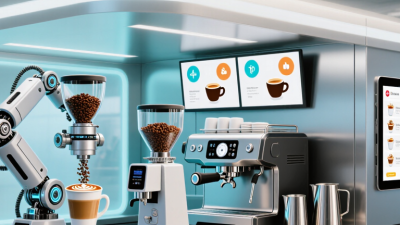
Robotic arms handle repetitive movements, including cup placement, portafilter transfer, pouring, and lid fitting. Vision sensors check cup position before each action. This reduces spills and protects equipment. Temperature sensors monitor boilers and milk modules continuously. Reliable machines also use automatic rinsing cycles, sealed ingredient containers, and alerts for low supplies.
Software connects the equipment through an industrial control platform. It records brewing time, water temperature, cleaning status, and fault codes. Remote monitoring helps overseas buyers review performance without visiting every location. However, connectivity should include secure access, data protection, and manual override controls. A coffee bar must still operate safely when the network fails.
Field testing often reveals small weaknesses. Foam quality may change with humidity. A robotic gripper can misread a damaged cup. Sensors also need regular calibration. These are not minor details. They affect taste, speed, maintenance costs, and customer trust.
Good suppliers provide clear service intervals, spare-part lists, training materials, and acceptance tests. Buyers should examine cleaning access, emergency stops, electrical compatibility, and local compliance before installation. Fancy automation is not enough. Practical reliability matters more.
Import, Installation, and After-Sales Considerations
Importing a robot coffee bar requires more than comparing arm speed or menu capacity. The International Federation of Robotics reported nearly 205,000 professional service robots sold in 2023, showing strong commercial adoption. However, service-robot data does not guarantee coffee-shop success. Buyers should verify customs classification, electrical voltage, wireless approvals, food-contact materials, and local safety documentation before shipment.
Installation details often decide daily performance. The site needs level flooring, stable power, water supply, drainage, ventilation, and reliable network coverage. Measure door widths and elevator limits before packing equipment. A practical acceptance test should cover drink accuracy, cleaning cycles, emergency stops, payment integration, and recovery after a network failure. The International Federation of Robotics also recorded 541,302 industrial robot installations in 2023, but coffee automation has different hygiene and customer-service requirements.
After-sales terms deserve equal attention. Request remote diagnostics, response times, technician coverage, spare-parts locations, software update rules, and operator training. Ask for realistic uptime data, not only laboratory results. Replacement pumps, seals, sensors, and brewing modules should have clear lead times. Grand View Research identifies automation and labor efficiency as major foodservice technology drivers, yet maintenance remains highly site-dependent. A perfect deployment is unlikely. Even experienced buyers may underestimate cleaning labor, local water quality, or seasonal demand. A pilot installation can expose these weak points before a larger import commitment.
China Top 10 Robot Coffee Bar Suppliers: Global Buyer Evaluation Benchmark
The chart compares ten anonymized supplier profiles using a standardized 100-point buyer evaluation model covering import readiness, installation support, and after-sales service. These dimensions reflect common considerations for international procurement, including export documentation, deployment capability, technical response, spare-parts availability, and warranty support.