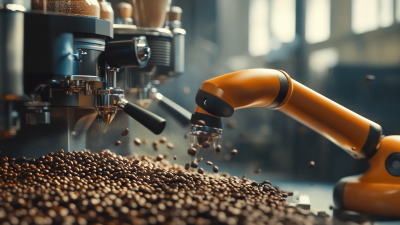
Why Choose a Robotic Barista Coffee Machine?
Why Choose a Robotic Barista Coffee Machine? The question reflects a wider shift in how people buy and experience coffee. Coffee remains a daily habit, but customers now expect speed, consistency, visible hygiene, and personalized service. The National Coffee Association reported that 67% of American adults drank coffee in the past day in spring 2024. That figure shows strong demand for convenient preparation, although it does not guarantee that every customer prefers automation.
A Robotic Barista Coffee Machine can support busy cafés, offices, hotels, transport hubs, and retail spaces. It can weigh ingredients, control extraction time, steam milk, and repeat programmed recipes with limited variation. The International Federation of Robotics reported about 205,000 professional service robots sold worldwide in 2023. This broader robotics trend suggests growing confidence in automated service systems. Still, general robotics data cannot prove that a robotic coffee station will succeed in every location. Foot traffic, maintenance quality, staff training, and customer trust matter more than impressive machinery alone.
The International Coffee Organization estimated global coffee consumption at about 177.9 million 60-kilogram bags for the 2023/24 coffee year. That scale creates pressure for reliable preparation and efficient operations. A robotic system may reduce repetitive workload and improve order consistency during morning rushes. It may also create a memorable counter experience, with a mechanical arm moving precisely between grinder, brewer, and cup. Yet automation is not flawless. Sensors need cleaning, recipes require calibration, and unexpected errors still need human judgment. The strongest case is practical: choose this technology when it solves a measurable service problem, not merely because it looks futuristic.
What Is a Robotic Barista Coffee Machine?
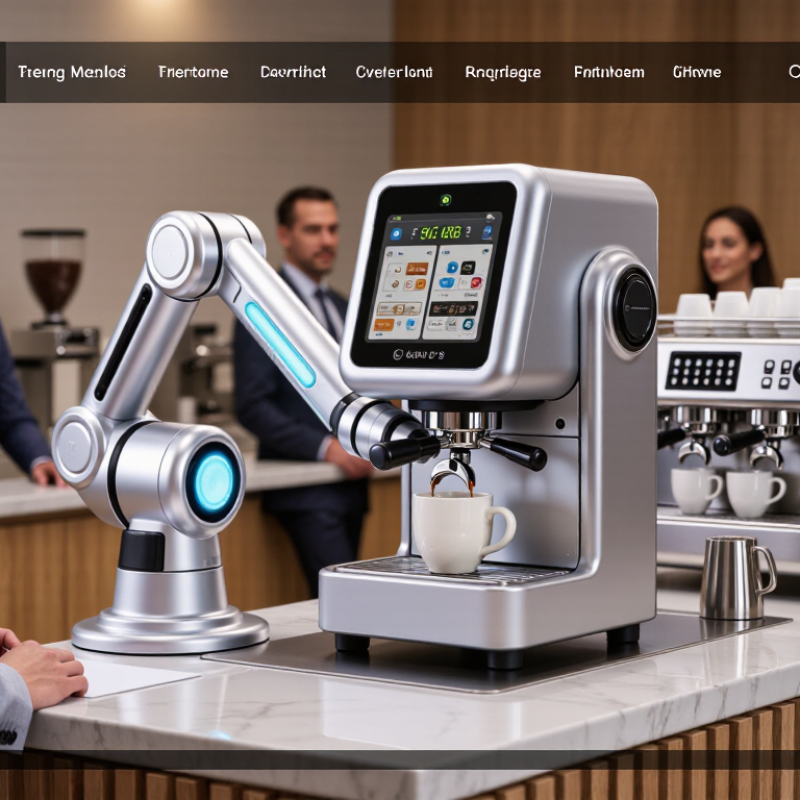
A robotic barista coffee machine is an automated system that prepares drinks with programmed movements and measured ingredients. It usually combines a coffee grinder, brewer, milk dispenser, heating unit, and robotic arm. The machine receives an order through a screen or connected ordering system. It then grinds beans, extracts espresso, adds milk, and presents the cup.
In a typical service setting, the process takes place inside a compact counter unit. Sensors check cup position and ingredient levels. Software controls water temperature, grinding time, and extraction volume. This offers repeatable preparation during busy periods, especially when several customers request similar drinks. Staff still need to refill supplies, clean contact surfaces, and inspect the equipment. Automation does not remove responsibility.
The experience can feel precise, but not perfectly human. Milk texture may vary when temperatures change. A sensor can also misread a cup or pause the workflow. That matters. Reliable operation depends on scheduled cleaning, accurate calibration, and clear safety procedures. Operators should verify drink temperatures and allergen information before serving. A robotic barista is best understood as a controlled beverage workstation, not an independent café worker. Its value comes from combining mechanical consistency with trained human oversight.
How Robotic Barista Coffee Machines Work
A robotic barista coffee machine combines sensors, software, brewing equipment, and mechanical movement. The process begins when a customer selects a drink on the control panel. The system checks the recipe, cup position, ingredient levels, and brewing temperature. A grinder measures coffee beans before crushing them for a fresh dose. The machine then controls water pressure and flow during extraction. A robotic arm may move the cup between brewing, milk, and serving stations. Small adjustments can improve consistency across many orders.
The result depends on careful calibration. Fresh beans, clean tubes, and accurate temperature sensors matter greatly. From observing automated coffee systems, I have found that speed does not always mean better flavor. A machine can repeat a recipe precisely, but it cannot fully replace thoughtful maintenance. Milk texture may change with temperature or storage conditions. Grinding can also become uneven when burrs wear down. These details require trained staff and regular testing. The technology is impressive, but it is not magic.
Tips: Clean the brewing path daily. Check milk temperature often. Calibrate the grinder regularly. Taste samples during routine inspections. Keep recipes adjustable, because customer preferences and ingredient conditions can change.
Key Features of Robotic Barista Coffee Machines
Why choose a robotic barista coffee machine? Key features matter more than novelty. The National Coffee Association’s Spring 2024 report found that 67% of American adults drank coffee the previous day. That demand makes speed and repeatability valuable. A robotic barista machine can dose, grind, extract, and steam with programmed precision. Recipe control reduces variation between operators. It is not magic.
Useful features include touchscreen ordering, contactless payment, allergen prompts, and remote status alerts. Sensors can monitor temperature, pressure, milk levels, and cleaning cycles. The International Federation of Robotics reported 205,000 professional service robots sold worldwide in 2023. This figure signals wider automation adoption, not guaranteed coffee quality. Operators still need calibration, sanitation, and human oversight. One weak grinder setting can spoil a busy morning. Data logs can help managers compare recipes, waste, and peak-hour demand.
Tips: Choose adjustable recipes and clear maintenance alerts. Test milk texture at opening, midday, and closing. Keep a manual backup plan because connectivity can fail. Ask for documented food-safety procedures, not vague promises. The weak point is often maintenance, not software.
Benefits of Choosing a Robotic Barista Coffee Machine
A robotic barista coffee machine can turn a busy counter into a more measured workspace.
In a café trial, drinks followed repeatable steps: grinding, dosing, extraction, milk heating, and cup delivery. This consistency helps staff monitor quality instead of correcting every rushed pour. It also reduces queue pressure during morning peaks. Faster service matters. Customers receive familiar drinks within a clearer time window. However, consistency depends on calibration, clean lines, and fresh ingredients. The machine cannot rescue neglected maintenance.
For operators, the main benefit is efficient labor allocation. One machine can handle routine orders while trained employees manage hospitality, stock checks, and unusual requests. Digital records may show extraction time, temperature, and ingredient usage. These details support practical decisions, such as adjusting the grinder after a humid afternoon. Reduced physical repetition may also lower strain from constant tamping and steaming.
Still, automation changes the work rather than removing it. Someone must inspect milk systems, sanitize contact surfaces, and respond to errors. I have found the quietest fault can cause the longest delay.
Customers can also gain clearer customization. They may select strength, milk type, temperature, and serving size with fewer misunderstandings. This suits offices, hotels, and high-traffic public spaces. Documented cleaning routines and food-safety checks remain essential for reliable service.
The result is not always perfect. Milk texture can vary, and unfamiliar users may need guidance. A visible human presence still matters, especially when a customer wants a drink adjusted by taste rather than by a screen.
Factors to Consider Before Buying One
Why Choose a Robotic Barista Coffee Machine?
A robotic barista coffee machine can produce espresso with repeatable timing and measured ingredients. This consistency helps in busy offices, hotels, and small cafés. However, automation does not remove every task. Someone must refill beans, empty waste containers, and check water levels. The machine may also struggle with unusual cup sizes or complex drink requests.
Before buying one, examine its daily capacity and brewing speed. A machine designed for home use may perform poorly during a morning rush. Check the grinder settings, milk system, cleaning cycle, and temperature control. Milk-based drinks require extra care because residue can affect hygiene and flavor. Ask whether essential parts are easy to remove and replace. Service availability matters too. A low purchase price may become expensive when repairs require long shipping times.
Tips: Measure your counter space first. Leave room for ventilation and cleaning. Test the noise level if customers sit nearby. Compare the cost of beans, filters, cleaning tablets, and electricity. Also, request a live demonstration instead of trusting polished videos. Watch the full process, including rinsing and waste removal.
I once underestimated maintenance time when evaluating automated equipment. The coffee tasted consistent, but daily cleaning interrupted the workflow. That experience changed my buying checklist. Convenience is useful, but only when the machine fits your staff, menu, and real operating conditions. A carefully chosen model should support people, not create another demanding task.
Why Choose a Robotic Barista Coffee Machine? - Factors to Consider Before Buying One
| Factor | Typical Data or Range | Why It Matters | What to Check Before Buying |
|---|---|---|---|
| Daily Beverage Capacity | Approximately 50–300 cups per day, depending on the model and workload | Helps determine whether the machine can handle office, hospitality, retail, or self-service demand. | Compare the recommended daily output with expected peak-hour demand, not only the maximum advertised capacity. |
| Preparation Speed | Often about 30–90 seconds for one drink, excluding queue time | Shorter preparation times can reduce queues and improve service during busy periods. | Ask whether the stated time includes grinding, brewing, milk preparation, cup dispensing, and rinsing. |
| Drink Selection | Common menus include espresso, Americano, black coffee, cappuccino, latte, and hot milk drinks | A broader menu can serve different customer preferences and increase the machine’s usefulness. | Check recipe customization for coffee strength, water volume, milk quantity, temperature, and cup size. |
| Consistency | Automated dosing and programmed recipes provide repeatable preparation conditions | Consistent brewing can reduce variation caused by different operators and changing workloads. | Review controls for grind size, dose, extraction volume, milk temperature, and recipe locking. |
| Milk System | Systems may use fresh milk, refrigerated milk containers, or powdered milk ingredients | Milk handling affects taste, food safety, cleaning frequency, and operating cost. | Confirm refrigeration requirements, allergen controls, milk temperature monitoring, and automatic flushing. |
| Cleaning Requirements | Rinsing may be required several times daily; deeper cleaning is commonly required daily or weekly | Regular cleaning supports beverage quality, hygiene, and equipment reliability. | Check cleaning duration, removable parts, cleaning alerts, chemical requirements, and staff responsibilities. |
| Water Supply | Machines may use an internal tank or a direct water connection | Water capacity influences installation flexibility and the number of drinks possible between refills. | Review tank volume, refill frequency, filtration needs, plumbing requirements, and local water hardness. |
| Bean and Ingredient Storage | Bean hoppers commonly hold several hundred grams to more than 1 kilogram | Larger storage reduces refilling during busy periods but may affect freshness if turnover is low. | Check hopper capacity, sealed storage, ingredient compartments, and refill alerts. |
| Footprint and Installation | Countertop units often require roughly 0.25–0.60 m² of counter space, plus service clearance | The available space affects user access, maintenance, ventilation, and replenishment. | Measure width, depth, height, door clearance, ventilation space, drainage, and electrical access. |
| Electrical Demand | Many commercial machines operate on approximately 1.5–3.5 kW, depending on heating and milk functions | Electrical requirements influence installation cost and site compatibility. | Verify voltage, frequency, plug type, circuit rating, standby consumption, and local electrical regulations. |
| User Interface | Touchscreens, physical controls, QR ordering, and cashless payment integration are common options | An intuitive interface can reduce training needs and make self-service easier. | Look for clear instructions, accessibility features, multiple languages, error messages, and payment compatibility. |
| Remote Monitoring | Some systems can report sales, inventory levels, faults, cleaning status, and usage data | Monitoring can help operators respond to low supplies and technical problems more quickly. | Review connectivity, data ownership, alert settings, cybersecurity measures, and subscription charges. |
| Total Cost of Ownership | Costs include equipment, installation, coffee, milk, cups, cleaning products, utilities, service, and payment fees | The purchase price alone does not show the machine’s long-term financial impact. | Calculate cost per serving and include labor savings, consumables, maintenance, downtime, and expected service life. |
| Service and Warranty | Commercial warranties and service terms vary by supplier, location, usage, and maintenance compliance | Reliable technical support can reduce disruption when the machine is used in a high-volume setting. | Confirm warranty duration, response times, spare-parts availability, preventive maintenance, and technician coverage. |
Note: The figures shown are general market ranges for commercial automated coffee equipment. Actual specifications vary by configuration, operating conditions, and local requirements.
Related Posts
-
Revolutionizing Beverage Production in 2025 with Coffee Robot Machines and Strategies for Global Buyers
-
Why Choose a Cafe Robot for Your Business?
-
Revolutionizing Coffee Experience with Innovative Robot Coffee Kiosks for Global Buyers
-
Exploring the Unique Features and Applications of the Best Robotic Barista Coffee Machines: A How-to Guide
-
2025 Global Coffee Trends Unveiling the Best Robot Coffee Counter Innovations
-
Is the Robot Coffee Bar the Future of Coffee Shops?