What is a Brushed Motor and How Does It Work?
In the world of electric motors, the Brushed motor holds a significant place. According to Dr. Emily Carter, a leading expert in motor technology, "Brushed motors are reliable and effective for various applications." This highlights their importance in both consumer goods and industrial environments.
Brushed motors feature a simple design with a rotating armature and fixed brushes. They transform electrical energy into mechanical energy efficiently. However, they do come with drawbacks. The brushes wear out over time, affecting performance and longevity. This aspect poses challenges for manufacturers and users alike.
Despite their limitations, brushed motors remain widely used. They are found in toys, power tools, and automotive applications. Their ease of control and low cost contribute to their popularity. Embracing improvements in materials and technology may enhance their durability, but the need for maintenance cannot be overlooked. As the industry evolves, reflecting on the reliability of brushed motors is crucial for future innovations.
What is a Brushed Motor?
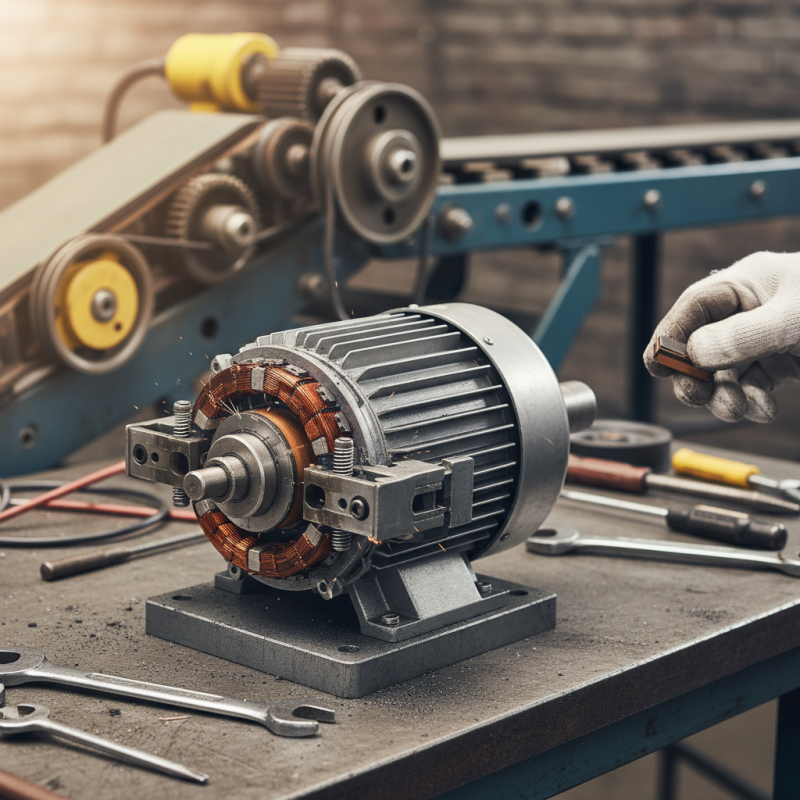
A brushed motor is a type of electric motor that uses brushes to deliver current to the rotor. This design includes a commutator to switch the direction of the current. The interaction between the magnetic field and the current generates motion, which powers various devices. They are common in toys and power tools due to their simplicity and low cost.
However, brushed motors do have limitations. They require maintenance over time, as brushes wear out. This can affect performance. It’s also worth noting that they can generate more heat, which can impact efficiency.
**Tip:** Keep your brushed motor clean. Dust can accumulate and affect its performance. Regular cleaning can extend the lifespan of your motor.
Brushed motors tend to be less efficient compared to brushless designs. This can lead to increased energy consumption. Understanding these aspects is essential if you rely on these motors for daily tasks.
**Tip:** Consider load when using a brushed motor. Overloading it can cause overheating and damage. Always monitor performance closely to avoid issues.
Brushed Motor Performance Analysis
Key Components of Brushed Motors
Brushed motors are widely used in various applications. Understanding their key components is essential for grasping how they function. The primary elements include the rotor, stator, brushes, and commutator. Each part plays a significant role in the motor's operation.
The rotor is a rotating part that carries the armature windings. This is where electrical energy transforms into mechanical energy. The stator, found outside the rotor, creates a magnetic field. It is usually made from permanent magnets or electromagnets.
The brushes, typically made of carbon, maintain electrical contact with the rotor. They ensure consistent energy transfer for smooth operation.
The commutator is also crucial. It reverses the direction of current through the rotor windings. This process allows continuous rotation, enabling the motor to work efficiently. However, mechanical wear on brushes and the commutator can create issues.
Regular maintenance is necessary to prevent performance degradation. Understanding these components can help troubleshoot common problems in brushed motors.
How Brushed Motors Generate Motion
Brushed motors are prevalent in various applications due to their simplicity and cost-effectiveness. They consist of a rotor, brushes, and a commutator. The brushes conduct electricity to the motor windings, creating a magnetic field. This interaction generates motion as the rotor turns, translating electrical energy into mechanical energy.
In industrial settings, brushed motors can exhibit a lifespan of around 1,000 to 5,000 hours. This can be a concern for applications requiring longevity. Reports indicate that over 60% of small electric motors in use today are brushed types. They are widely used in toys, power tools, and automotive fans, showing versatility but also limitations. The wear and tear on brushes can lead to maintenance issues.
The efficiency of brushed motors typically ranges from 75% to 85%. While reasonable, this leaves room for improvement when compared to brushless motors, which can achieve efficiencies above 90%. The thermal management and heat generation in brushed motors need careful consideration. Users must weigh the cost against performance, especially when longevity and efficiency are critical.
What is a Brushed Motor and How Does It Work? - How Brushed Motors Generate Motion
| Feature | Description |
| Construction | Brushed motors consist of a stator (stationary part) and a rotor (moving part) with brushes that provide electrical contact. |
| Operating Principle | They operate by providing current to the motor windings, creating a magnetic field that causes the rotor to turn. |
| Types | Common types include DC brushed motors and universal motors, used in various applications like toys and power tools. |
| Control | Speed can be controlled by varying the voltage supplied or through pulse-width modulation (PWM). |
| Advantages | Brushed motors are simple to control, cost-effective, and readily available, making them popular for many applications. |
| Disadvantages | They can wear out quickly due to brush friction, leading to maintenance issues and reduced lifespan compared to brushless motors. |
| Applications | Used in electric vehicles, appliances, robotics, and manufacturing machinery where precise control of motion is needed. |
The Working Principle of Brushed Motors
Brushed motors utilize a straightforward and efficient working principle. In a brushed motor, electrical energy flows through the winding on the rotor. This setup creates a magnetic field that interacts with the stationary magnets. The attraction and repulsion between these magnetic fields produce torque, causing the rotor to turn. According to industry reports, approximately 50% of all motors in use today are brushed motors due to their simplicity and cost-effectiveness.
While they are reliable, brushed motors do have their downsides. The friction between the brushes and the commutator causes wear. This wear can affect performance over time, leading to maintenance challenges. Studies indicate that over 30% of motor failure relates to worn friction components. Improved designs and materials are crucial to extend the lifespan of these motors.
Brushed motors are commonly found in numerous applications, from small tools to household appliances. The ease of control and robustness make them popular. However, noise and efficiency losses due to brush friction must be addressed. This balance between functionality and longevity needs careful consideration in design and application.
Typical Applications of Brushed Motors
Brushed motors are widely used in various applications due to their simplicity and effectiveness. These motors excel in devices where control and versatility are required. Common applications include household appliances, toy cars, and small power tools. For instance, a brushed motor spins a fan in small appliances, ensuring circulation and comfort in homes.
In the toy industry, brushed motors power remote-controlled vehicles. They offer quick acceleration and responsive handling. These motors are perfect for young enthusiasts learning about mechanics. However, while they are reliable, brushed motors do wear down over time. The brushes in these motors can experience friction, necessitating replacement.
Tips: When using brushed motors, consider the load they will bear. Choose a motor that aligns with your project’s demands. Maintain your motor regularly to ensure peak performance. Avoid overloading, as this can damage the motor and reduce its lifespan. Small adjustments can lead to significant improvements in efficiency.