Why Are Sink Toys So Popular with Kids?
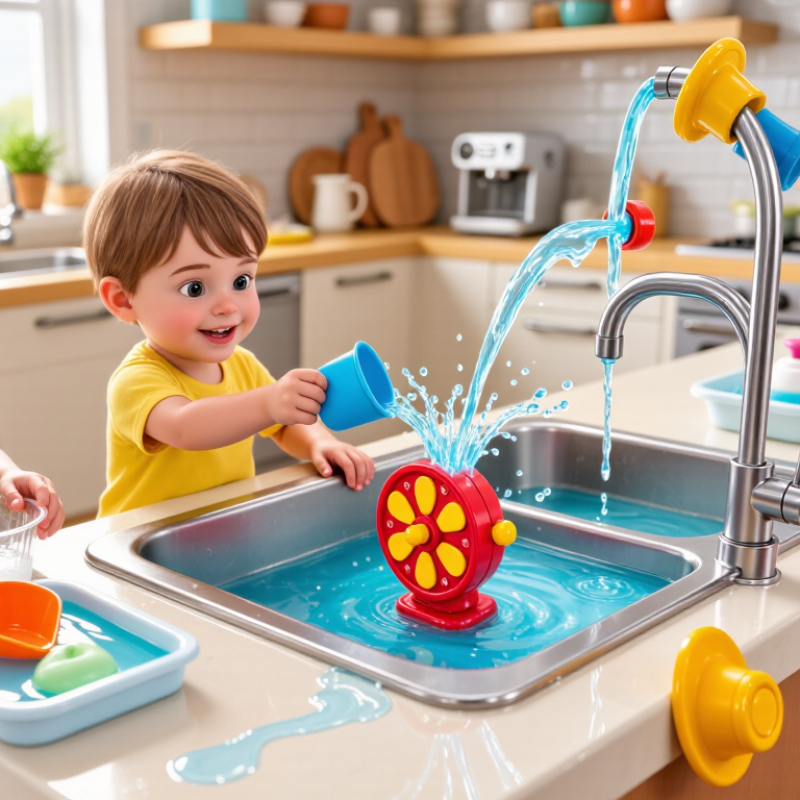
At the kitchen sink, a small cup can become a waterfall, a loading dock, or a pretend café. That simple transformation helps explain why SINK TOY play holds children’s attention. Kids can scoop, pour, squeeze, and watch water change direction. The actions are easy to repeat, but each splash offers a slightly different result. That matters to curious hands.
Pediatrician Dr. Michael Yogman, lead author of an American Academy of Pediatrics report on play, wrote, “Play is not frivolous: it enhances brain structure and function and promotes executive function.” His research concerns play and child development broadly, not sink toys specifically. Still, it offers a useful lens: a toy can invite learning without feeling like a lesson. A spinning water wheel, for example, gives a child an immediate response to a small change in water flow. A suction-cup toy may stick, slip, and need repositioning. Small experiments.
The appeal is not only educational. Sink toys often make ordinary routines feel more inviting, especially when a child can choose what to pour or where to place a toy. The appeal can fade, too. A toy that is hard to clean or offers only one action may quickly lose interest. And water play needs an attentive adult nearby; toys do not make supervision optional. In this article, we’ll look at the sensory fun, simple cause and effect, and everyday routines behind sink toys’ popularity—while keeping their limits in view.
What Sink Toys Are and How Children Play With Them
Sink toys are small, water-safe objects children use at a sink, water table, or shallow basin. They might include cups, funnels, floating animals, scoops, and simple spinning wheels. Children pour, catch, squeeze, sort, and watch water move. A funnel can turn a steady stream into a thin trickle. A cup may float when empty and dip below the surface when full. These small changes invite repeated experiments.
Play often begins with familiar routines, like washing a toy plate or bathing a doll. Then children make up their own challenges, such as filling a cup to a certain level or rescuing floating pieces with a scoop. They practice hand control, early counting, and words like full, empty, fast, and slow. The play can be absorbing. It can also get splashy, and wet sleeves are not every child’s favorite. Adult supervision matters around water, even in a shallow sink. For young children, choose toys too large to swallow, and dry them after play to reduce trapped moisture.
Tips: Use a little water and keep a towel nearby. Stay within arm’s reach, check toys for cracks, and invite children to help pour the water away. Some toys hold a child’s attention for only a few minutes. That is normal.
Why Sink Toys Are Popular with Kids
Sink toys are water-safe toys children can use during supervised sink play. Pouring, scooping, floating and pretend washing make water play hands-on and invite simple cause-and-effect exploration.
About this chart: The bars show the order of actions in an example play sequence, not measured popularity or survey results. Always supervise children around water.
How Water Play Captures Children’s Attention
Sink toys hold children’s attention because water responds to every small movement. A cup tips, a floating boat drifts, and a toy disappears beneath the surface. These simple changes invite children to test what happens next. They may pour water through a wheel, push a toy along the tub, or watch bubbles rise. The play feels different from using toys on a dry floor. It offers cool sensations, gentle splashing, and clear cause and effect.
That repetition has a purpose. Pouring, squeezing, and reaching can help children practise coordination while exploring water at their own pace. There is no single right way to play. Still, adults may expect a tidy activity and find water on the floor instead. It can be messy. A child might also lose interest quickly, then return to the same toy later. Attention varies from day to day.
Tips: Choose age-appropriate toys without small detachable parts, and stay within arm’s reach whenever a child is near water. Use only a shallow amount, keep the play area slip-resistant, and empty the tub afterward. Rinse and dry toys regularly, especially hollow ones where moisture can collect. Offer a cup or spoon too. Simple tools can make the play more engaging.
Why Pouring and Floating Encourage Hands-On Learning
Sink toys turn water into a small laboratory. A child tips a cup, watches a stream splash, then tries again with a spoon. Each pour offers immediate feedback: more water makes a louder splash, while a narrow opening slows the flow. Floating toys invite another question: why does one bob at the surface while another sinks? Harvard University’s Center on the Developing Child notes that more than one million neural connections form each second during early childhood. That figure describes brain development, not the effect of any single toy.
Small discoveries matter.
The American Academy of Pediatrics’ 2018 clinical report, The Power of Play, connects play with language, self-regulation, and relationships. Pouring can build hand control as children grip, tilt, and aim; floating can spark comparison and prediction. An adult might ask, “What changed when you filled the cup?” Then wait. Too many questions can turn play into a test, and children may simply want to splash. That is worth noticing. Sink play is not a guaranteed lesson, but repeated, self-chosen experiments give children room to explore cause and effect at their own pace.
How Sink Toys Make Daily Routines More Enjoyable
A sink can feel like a small stage for everyday play. A cup fills, a sponge squeezes, and a little stream runs down the drain. These simple actions give children something to explore while hands are being washed or dishes are rinsed. The routine feels less like a pause in play and more like a playful task. Just a few minutes can help a child practice pouring, noticing cause and effect, and naming wet, dry, full, or empty. Small discoveries matter.
Sink toys can also make transitions gentler. A child who resists washing up may be more willing to choose a floating toy or rinse a plastic cup. Keep the activity simple, with only a few items within reach. Too many toys can crowd the basin and make cleanup harder. Adult supervision matters, even with shallow water; check water temperature and choose toys suited to the child’s age. Afterward, empty and dry the toys to limit trapped moisture. It is not a magic fix—some days, the sink is still just the sink. But a familiar routine with a small choice can feel easier for everyone.
Why Are Sink Toys So Popular with Kids? - How Sink Toys Make Daily Routines More Enjoyable | Dimension | What Children Experience | How It Can Make a Daily Routine More Enjoyable |
| Water play | Children can pour, scoop, splash, and watch water move between containers. | Simple, hands-on play can make time at the sink feel more engaging while a caregiver supervises. |
| Cause and effect | Filling a cup, tipping it, or squeezing a water toy shows how actions change what happens next. | Small discoveries can give children something interesting to focus on during washing or bathing. |
| Sensory exploration | Children notice water’s movement, temperature, and sound through supervised play. | These varied sensations can make a familiar routine feel less repetitive for some children. |
| Imaginative play | Floating toys and containers can become characters, boats, or pretend washing tools. | Pretend play can add a playful element to bath time or handwashing without changing the routine itself. |
| Practice with everyday skills | Pouring and handling small, age-appropriate items gives children opportunities to use hand coordination. | Play can accompany supervised practice with simple routines, such as rinsing hands or putting toys away. |
| Choice and participation | A child may choose which toy to use or which container to fill. | Offering a small choice can help a child feel involved, while an adult remains responsible for the routine and safety. |
| Easy-to-follow play | Many sink toys invite open-ended play and do not require complicated instructions. | Children can begin playing quickly, making them convenient for short, supervised moments at the sink or bath. |
| Cleaning and storage | Wet toys need to be rinsed when appropriate, drained, and allowed to dry fully between uses. | A simple cleanup habit helps keep the play area orderly and reduces the chance of moisture remaining inside toys. |
| Safety and supervision | Water play requires close, attentive adult supervision. Toys should be suitable for the child’s age and checked for damage or small parts. | Keeping play within an adult’s reach and following the toy’s care instructions helps make the routine safer. |
Which Features Keep Children Coming Back to Sink Toys
Sink toys hold a child’s attention when water responds to every small action. A cup tips, a stream fills a little basin, and a wheel begins to spin. That simple cause and effect invites children to try again. It also gives them room to predict what might happen next.
The most engaging designs offer more than one way to play. Scoops, floating pieces, funnels, and movable parts create fresh little challenges. One day, a child may pour water through a funnel; another day, they may line up floating toys. Bright colors help pieces stand out against a pale sink. Suction cups can keep toys in place, though they do not always grip well on every surface. A small annoyance, perhaps, but worth noticing.
Convenience matters too. Toys that are easy to rinse and dry are more likely to return to the sink tomorrow. Adults can check that pieces are suitable for a child’s age and have no loose or damaged parts. Keep play supervised, and let toys dry between uses to limit trapped moisture. Not every child will love water play. Still, a toy that is easy to reach, simple to use, and open to imaginative play can make an ordinary wash-up feel new again.