
Why Choose a Natural Gas Generator?

A Natural Gas Generator can provide dependable electricity when utility service is unavailable, unstable, or insufficient for a site’s needs. It may support a home, workshop, farm, or commercial facility. Its fuel can arrive through an existing gas connection, reducing the need to store diesel on-site. But convenience is not the whole story. Fuel availability, generator capacity, ventilation, maintenance, and installation quality all shape real-world performance.

Energy scholar Vaclav Smil writes, “Energy is the only universal currency: one of its many forms must be transformed to get anything done.” That principle helps frame the choice. A generator converts fuel into electrical power, but every conversion has limits and costs. Buyers should compare expected loads, startup surges, noise, service intervals, and emissions—not just the advertised wattage. A quiet unit beside a house can still disappoint if it cannot start the well pump or handle several appliances at once.

Details matter. So does restraint. Natural gas may burn more cleanly than some other fossil fuels, yet it is not emission-free, and gas supply can fail during severe weather. The right choice depends on the site, not a slogan. This guide examines the practical advantages, trade-offs, and selection questions behind choosing a Natural Gas Generator, while recognizing that even a well-planned backup system has limits.
Why Choose a Natural Gas Generator?

How a Natural Gas Generator Produces Electricity

Why Choose a Natural Gas Generator?
How a Natural Gas Generator Produces Electricity

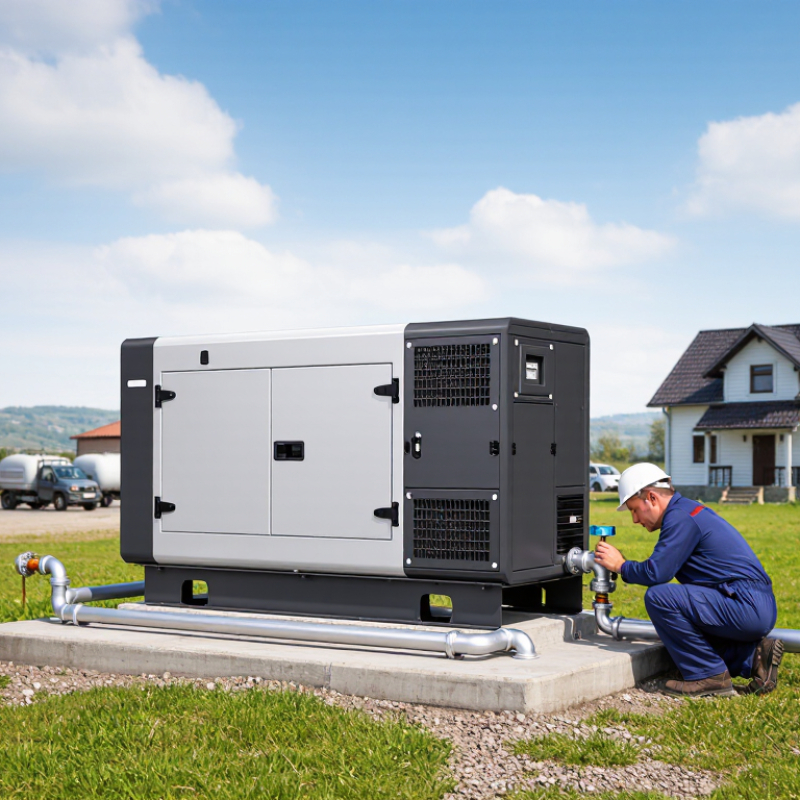
It starts with fuel. Natural gas flows through a supply line into the engine, where it mixes with air and ignites inside cylinders. Expanding gases push pistons and turn a crankshaft. That rotation drives an alternator. Inside, a rotor spins within stationary windings, changing a magnetic field and producing electrical current. The engine creates motion; the alternator converts that motion into electricity. A voltage regulator helps keep the output steady as connected loads change.

A control system monitors speed and voltage, then adjusts the engine’s response. When demand rises, the engine works harder. A motor starting can briefly draw much more power than it uses while running. That detail is easy to underestimate. Rated capacity, starting surge, and fuel supply all matter when sizing a system. A service line can provide a steady fuel source, but an interruption can still stop generation. The generator also produces heat, exhaust, vibration, and noise, so placement and ventilation need careful planning. Electrical connections should be handled by qualified professionals. Real setups are less tidy than diagrams: loads switch on unevenly, and maintenance schedules can slip.

Key Benefits of Using Natural Gas for Power

Why Choose a Natural Gas Generator?

Key Benefits of Using Natural Gas for Power

A natural gas generator can supply backup electricity without requiring fuel cans or an onsite diesel tank. If the home or facility already has a gas connection, fuel may be available automatically during an outage. That convenience can matter during a long storm. Natural gas also burns more cleanly than diesel in many generator applications, producing less particulate matter. Emissions still depend on the equipment and how it is operated. It is not emission-free.

For regular use, a steady fuel supply can reduce the need to monitor stored fuel. Some models also run more quietly than comparable alternatives, but noise varies by design and installation. Natural gas systems need proper sizing, ventilation, and routine servicing. A gas supply can also be interrupted, so backup plans matter. I used to think a pipeline connection meant uninterrupted power; that assumption needs a reality check.

Tips: Check the generator’s rated output against essential appliances, such as a refrigerator, furnace, and well pump. Ask a qualified installer to assess gas-line capacity and safe placement. Keep service records, and test the unit according to its manual. Small checks help. During an outage, avoid running equipment in enclosed spaces, and follow the manufacturer’s safety instructions.

Where Natural Gas Generators Are Most Useful

Why Choose a Natural Gas Generator?

Where Natural Gas Generators Are Most Useful

Natural gas generators are especially useful at sites with a reliable pipeline connection and a steady need for backup power. Hospitals, food-processing plants, water facilities, and data centers may need electricity to keep essential equipment running during an outage. A generator can support selected loads, such as refrigeration, pumps, or server cooling. The U.S. Energy Information Administration reported that natural gas supplied about 43% of U.S. utility-scale electricity generation in 2023. That scale reflects an established fuel network, but local supply still matters.

Data centers are one example of rising demand for dependable power. Lawrence Berkeley National Laboratory’s 2024 report estimated that U.S. data centers used 176 terawatt-hours of electricity in 2023, with use potentially reaching 325–580 terawatt-hours by 2028. Those estimates do not mean every facility needs a gas generator. They do show why operators assess backup options carefully. Still, gas is not magic. Pipeline pressure, connection capacity, and emergency fuel availability should be checked before choosing a system.

Tips: List the equipment that must stay on, then size the generator for its starting loads. Ask a qualified installer to review ventilation, maintenance access, and gas supply. A test run helps expose weak points.

Why Choose a Natural Gas Generator? - Where Natural Gas Generators Are Most Useful

Location or Use Why Natural Gas Can Be a Good Fit Typical Role Important Considerations
Homes with a reliable gas connection A standby unit can use an existing natural gas supply, avoiding the need to regularly refill and store gasoline or diesel for the generator. Automatic backup for selected household circuits or, when properly sized, the whole home. Confirm generator capacity, transfer-switch requirements, local permits, and whether gas service is expected to remain available during an outage.
Commercial buildings A piped fuel supply can support standby power without routine onsite liquid-fuel deliveries, where the gas network and service capacity are adequate. Backup for essential lighting, communications, refrigeration, security, or other prioritized loads. Critical facilities should assess fuel-supply resilience, load-starting requirements, runtime needs, and applicable building and fire codes.
Hospitals and healthcare facilities Natural gas may be considered where a site has a suitable gas connection and needs a generator as part of a professionally engineered emergency-power system. One component of a layered backup-power plan for critical loads. Do not assume pipeline gas is uninterrupted during emergencies. Requirements for emergency power, redundancy, testing, and fuel security vary by facility and jurisdiction.
Data centers and telecommunications sites A connection to pipeline gas can be useful for sites seeking an alternative to storing large quantities of liquid fuel. Standby or other service, depending on the generator’s design and the site’s engineering requirements. Evaluate gas-pressure and flow requirements, outage duration, redundancy, emissions rules, and the consequences of a shared utility disruption.
Sites with limited fuel-storage space When pipeline service is available, the generator can draw fuel from the network rather than relying on a large onsite liquid-fuel tank. Backup power where tank space, fuel handling, or scheduled refueling is a concern. A pipeline connection does not provide fuel independence; verify supply conditions and maintain an appropriate contingency plan.
Facilities with combined heat and power needs Some natural-gas generator systems can be configured to capture useful heat for processes or building loads, improving total fuel utilization when there is a steady demand for heat. Combined heat and power (CHP), where the system and site are designed for it. CHP suitability depends on matching heat and electrical demand, equipment design, operating hours, and local regulations; it is not a benefit of every generator installation.
Remote or off-grid locations A natural gas generator may work if a dependable gas source is available, such as a suitable onsite supply or dedicated infrastructure. Power generation where fuel access and system design support the intended duty. Without a reliable gas source, pipeline-dependent models may be impractical. Confirm fuel availability, gas quality, maintenance access, and whether another fuel type better suits the site.

Suitability depends on generator specifications, local gas-service capacity, installation design, and applicable codes. Natural gas generators produce emissions and require proper installation, ventilation, maintenance, and safe exhaust routing.

Costs, Emissions, and Other Important Considerations

A natural gas generator can provide steady backup power when a home already has a suitable gas connection. Its real cost depends on more than the purchase price. Installation may require gas-line work, electrical upgrades, ventilation, and a properly sized transfer switch. Ask for an itemized estimate; a low equipment price can hide substantial site work.

Fuel matters. Gas prices vary, and a generator’s consumption rises with electrical load. Compare expected fuel use at the loads you actually need, such as a refrigerator, heating equipment, and a few lights. Maintenance also adds up: oil, filters, inspections, and occasional repairs. A licensed installer can assess fuel-line capacity and safe clearances, but local conditions may change the quote. Budget for that uncertainty.

Natural gas combustion generally produces less carbon dioxide per unit of energy than diesel combustion, but it still releases greenhouse gases and nitrogen oxides. Methane leakage during gas production and delivery can also affect its climate impact. Emissions depend on the model, operating hours, and fuel supply, so avoid treating “cleaner” as “clean.” Consider noise, exhaust placement, and air quality near bedrooms or neighboring homes. These details are easy to overlook. A generator’s published emissions figures may not reflect its full supply chain.

How to Choose the Right Generator for Your Needs

Choosing a natural-gas generator starts with what it must run, not its advertised maximum output. List essential loads: the refrigerator, well pump, furnace fan, lights, and medical equipment. Check each appliance’s running watts and starting surge; motors may briefly need much more power. A qualified electrician can verify the load calculation and transfer-switch requirements.

Fuel access matters, too. Is a gas line available, and can it supply the generator’s required pressure and flow during an outage? The U.S. Energy Information Administration reported that natural gas produced about 43% of U.S. utility-scale electricity in 2023. That describes the national grid, not local gas reliability. A household connection may still be affected by service interruptions.

Compare emissions and operating needs before choosing a unit. The U.S. Environmental Protection Agency’s greenhouse-gas emission factors list natural gas at 52.91 kilograms of carbon dioxide per million British thermal units, versus 74.14 for diesel. These are combustion figures, not full lifecycle comparisons. Ventilation, noise, maintenance access, and installation cost deserve equal attention. A neat load estimate can still miss a pump’s startup surge; leave room for professional review.

CONTACT US