
What Are China Top Electric Scooter Suppliers?

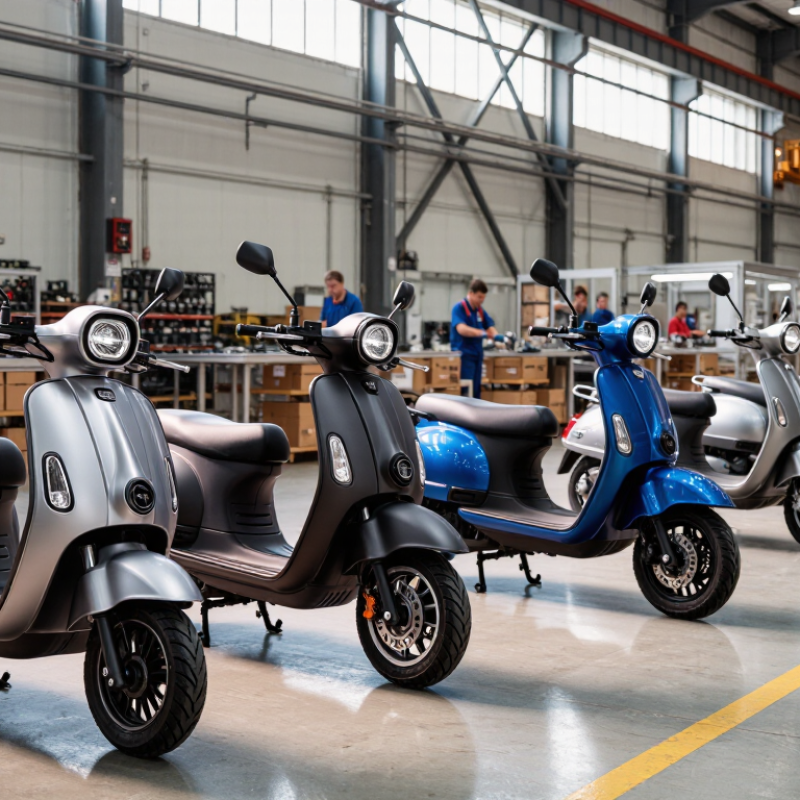
China has become a major sourcing hub for electric scooters, serving retailers, distributors, and mobility brands worldwide. This guide examines what makes China’s top electric scooter suppliers reliable, capable, and suitable for long-term cooperation. It also considers manufacturers producing models such as the Scuter Electric Scooter, including compact commuter designs and higher-range urban vehicles.

A strong supplier should offer more than attractive factory prices. Buyers need clear battery specifications, tested motor systems, stable production capacity, and practical quality-control procedures. Factory experience matters, especially when suppliers manage frame welding, controller installation, waterproofing, and final road testing. Certifications and test reports should be verified carefully, rather than accepted from a sales brochure. Ask about battery cells, charging protection, spare parts, warranty handling, and delivery schedules. Small details often reveal operational maturity.

No ranking is perfect. A large factory may provide scale but limited customization. A smaller manufacturer may respond faster, yet struggle with sudden demand. This trade-off deserves attention. Buyers should compare samples, inspect packaging, review customer feedback, and request an independent factory audit when possible. Transparent communication is another important signal. Reliable suppliers explain limitations instead of promising everything. They should also understand the safety and import requirements of the destination market.

The best supplier depends on your product goals, budget, order volume, and service expectations. Careful comparison reduces avoidable risks. It also creates stronger partnerships. Mistakes can still happen. The key is discovering them before mass production begins.
What Are China Top Electric Scooter Suppliers?

Electric Scooter Manufacturing in China: An Industry Overview

What Are China Top Electric Scooter Suppliers?

Electric scooter manufacturing in China is concentrated around mature production clusters, especially in coastal industrial provinces. These regions provide nearby suppliers for frames, motors, controllers, tires, displays, and battery systems. A capable manufacturer usually offers OEM or ODM development, sample testing, production control, and export support.

Experienced buyers should inspect welding quality, cable protection, charging performance, and water resistance. Factory capacity alone does not prove reliability. Consistent records matter more.

Tips:

Request a product sample before placing a large order. Check battery documentation, motor ratings, inspection reports, and warranty procedures. Ask how rejected parts are recorded. Visit the assembly line when possible. A clean showroom can still hide weak process control.

Strong suppliers maintain traceable quality checks from incoming materials to final packing. They test brakes, lights, folding mechanisms, and battery protection systems. They should also explain which standards apply in the destination market.

Local sourcing can reduce delays, but it may create uneven component quality. This is where supplier audits become valuable.

I have found that simple production questions often reveal more than polished presentations. For example, ask who approves a failed battery pack. If the answer is unclear, the system may be immature.

Manufacturing is improving quickly, yet communication, documentation, and after-sales cooperation still need careful review.

Key Types of China Electric Scooter Suppliers

What Are China Top Electric Scooter Suppliers?

Key Types of China Electric Scooter Suppliers

China’s electric scooter supply chain includes several distinct supplier types. OEM factories build products from an importer’s drawings and specifications. ODM manufacturers offer ready-developed platforms, then adjust colors, batteries, displays, and packaging. Trading companies combine products from several factories. They can simplify sourcing, but production visibility may be weaker.

The scale is substantial. The International Energy Agency’s Global EV Outlook 2024 estimated around 25 million electric two- and three-wheelers were sold worldwide in 2023. China remained the dominant market and manufacturing base. The China Bicycle Association also reported domestic electric-bicycle output above 40 million units in 2023. These figures explain why Chinese suppliers often provide mature frames, controllers, battery packs, and motor systems at different price levels.

A practical buyer should separate supplier claims from verified capability. Factory-direct does not always mean better. Request production videos, sample test records, battery safety documents, and clear warranty terms. Check whether the stated range was measured with a rider, a fixed load, or ideal laboratory conditions. That detail matters.

Component-integrated factories suit buyers needing stable assemblies and fewer coordination problems. Specialist exporters may understand packaging, documentation, and destination-market requirements more clearly. Trading companies can be useful for small orders, although their margins and technical control deserve scrutiny. This classification is not perfect. Some suppliers fit two categories, and factory ownership can change. A careful audit remains necessary.

What Are China’s Top Electric Scooter Suppliers? — Key Supplier Types

The chart compares indicative minimum order quantity ranges commonly associated with major China electric scooter supplier types. OEM/ODM manufacturers usually require larger orders for customization, while stock wholesalers and trading companies generally support smaller trial orders. Actual terms vary by product specifications, certification requirements, and customization level.

How to Evaluate Supplier Quality, Certifications, and Reliability

China remains the world’s largest electric two-wheeler manufacturing base. The IEA’s Global EV Outlook 2024 reports that electric two- and three-wheelers represented more than half of new sales in China during 2023. This scale creates choice, but not every supplier offers equal quality. Buyers should examine production records, not polished catalogs.

Request ISO 9001 certificates, then verify their registration and scope independently. Product safety needs separate evidence. For scooters, check testing against standards such as EN 17128, UL 2272, or relevant national requirements. Battery packs should include documented BMS protection, cell traceability, thermal testing, and transport test reports under UN 38.3. A certificate without a matching model number is a warning.

Audit the factory or use an independent inspection agency. Review incoming-cell checks, welding controls, water-ingress testing, and final inspection rates. Ask for three recent batch reports. Compare the reported defect rate with warranty claims. The figures may not match. That is useful evidence, not an automatic rejection.

Reliability also depends on spare parts and software support. Confirm motor, controller, charger, and battery availability for at least two years. Test a production sample after vibration, braking, hill climbing, and repeated charging. One sample proves little. The World Bank’s Electric Mobility Development report emphasizes that total ownership costs depend heavily on maintenance and battery life, not only purchase price. A low quotation can become expensive when support is weak.

Leading Chinese Electric Scooter Supplier Profiles

China’s leading electric scooter suppliers often combine in-house assembly with specialized component sourcing. A credible supplier profile should show factory experience, engineering depth, and transparent production records. Look for facilities with controlled welding areas, battery testing rooms, and clear inspection procedures. A sample scooter should feel stable on uneven pavement, not only on a polished showroom floor.

Established suppliers usually support private-label projects, fleet orders, and regional specifications. Their engineers can adjust motor output, braking systems, lighting, deck size, and folding mechanisms. Ask for battery cell documentation, charger specifications, and test reports suited to your target market. Quality teams should inspect incoming parts, finished scooters, and packed units. Photographs help, but live video inspections reveal more. I have found that small details matter, such as cable routing, screw alignment, and water-resistant connectors.

Supplier reliability also depends on communication after payment. Responsive teams explain production delays instead of hiding them. They provide replacement-part lists and practical maintenance guidance. Some factories offer impressive samples but weaker mass production. That risk deserves attention. A careful buyer should compare several samples, record braking distance, check charging temperature, and test folding joints repeatedly. No factory is perfect. Even a professional supplier may need clearer documentation or stronger packaging after real-world feedback.

How to Choose the Right Supplier for Your Market

Choosing a top Chinese electric scooter supplier is not about factory size alone. It is about market fit, evidence, and controlled risk. The IEA’s Global EV Outlook 2024 identifies China as the dominant market for electric two-wheelers. That scale creates advantages, but quality can still vary between factories.

Ask for recent production records, battery test reports, and traceable component data. Check whether the supplier follows ISO 9001 practices and can support your market’s safety requirements. For European sales, review applicable EN standards and battery transport rules. Other regions may require different certifications. Do not accept copied certificates without verification.

Inspect a working sample under realistic conditions. Test braking, water resistance, charging temperature, folding joints, and display accuracy. A clean showroom sample proves very little. Confirm cell origin, warranty limits, spare-part availability, and software support in writing. The World Bank’s Global Road Safety Facility emphasizes safer vehicle design and responsible road use; these points should influence your specification.

Look beyond the quoted unit price. Compare minimum order quantity, tooling fees, lead time, packaging strength, and failure-handling procedures. A lower price may hide weaker batteries or expensive replacement parts. No supplier scores perfectly. A factory may pass an audit yet miss a delivery window. That uncomfortable gap deserves attention. Use staged orders, independent inspections, and measurable acceptance criteria before scaling. A supplier that answers difficult questions clearly is often more valuable than one offering the fastest promise.

What Are China Top Electric Scooter Suppliers? - How to Choose the Right Supplier for Your Market

Supplier screening benchmarks for electric scooter importers, distributors, retailers, and private-label buyers.

Supplier Category Typical Order Quantity Typical Production Lead Time Common Scooter Configuration Battery and Motor Options Key Compliance Documents Best Fit for Main Verification Point
Stock Model Exporter 10–50 units per model 7–20 calendar days, subject to inventory Foldable commuter scooters with solid or pneumatic tires; basic LED display and electronic braking 250–500 W nominal motor; 36 V or 48 V lithium-ion battery; approximately 15–40 km claimed range CE documentation, UN38.3 test summary, battery MSDS/SDS, product user manual, charger test records Small retailers, product testing, and pilot market launches Confirm actual warehouse stock, battery production date, and spare-parts availability
OEM Assembly Supplier 100–500 units per configuration 30–60 calendar days after specification approval Existing platform with customized color, packaging, decals, display language, and accessory bundle 350–800 W nominal motor; 36 V, 48 V, or 52 V battery systems; approximately 25–55 km claimed range CE or UKCA technical file support, EMC and LVD reports where applicable, UN38.3, IEC 62133-2 evidence, RoHS declaration Importers seeking private-label products with controlled investment Check whether test reports match the exact model, battery pack, charger, and factory entity
ODM Product Developer 300–1,000 units per project 60–120 calendar days, including engineering and pilot production Customized frame, deck, folding system, dashboard, firmware, lighting, and packaging 500–1,000 W nominal motor; 48 V or 52 V battery; approximately 30–70 km claimed range depending on test conditions Design risk assessment, EMC/LVD documentation where applicable, UN38.3, IEC 62133-2, RoHS, ingress-protection test evidence if advertised Established distributors and brands requiring differentiated products Define tooling ownership, firmware rights, warranty responsibility, and change-control procedures
Performance Scooter Manufacturer 50–300 units per configuration 35–75 calendar days after component confirmation Dual suspension, larger pneumatic tires, hydraulic or mechanical disc brakes, higher-load frame designs 800–2,000 W combined nominal motor rating; 48–72 V battery systems; range claims commonly depend on rider weight, speed, and terrain UN38.3, battery safety evidence, charger certification, EMC documentation, brake and structural test records Specialty retailers and markets with demand for high-performance mobility products Verify continuous motor rating, braking distance, thermal protection, and maximum-load test results
Fleet and Rental Supplier 200–2,000 units per deployment 60–120 calendar days, including software and fleet configuration Reinforced frame, swappable or protected battery, GPS/IoT option, tamper-resistant hardware, fleet dashboard integration 350–800 W nominal motor; 36 V or 48 V battery; range and operating time specified by route, payload, and duty cycle UN38.3, battery transport documents, EMC evidence, IP test report when claimed, cybersecurity and data-processing documentation where applicable Shared-mobility operators, campuses, resorts, and corporate fleets Evaluate battery-swapping cycle life, uptime targets, API access, repair procedures, and replacement-parts supply
Regulated-Market Specialist 100–500 units per approved model 45–90 calendar days, depending on country-specific testing Models adapted to local speed limits, lighting rules, reflectors, braking requirements, and labeling standards Commonly 250–500 W nominal motor with speed-limited firmware; battery capacity selected for local range requirements Market-specific conformity assessment, CE or UKCA where required, UN38.3, IEC 62133-2 evidence, RoHS, EMC and charger documentation Distributors entering Europe, the United Kingdom, Australia, or other regulated markets Confirm legal road-use requirements, speed settings, plug type, label language, and importer obligations
After-Sales-Focused Supplier 50–300 units per model 30–60 calendar days for repeat orders Standardized platform designed for easy replacement of tires, brake parts, controllers, displays, and folding components 250–800 W nominal motor; replaceable battery and controller assemblies; range specified using a documented test method Parts catalogue, repair manuals, warranty policy, UN38.3, charger documentation, and applicable conformity records Retailers prioritizing low warranty cost and long product service life Request a 12-month spare-parts forecast, response-time commitment, and warranty-return process
Important purchasing note: The figures above are practical market-screening benchmarks rather than rankings of specific companies. Confirm the exact specification, certification scope, battery chemistry, test method, delivery terms, warranty coverage, and legal requirements for the destination market before placing an order. Advertised range, speed, payload, and charging time can vary significantly with rider weight, terrain, temperature, tire pressure, riding mode, and local regulations.

CONTACT US