
What Are the Top Dinosaur Diorama Supplies?

Building a convincing prehistoric scene begins with choosing the right Dinosaur Diorama Supplies. The best materials do more than decorate. They help recreate scale, texture, habitat, and believable animal behavior.

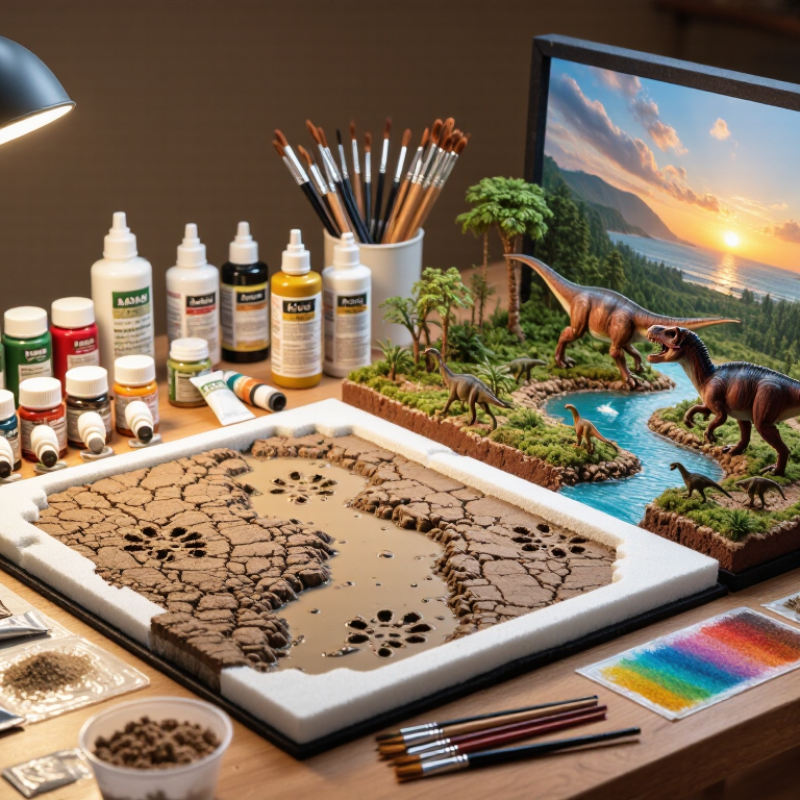
Dr. Thomas R. Holtz Jr., a respected paleontologist and dinosaur researcher, offers a useful principle: “A good dinosaur display should make evidence visible, not hide it behind spectacle.” That idea matters when selecting every component. Foam board creates stable terrain. Air-dry clay shapes muddy banks, cracked earth, and raised footprints. Acrylic paints add layered color without making the scene appear artificial. Fine sand, gravel, static grass, and preserved moss can suggest a dry floodplain or dense forest floor.

Scale is essential. A small plant beside a large theropod should look physically plausible. Otherwise, the whole scene feels confused.

Lighting changes everything.

Warm LEDs can imitate late-afternoon sunlight, while cooler lighting supports a misty coastal setting. Clear, non-toxic adhesive helps secure figures without leaving distracting marks. A matte sealant protects painted surfaces and reduces unwanted shine.

Still, no diorama is perfect. Beginners often add too much foliage, making the animals disappear. I have also seen beautifully painted figures placed on flat, empty ground. That mistake is easy to overlook. Leave room for revision. Test the composition before gluing anything permanently.

This guide examines the top Dinosaur Diorama Supplies for beginners, educators, collectors, and museum-style model builders. It focuses on practical performance, visual realism, durability, and responsible material choices. The goal is not simply to build a colorful display. It is to create a small world that rewards careful observation.
What Are the Top Dinosaur Diorama Supplies?

Core Materials for Building a Dinosaur Diorama

Core materials determine whether a dinosaur diorama feels educational or merely decorative. Start with a rigid base, such as sealed foam board, plywood, or thick recycled card. A 30-by-20-centimeter base suits one small scene and remains easy to handle. Use lightweight air-dry clay for slopes, riverbanks, and exposed rock. It is easier to reshape than plaster, although it can crack when applied too thickly.

Surface texture gives the scene credibility. Fine sand, crushed cork, small pebbles, and dried moss can represent soil, stone, and vegetation. Keep natural materials clean and fully dry. Water-based acrylic paint works well for layered ground colors. Apply dark brown first, then brush lighter tones across raised textures.

According to Grand View Research’s 2024 arts and crafts market report, the sector continues to expand through accessible, hands-on creative activities. That trend supports using affordable, flexible materials rather than specialized equipment.

The dinosaur figures need stable support. Thin wire, removable modeling putty, or hidden wooden pegs can prevent tipping. Avoid placing every animal at the same height; uneven terrain creates stronger depth.

A warm white light can reveal footprints and ridges, but heat near paper or dried plants deserves caution. Educational guidance from the Smithsonian emphasizes accurate scale and habitat context in presenting prehistoric life.

Scale is easy to underestimate. I often make the plants too large. Sketching the scene before gluing anything can expose that mistake. Leave a small viewing path around the base, so details remain visible without touching fragile surfaces.

Terrain Supplies for Creating a Prehistoric Landscape

What Are the Top Dinosaur Diorama Supplies?

Terrain Supplies for Creating a Prehistoric Landscape

Creating a prehistoric landscape starts with terrain, not the dinosaur figures. A rigid foam board makes a light, stable base for most small dioramas. Shape gentle ridges with a craft knife, then cover exposed edges with air-dry clay. My first slope looked too clean. Natural ground needs uneven transitions.

Mix fine sand, small gravel, and crushed bark to build believable texture. Use diluted PVA glue to secure each layer, and let it dry completely before adding more. Dark soil belongs in hollows, while lighter dust works on raised paths. Acrylic earth tones help separate stone, mud, and dry vegetation. Keep the palette limited. Too many colors make the scene look artificial. Add shallow puddles with clear, water-based craft medium, but test it on scrap material first.

For plants, combine static grass, dried twigs, paper leaves, and tiny roots. Place taller growth behind the dinosaur to create depth without hiding its silhouette. A few fallen branches can suggest age and movement. Avoid filling every space. Empty ground gives the eye a resting point. I still overbuild rocks sometimes, and the landscape becomes crowded. Check scale carefully: a pebble beside a small dinosaur should not resemble a boulder. Wear eye protection when cutting foam or crushing texture materials, and work with good ventilation. Secure loose pieces before handling the finished display.

Dinosaur Figures and Scale-Matching Accessories

Dinosaur figures and scale-matching accessories determine whether a diorama feels believable. A 1:35 dinosaur needs smaller trees, fences, rocks, and human figures than a 1:12 model. Measure the dinosaur’s shoulder height first. Then match every accessory to that reference. A tiny bush beside a large predator can break the scene instantly. I still misjudge scale when accessories are sold separately. That mistake is surprisingly common.

Grand View Research’s 2024 Toys Market Size report estimated the global toy market at about $108.7 billion in 2023. Its projected growth reflects continuing interest in imaginative, hands-on play. Circana reported an 8% decline in U.S. toy sales during 2023, making reusable supplies a practical choice. Durable foam terrain, washable paint, and modular trees can support repeated redesigns. ASTM F963-23 also emphasizes safety requirements for children’s toys, so avoid sharp wire, loose magnets, and brittle parts.

Tips: Choose one scale. Compare footprints, eye levels, and tree heights before gluing. Use a ruler beside the figures. A 30-centimeter tree may look realistic with a small species, but absurd beside a towering predator. Leave some empty ground, too. Crowded scenes often look less natural. For advanced detail, press three-toed tracks into damp modeling material, then vary their depth. Perfect symmetry feels artificial, although my first layouts still rely on it.

Tools for Constructing, Painting, and Detailing the Scene

What Are the Top Dinosaur Diorama Supplies?

A convincing dinosaur diorama begins with a rigid base, not the dinosaur itself. Use foam board, air-drying clay, craft wire, and lightweight filler for terrain. Grand View Research’s 2024 Arts and Crafts Market report projects a 5.4% annual growth rate through 2030. That growth reflects rising interest in hands-on creative projects, including miniature scene building. A sharp craft knife, metal ruler, sanding blocks, and a cutting mat improve control. Always cut away from your hands. Small mistakes still happen.

For painting, prepare acrylic colors, fine brushes, a mixing palette, and a water container. Use thin layers for skin, shadows, and dusty ground. A 2023 report from the U.S. Bureau of Labor Statistics shows continued household spending on entertainment supplies, supporting the value of accessible, low-cost hobby materials. For detailing, add static grass, fine sand, crushed cork, dried twigs, and clear resin for shallow water. Tweezers help place tiny eggs or footprints. A pin vise creates clean holes for wire supports. Work under bright, neutral light. It reveals uneven paint. My own early scenes often looked too clean, because I added texture late. Realistic results need scattered debris, softened edges, and restrained color variation. Avoid loose particles around young children and follow product safety instructions.

What Are the Top Dinosaur Diorama Supplies?

Typical starter-kit cost by supply category for a small 30 × 20 cm dinosaur scene

Acrylic paints, cutting tools, brushes, adhesives, texture materials, sculpting materials, and foliage are the core supplies for constructing, painting, and detailing a dinosaur diorama. Values are indicative generic-retail estimates in US dollars and may vary by quantity and location.

Finishing Supplies for Protecting and Displaying the Diorama

Protecting a dinosaur diorama requires more than a final coat of paint. A matte, water-based varnish can reduce glare and shield painted skin from light dust. Test it on a hidden corner first. Some finishes darken soil, foam, or dry-brushed scales.

The American Alliance of Museums’ 2023 Museum Facts report estimated 850 million museum visits in the United States during 2022. That scale highlights a practical issue: displays must survive repeated viewing, cleaning, and handling nearby. Use a clear acrylic cover with UV-filtering protection, leaving space above tall specimens. The National Park Service Museum Handbook recommends stable temperature and relative humidity for collection care, although a home display rarely achieves museum-level control. A small digital hygrometer still helps. Aim for steady conditions, not dramatic daily swings. Add silicone feet beneath the base, an acid-free information card, and a concealed cable-free light source when possible. Adhesive felt can scratch wood.

Tips: Dust with a soft artist brush, then use low-pressure air from a distance. Never spray cleaner onto the cover. Wipe the acrylic with a clean microfiber cloth. Check loose teeth, tails, and plant stems every few months.

I once sealed a scene too quickly and trapped a fingerprint under the varnish. It looked minor, but angled light made it obvious. Slowing down matters. A removable cover also improves repairs, even if it slightly reduces the diorama’s open, natural feeling. Foam-backed storage boxes can protect the model during relocation, but they should not press against fragile details.

CONTACT US