Top Tips for Choosing Auto Parts Bearings for Your Vehicle?
Choosing the right Auto Parts Bearings for your vehicle can be daunting. Each component plays a crucial role in overall performance. The right bearings can enhance your car's efficiency and ensure smooth operation. However, many overlook their importance, focusing instead on more glamorous aspects of the vehicle.
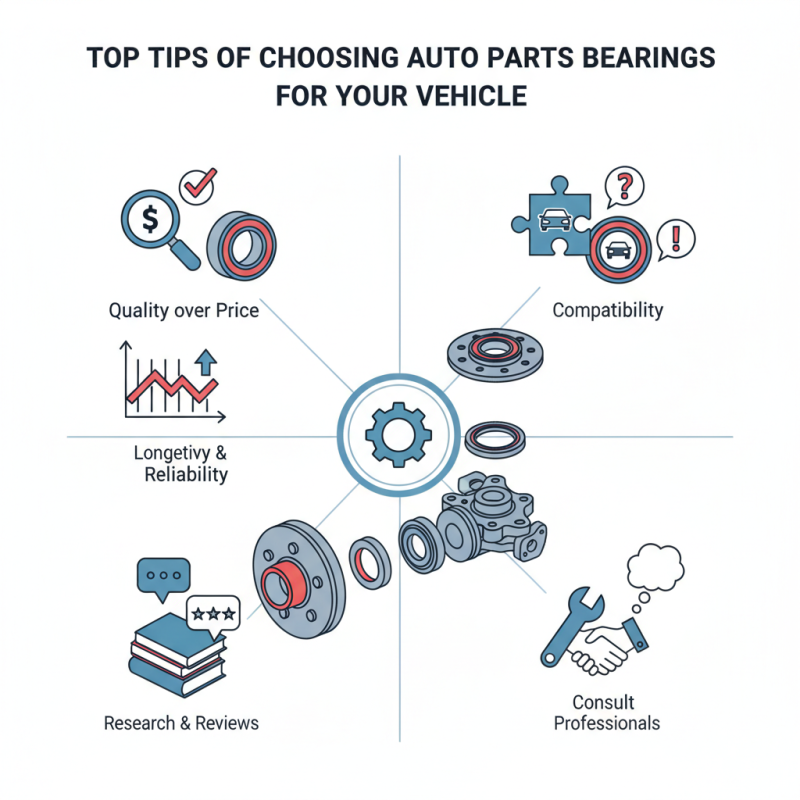
When selecting Auto Parts Bearings, consider quality over price. Cheap options may save money upfront but can lead to expensive repairs down the line. Take the time to research brands and read reviews. Users often share their experiences, highlighting both the pros and cons of different products. Failures in bearings can happen, and you should be aware of the signs.
Keep in mind that not all auto parts fit every vehicle. Compatibility is essential. It’s easy to assume a part will work because it looks right, but verification is necessary. Consulting with professionals can provide clarity. Sometimes, what seems like an obvious choice can lead to frustrating issues later. Choose wisely and invest in quality Auto Parts Bearings for longevity and reliability.
Understanding the Different Types of Auto Bearings Available
When selecting auto bearings, it's vital to understand the various types available. Different vehicles require specific bearings to function efficiently. Ball Bearings are common and versatile. They handle both radial and axial loads well. They are often used in wheel hubs and electrical components.
Roller bearings differ slightly, having cylindrical rollers that distribute weight. These are excellent for heavy loads, providing better stability. However, they can be bulkier. Needle bearings are a subtype, ideal for tight spaces. They enable smooth movement with minimal friction.
Each bearing type serves a unique function. Not all bearings are interchangeable. Using the wrong type can lead to premature failure. This can waste your money and cause safety hazards. It’s essential to consider your vehicle’s unique requirements before making a selection. Some parts may seem similar but can behave differently under load. Understanding these differences can help you make a better choice.
Top Tips for Choosing Auto Parts Bearings for Your Vehicle
This chart illustrates the distribution of different types of auto bearings in the market. Understanding the prevalence and application of each type can assist vehicle owners and repair professionals in making informed decisions when selecting replacement parts.
Key Features to Consider When Selecting Auto Parts Bearings
When selecting auto parts bearings for your vehicle, consider several key features. The material is crucial. Bearings can be made from steel, ceramic, or composite materials. Steel is common, but it can rust. Ceramic options resist heat well and last longer. Composites are lighter but may not perform under stress.
Size and fit also matter. Measure the existing bearings accurately. A slight mismatch can lead to issues like vibrations or premature wear. Pay attention to the specifications. Check the load capacity and speed rating. These ensure the bearing can handle your vehicle's demands.
One important tip is to look for seals or shields. These keep dirt and moisture out. This simple feature can enhance the lifespan of the bearing. Don't overlook the noise level too. A quiet bearing usually indicates quality. Pushing through noise could mask underlying problems.
Choosing the right bearings doesn’t have to be daunting. Just take your time and ensure you gather all the right information. Your vehicle will thank you for it.
Top Tips for Choosing Auto Parts Bearings for Your Vehicle
| Characteristic | Description |
| Material | Common materials include steel, ceramic, and plastic composites. |
| Bearing Type | Choice between ball bearings, roller bearings, or tapered bearings based on load requirements. |
| Load Rating | Ensure proper load handling capacity based on the vehicle's application. |
| Seals & Shields | Presence of seals or shields to protect against contaminants and retain lubrication. |
| Temperature Rating | Verify recommended operating temperature ranges for the bearing materials. |
| Lubrication Type | Select between grease and oil lubrication depending on application and service intervals. |
| Installation Ease | Consider design and dimensional specifications for ease of installation. |
How to Determine the Right Size and Fit for Your Vehicle's Bearings
When selecting bearings for your vehicle, determining the right size and fit is crucial. Incorrect sizing can lead to premature wear and performance issues. According to industry reports, up to 20% of vehicle repairs are related to bearing failures stemming from poor fit. This statistic highlights the importance of accuracy in measurement.
To ensure you choose the correct bearings, begin with precise measurements of your current components. Use calipers or a micrometer for the most reliable results. Pay attention to both inner and outer diameters. A mere 0.1 mm discrepancy can significantly impact functionality. Also, consider the width of the bearing; it is as essential as the diameter.
One common mistake is overlooking the vehicle’s specific requirements. Factors such as load capacity and operating conditions also play a role. For instance, heavy-duty applications demand different bearing specifications than standard uses. Professional guidelines suggest matching bearings not only by size but also by design criteria to improve performance longevity. Adjustments may be necessary for the best fit, so don’t hesitate to consult technical manuals for your vehicle. Adjusting these parameters can deepen your understanding of the components’ effectiveness.
Material Choices for Auto Bearings: Pros and Cons
When selecting auto bearings, material choice plays a significant role. Steel is a popular option due to its strength and affordability. However, steel can be prone to rust if not properly treated. Many vehicle owners overlook this detail, resulting in premature wear and failures.
On the other hand, ceramic bearings offer surprising benefits. They are lighter and exhibit excellent resistance to corrosion. This can lead to better fuel efficiency and longer durability. Yet, ceramics can be fragile. Some users report cracking under heavy loads. This potential downside must be carefully considered.
Additionally, plastic bearings are gaining traction. They are lighter and often quieter than their metal counterparts. However, their load-bearing capacity is often less robust. Many fail to realize that not all applications suit plastic bearings.
Understanding the requirements of your vehicle is crucial. Balancing pros and cons is vital. Avoiding a one-size-fits-all mentality will surely lead to better choices.
Tips for Evaluating Quality and Performance of Bearings
When selecting auto parts bearings, evaluating their quality and performance is crucial. Quality bearings ensure your vehicle runs smoothly. Look for materials that resist wear and corrosion. Steel and ceramic are common choices. A recent industry report indicates that high-quality bearings can reduce friction by up to 30%. This translates to better fuel efficiency and longevity.
Performance testing is key to understanding a bearing’s capabilities. Check for certifications like ISO and ABEC ratings. These standards indicate precision and reliability. Additionally, bearings with a higher load rating can handle more stress, vital for heavy-duty applications. Research shows that underperformance in bearings can lead to mechanical failures, costing businesses thousands in repairs.
Pay attention to noise levels as well. High-quality bearings typically produce less noise during operation. This can indicate a smoother performance. Sometimes, cheaper options may seem appealing. However, they often lack the durability necessary for long-term use. Consider the environment too. Bearings exposed to extreme temperatures need special materials. Investing in the right bearings can lead to significant savings in maintenance and repairs down the line.