
What Are the Top Punching Machine Types in 2026?

Choosing a Punching Machine in 2026 is less about finding one universal winner and more about matching the machine to the part, material, and production volume. A shop cutting short runs of stainless-steel panels has different needs from a high-volume line punching thin electrical components. Tool changes, required accuracy, floor space, and maintenance can matter as much as rated tonnage.

Industry reports offer useful context, but they do not rank machine types for every factory. Grand View Research’s Metal Stamping Market analysis describes demand across sectors such as automotive, electronics, and industrial equipment. Those applications help explain why manufacturers compare mechanical presses, hydraulic presses, servo-driven systems, turret punch presses, and CNC punching machines. Each makes different trade-offs in speed, flexibility, energy use, and setup time. Buyers should verify performance against their own materials and production data.

Automation also shapes the 2026 decision. The International Federation of Robotics’ World Robotics 2024 report recorded about 4.28 million industrial robots operating worldwide in 2023, a 10% increase from 2022. That figure covers industrial robots broadly, not punching machines specifically. Still, it highlights why integration with feeding, handling, and inspection systems deserves attention. Details matter. A fast press may lose its advantage if changeovers are slow or scrap rises. And no machine type is best in every shop. The comparison below outlines the leading options, their practical strengths, and the questions worth asking before purchase. One caution: published market forecasts rarely reveal the shop-floor compromises behind a machine’s quoted specifications.
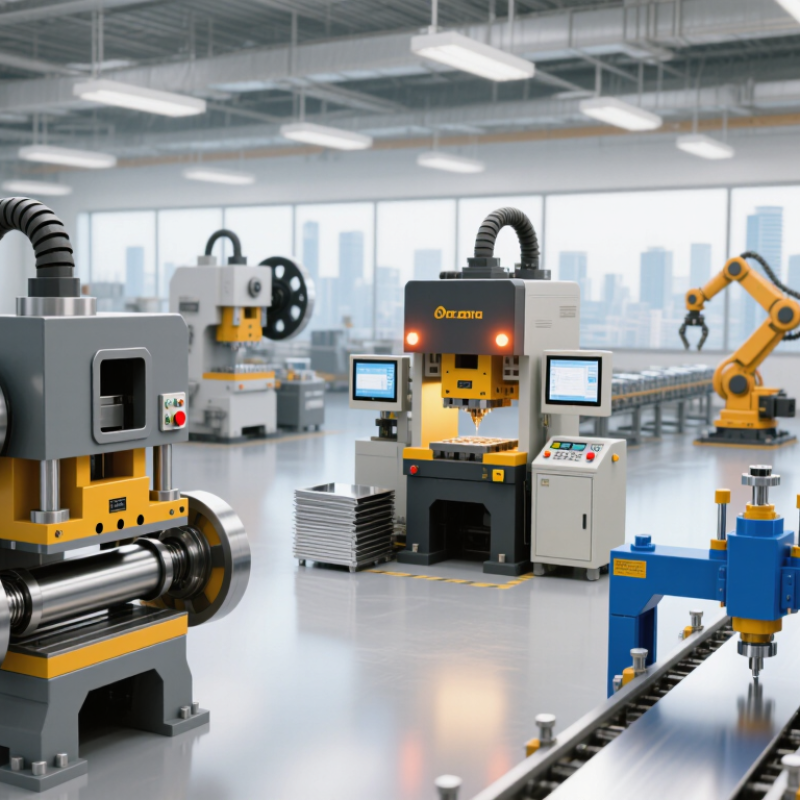
What Are the Top Punching Machine Types in 2026?

How Punching Machines Work and Where They Are Used

What Are the Top Punching Machine Types in 2026?

A punching machine drives a punch through sheet material into a matching die. The punch shears out a hole or shape, while the die supports the workpiece and clears the removed slug. Mechanical, hydraulic, and servo-electric presses differ in how they deliver force and control stroke speed. CNC turret machines add another option: a rotating tool station selects punches for varied patterns. Operators use them to make cabinet panels, brackets, appliance parts, and automotive components. Small details matter. Incorrect die clearance can leave rough edges or distort thin sheet.

Punching is especially useful when shops need repeatable features at production scale. The World Steel Association’s World Steel in Figures 2024 reports 1,888.2 million tonnes of crude steel production in 2023. That figure describes the scale of steelmaking, not punching demand, but it helps explain the need for efficient downstream fabrication. A punch press can produce holes, slots, and cutouts without routing every feature separately. Yet it is not ideal for every contour; complex shapes may require secondary cutting or finishing.

Tips: Match punch and die clearance to material thickness and type. Check tool wear regularly. A quick setup may save time, but poor alignment can create burrs and scrap. Record settings for repeat jobs, then verify the first few parts by measurement.

Mechanical Punching Machines for Fast, High-Volume Production

Mechanical Punching Machines for Fast, High-Volume Production

Mechanical punching machines suit repeatable parts made in large batches. A motor spins a flywheel, storing energy for each stroke. The crank or eccentric mechanism then drives the slide through a fixed cycle. At high speeds, this can support steady output for brackets, panels, and small stamped components.

The scale of the market helps explain the demand. MarketsandMarkets estimated the global metal stamping market at USD 214.3 billion in 2023, with a forecast of USD 276.6 billion by 2028. That estimate covers more than mechanical presses, but it signals continued demand for stamped parts. Output depends on the whole line, too: feeder accuracy, die setup, material thickness, and planned changeovers all matter. Small errors add up.

For long runs, compare gap-frame and straight-side presses against the part’s size, force needs, and tolerances. Check rated tonnage at the point in the stroke where the die needs it; maximum tonnage alone can mislead. A well-matched press can cycle quickly. But speed is not the only target. Inspect clutch-and-brake condition, lubrication, and die wear on a documented schedule, and use suitable guarding and operator training. One caveat: fast presses can magnify setup mistakes. That deserves a second look before increasing stroke rate.

What Are the Top Punching Machine Types in 2026?

Typical operating-rate ranges for machines used in fast, high-volume production

Mechanical stamping presses and high-speed presses are shown in strokes per minute; turret punch presses are shown in hits per minute. These approximate industry ranges vary by machine configuration, tooling, material, and operating conditions, so they are not directly equivalent.

Hydraulic Punching Machines for Powerful, Controlled Forming

Hydraulic punching machines suit jobs that need high force, steady pressure, and careful control through thick or layered sheet metal. Operators can adjust pressure and stroke speed to reduce distortion around the cut. On a shop floor, that control is visible: the sheet stays flatter, while the punch moves through material with less abrupt impact. Setup still matters. Poorly matched tooling can cause burrs, noise, and extra finishing work.

Grand View Research estimated the global metal stamping market at USD 231.8 billion in 2023 and projected a 4.4% compound annual growth rate through 2030. That figure covers stamping broadly, not hydraulic punching machines alone, so it signals demand rather than machine sales. For buyers, the useful comparison is cycle time, material thickness, accuracy, and energy use under real workloads. Hydraulic systems can deliver strong, controllable force, but they may consume energy while holding pressure or waiting between cycles. That distinction matters. A practical trial using the intended material and die often reveals more than a catalog rating. One caution: high tonnage is not automatically better; it can increase tooling wear and operating costs when the job needs less force.

What Are the Top Punching Machine Types in 2026? — Hydraulic Punching Machines for Powerful, Controlled Forming
Machine Type Typical Rated Force Typical Workpiece Control and Setup Common Applications Key Consideration
Portable Hydraulic Hole Punch Approximately 10–30 metric tonnes Sheet metal, flat bar, and small structural sections; capacity depends on material strength, thickness, and hole size. Handheld or pump-connected hydraulic unit; manual positioning is common. On-site installation, electrical enclosures, maintenance, and low-volume fabrication. Portable models are convenient for field work, but their throat depth and production rate are usually limited.
C-Frame Hydraulic Punch Press Approximately 20–200 metric tonnes Sheet, plate, and formed components within the machine’s throat and bed capacity. Manual, semi-automatic, or programmable controls; tooling is mounted between the ram and bolster. General fabrication, blanking, piercing, and forming operations. The open-sided frame provides convenient access; heavier or off-center loads must remain within the machine’s rated limits.
H-Frame Hydraulic Punch Press Approximately 100–1,000 metric tonnes or more Thick plate, large components, and heavy-duty workpieces, subject to tooling and bed specifications. Typically stationary, with powered controls and adjustable stroke or pressure settings. Heavy fabrication, large-hole punching, and operations requiring high forming force. The rigid frame suits demanding loads, but the machine requires substantial floor space and appropriate workpiece handling.
Hydraulic CNC Turret Punch Press Often approximately 20–50 metric tonnes; varies by machine design Thin-to-medium sheet metal, commonly used for repeatable flat-sheet parts. CNC-controlled axes position the sheet; a tool turret or tool stations enable programmed punching sequences. Enclosures, cabinets, panels, and batches of parts with multiple hole shapes or patterns. Automation improves repeatability and throughput; tool layout, sheet size, and programming affect productivity.
Hydraulic Ironworker Punch Station Commonly approximately 40–200 metric tonnes Flat bar, angle, channel, and other structural steel sections within the machine’s capacity. Hydraulic power unit with a dedicated punch station; some machines combine punching with shearing and notching stations. Structural steel fabrication, maintenance shops, and general metalworking. Check the punch throat, die opening, and workpiece geometry; rated force alone does not determine maximum thickness.
Multi-Station Hydraulic Punching System Varies by station and frame; selected to match the required operation Repeated parts or assemblies requiring several hole sizes, positions, or forming steps. Multiple tools or stations may be operated manually, with fixtures, or through automated material handling. Higher-volume production and repeatable component processing. Station layout and tooling reduce handling between operations, while setup flexibility depends on the system configuration.
Note: Force ranges are indicative examples, not universal specifications. Actual capacity depends on the machine model, material grade, stock thickness, punch and die geometry, throat depth, and operating conditions. Confirm the manufacturer’s capacity chart and applicable safety requirements before selecting or operating equipment.

Servo-Electric Punching Machines for Precision and Energy Efficiency

Servo-electric punching machines are a leading choice when accuracy and energy use matter. A servo motor controls the ram’s movement, allowing operators to adjust stroke speed and position for different jobs. This can help produce clean, repeatable holes in thin sheet metal and reduce unnecessary energy use during pauses. The exact savings depend on the machine, material, and production cycle. That matters.

For a workshop, precise control can also reduce setup adjustments when switching between hole patterns. Operators still need suitable tooling, correct clearance, and secure sheet support; the machine cannot compensate for poor setup. Watch the first few parts for burrs or shifted holes before running a full batch. One limitation is worth noting: a servo-electric model may not suit every force requirement or production budget. Compare its rated capacity and duty cycle with your actual work.

Tips: Test a sample sheet before production. Record the stroke settings, material thickness, and tool condition. Recheck them after a tooling change. Small notes can prevent repeated adjustments.

CNC Turret and Single-Station Punching Machines for Flexible Manufacturing

CNC turret and single-station punching machines serve different needs on flexible production floors. A turret holds multiple tools, letting operators switch between punches and dies without changing every tool by hand. With a well-planned program, one sheet can receive holes, slots, and formed features in a single setup. That can reduce handling time. It is not automatic magic: poor tool sequencing can still create delays or waste material.

Single-station machines use one tool position, making them practical for short runs, prototypes, or parts that need frequent design changes. Operators can change tooling to suit the next job, and the simpler setup may be easier to manage. But repeated tool changes add time when a part requires many features. Small shops should compare actual job mix, not just machine speed.

Flexible manufacturing depends on more than the punch itself. Check sheet size, material thickness, tool availability, programming skills, and how parts move to bending or finishing. A turret may suit steady batches with varied features, while a single station can handle occasional, changing work. Measure real cycle times on representative parts. Even then, estimates can miss awkward loading or scrap removal. Those details matter on a busy shift.

CONTACT US