
Top 10 Features of 180 Rotation Rotary Actuator Explained
The 180 Rotation Rotary Actuator is an essential device in many industries. This actuator plays a crucial role in automating movements. Its ability to rotate components by 180 degrees enhances efficiency in various applications. Engineers and technicians rely on its precision and reliability.
One of the standout features of the 180 Rotation Rotary Actuator is its compact design. Despite its small size, it delivers powerful performance. This balance of size and strength often surprises users. Additionally, the actuator's speed can be modified to fit specific tasks. While this flexibility is advantageous, it demands careful calibration and testing.
Durability also stands out as a vital attribute. The actuator withstands harsh conditions and continues to function effectively. However, over time, wear and tear can affect its performance. Regular maintenance is necessary, but not always prioritized. Users must reflect on their maintenance practices to ensure optimal functionality. The 180 Rotation Rotary Actuator is a remarkable technology, yet it requires thoughtful oversight to realize its full potential.
Understanding the 180-Degree Rotation of Rotary Actuators
Rotary actuators are essential components in automation. The 180-degree rotation capability is critical for various applications, from industrial machinery to robotics. In 2021, the global rotary actuator market was valued at approximately $2.1 billion, highlighting its importance in modern technology. These devices offer precise control over movement, which is crucial for tasks requiring accuracy.
The 180-degree rotation feature allows for efficient motion in tight spaces. It enables swift transitions between positions, vital in manufacturing contexts. Automation often demands quick responses. For instance, in assembly lines, a delay of even a second can lead to significant productivity losses. However, not all rotary actuators perform equally. Some may struggle with consistent torque delivery at full rotation, leading to the need for constant adjustments.
Users can face challenges with installation too. Proper alignment is critical; any misalignment can result in mechanical stress and premature failure. An average of 15% of installations encounter alignment issues. These factors might lead users to overlook the actuator's importance. Understanding the limits and capabilities helps in making informed decisions, ensuring optimal usage in applications demanding precision and reliability.
Key Components of a 180 Rotation Rotary Actuator
A 180 rotation rotary actuator is an essential component in various mechanical systems. Its design allows for precise movements, facilitating tasks in automation. The actuator primarily consists of several key components that enhance its functionality.
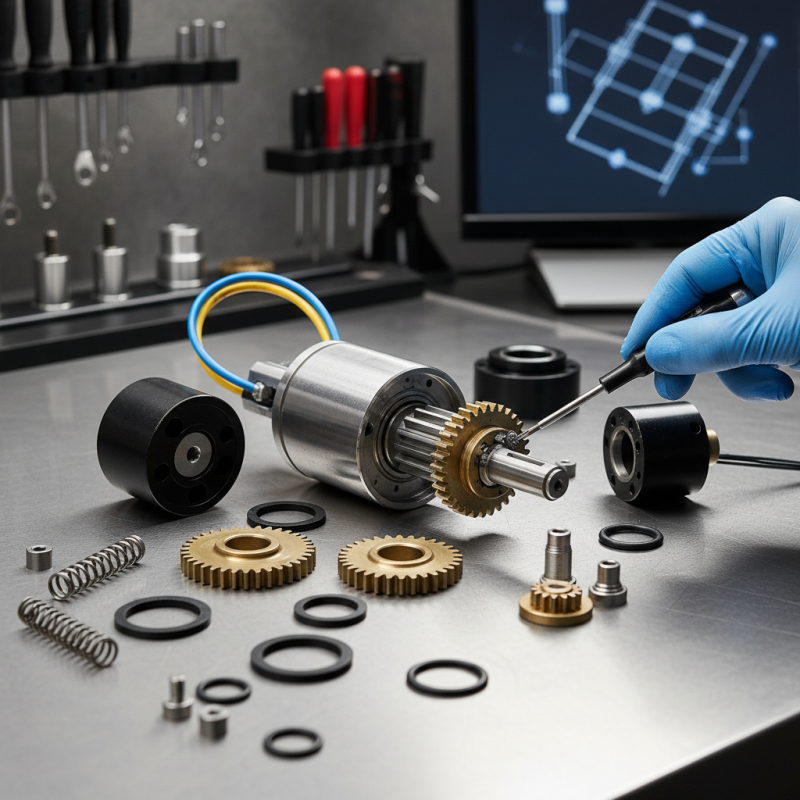
One crucial part is the gear mechanism. Gears play a vital role in converting rotational motion into desired angles. They ensure smooth transitions and can handle significant torque. The choice of materials for these gears can affect wear and tear. Often, metal gears are preferred for durability.
Another important component is the housing. It protects internal elements from external damage. A robust housing also minimizes vibration and ensures steady performance. However, designs that are too rigid may restrict movement. It's crucial to find a balance between protection and flexibility.
Additionally, the control system is significant for precision. Integrating sensors can enhance feedback, allowing for adjustments during operation. While automation offers many advantages, relying solely on electronic systems can sometimes lead to failures. Regular maintenance and human oversight remain vital for optimal functioning.
Operational Mechanisms Behind Rotary Actuation
Rotary actuators play a critical role in many industrial applications. Understanding their operational mechanisms can help optimize their use. At the heart of a 180-degree rotary actuator is the torque generation. This allows the actuator to turn, fulfilling various functions. The actuator's design includes gears and motors that convert electrical energy into mechanical motion.
Feedback systems are vital for precise operation. These systems monitor the actuator's position in real-time. If there's a deviation, adjustments are made instantly. Such systems are complex but necessary for accuracy. The challenge lies in calibration. Improper settings can lead to performance issues.
Another intriguing aspect is their mounting options. Rotary actuators can be positioned horizontally or vertically. Each orientation affects performance and reliability. Users often overlook this detail, which can lead to inefficiencies. Design flaws in housing can diminish an actuator's lifespan. It’s essential to consider environment factors too, like temperature and humidity. Each variable can dramatically impact functionality. There’s always a risk involved. Continuous improvements are necessary to achieve desired outcomes.
Top 10 Features of 180 Rotation Rotary Actuator Explained - Operational Mechanisms Behind Rotary Actuation
| Feature | Description | Operational Mechanism | Applications |
|---|---|---|---|
| Compact Design | Space-efficient actuator suitable for confined spaces. | Utilizes a gear system to minimize size. | Robotics, automotive applications. |
| High Torque Output | Delivers substantial force for heavy loads. | Employs advanced gearing for increased force. | Industrial automation, machinery. |
| 360-Degree Rotation | Provides full rotational movement. | Mechanically constructed to allow full rotation. | Conveyor systems, packaging. |
| Customizable Speed | Adjustable rotational speed for various tasks. | Uses variable frequency drives (VFDs). | Assembly lines, robotics. |
| Durability | Built to withstand harsh environments. | Composed of high-strength materials. | Heavy machinery, outdoor applications. |
| Safety Features | Includes emergency stop and limit switches. | Integrated sensor technology. | Manufacturing, safety-critical systems. |
| Energy Efficiency | Reduces power consumption while operating. | Optimized motor design and control. | Smart factories, eco-friendly designs. |
| Versatile Mounting Options | Can be mounted in various configurations. | Offers multiple attachment points and brackets. | General automation, flexible systems. |
| Low Maintenance | Reduced need for regular service and upkeep. | Self-lubricating components. | Long-term operational systems. |
| Integrated Feedback Systems | Provides real-time feedback for positions. | Equipped with encoders and sensors. | Precision applications, robotics. |
Applications and Benefits of 180 Rotation Rotary Actuators
180 rotation rotary actuators are vital in many industries. Their ability to rotate components by 180 degrees enhances various applications, from robotics to automation. These devices often manage mechanical arms or valves, improving efficiency and precision in processes.
In robotics, these actuators enable smooth and accurate movements. They are crucial in robotic arms assembling products. The speed of rotation can greatly impact production rates. However, the limits of torque can sometimes pose challenges. Engineers must design systems to overcome these limitations.
In automation, they provide reliable control for valves in piping systems. The quick response time is a significant advantage. Yet, it is essential to regularly maintain them. Neglect can lead to failures that disrupt operations. Finding the right balance between performance and maintenance is key.
Maintenance Tips for Enhanced Performance of Rotary Actuators
Maintaining rotary actuators is critical for optimal performance. According to the International Society of Automation, regular maintenance can increase actuator lifespan by up to 40%. Simple steps can lead to significant improvements. Checking for lubrication levels and ensuring seals are intact can prevent costly breakdowns. Every failure can lead to downtime. Downtime can impact overall productivity.
Temperature fluctuations can affect performance. The actuator's environment needs careful monitoring. Dirty or aged components can impair functionality, causing erratic movements. A clean and dry workspace can minimize the risk of contamination. Inspecting connections and tightening bolts can prevent unexpected failures.
Many users overlook minor maintenance tasks. They may ignore noise levels during operation. Unusual sounds can indicate underlying issues. Regular inspections can reveal these problems early. Implementing a routine maintenance schedule ensures reliability. Each technician should have a checklist to follow. Skipping steps can create gaps in performance.