
What Are the Top Types of Benches for Global Buyers?

Global buyers now view Benches as practical assets, not simple seats. They must fit public parks, hospitality spaces, offices, schools, and residential projects. Each setting demands a different balance of comfort, strength, maintenance, and visual identity.

Grand View Research reported that the global outdoor furniture market reached approximately USD 22.3 billion in 2023. Its 2024 report expects continued growth through 2030, supported by urban development and outdoor living. Benches represent only one segment, so market-wide figures require careful interpretation. Still, the trend is clear. Buyers are requesting durable materials, replaceable parts, weather resistance, and flexible layouts. Technavio’s outdoor furniture research also identifies commercial construction and hospitality investment as important demand drivers. The numbers support opportunity, but they do not remove procurement risks.

Dirk Wynants, founder of outdoor furniture brand Extremis, has said, “A good product should bring people together.” That idea helps frame this guide. Park benches prioritize vandal-resistant construction and drainage. Storage benches serve compact homes and hospitality areas. Dining benches improve seating density, while modular and waiting benches support changing layouts. Recycled plastic, powder-coated steel, hardwood, and aluminum each perform differently in rain, heat, and heavy use.

The best choice is rarely the cheapest one. It is the one that survives its real environment. Buyers should check load ratings, warranty terms, installation details, and replacement availability. A beautiful bench can still fail. Sometimes, the overlooked details decide everything.
What Are the Top Types of Benches for Global Buyers?

How Benches Are Classified by Design, Function, and Placement

Benches are easier to compare when buyers classify them by design, function, and placement.

Design covers structure, seating shape, and visual character. Backless benches create a clean, flexible line in parks, corridors, and transit areas. Benches with backs and armrests offer stronger support for longer sitting. Curved seats may improve comfort, but they can reduce usable seating space. I recommend checking seat height, depth, edge finishing, and surface drainage before approval.

Function separates benches made for brief stops from those intended for extended rest.

Waiting benches often need stable frames, easy cleaning, and clear spacing between users. Outdoor leisure benches require weather-resistant materials, secure anchoring, and surfaces that dry quickly after rain. Some models include planters, tables, or storage features. These additions can improve utility, yet they may increase maintenance and installation complexity. Practical details matter more than attractive photographs.

Placement strongly influences the correct bench type.

A school courtyard may need rounded edges and high-impact durability. A waterfront location needs corrosion-conscious hardware and fast drainage. Indoor commercial spaces often favor lighter forms that can be moved during cleaning.

In procurement reviews, I compare dimensions with the actual site plan, not only the product sheet. Even experienced buyers can overlook sunlight, wheelchair access, or cleaning routes. A beautiful bench can still fail when its location was poorly considered.

Indoor Benches for Homes, Offices, and Commercial Interiors

What Are the Top Types of Benches for Global Buyers?

Indoor benches serve more than one purpose in homes, offices, and commercial interiors. Upholstered benches add comfort to entryways, bedrooms, and waiting areas. A firm seat with stain-resistant fabric works better in busy offices. Wooden benches bring warmth to dining spaces and hotel lobbies. They also suit buyers seeking simple maintenance and long service life.

Storage benches help small homes use space efficiently. A lift-up seat can hold shoes, blankets, or office supplies. For reception areas, long modular benches support flexible seating plans. Metal-framed benches offer strong support and a lighter visual effect. However, exposed metal may feel cold without suitable cushions. That detail is easy to overlook.

I have found that practical buying decisions begin with measurements. Check seat height, depth, load capacity, edge safety, and doorway access. Commercial buyers should also request material information, cleaning guidance, and test documentation. Local fire, furniture, and workplace requirements may differ between markets. A bench can look excellent online but feel too low in daily use. Samples and real-use trials remain valuable, even when they slow purchasing. Mistakes still happen. A careful review reduces them.

Outdoor Benches for Parks, Gardens, Streets, and Public Areas

What Are the Top Types of Benches for Global Buyers?

Outdoor benches serve different needs in parks, gardens, streets, and public areas. Choosing the right type requires more than checking appearance and price.

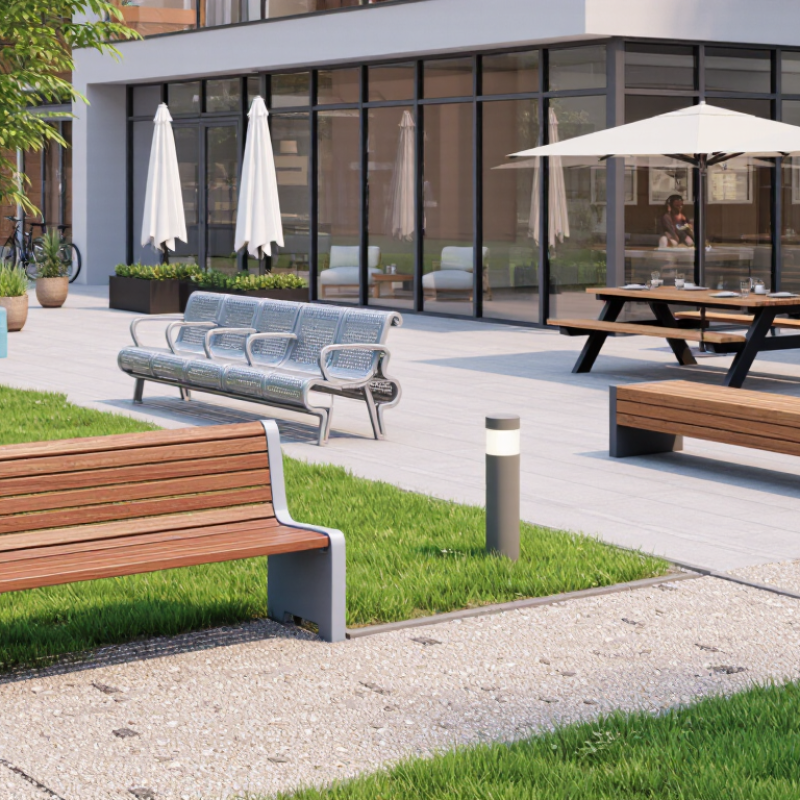
Park benches with backrests support longer visits and improve comfort for older users. They often use steel frames, recycled plastic slats, treated wood, or durable composite materials. Curved seats can feel welcoming, but excessive curves may reduce usable seating space. That detail is easy to miss.

Garden benches usually suit quieter settings. Wooden designs blend with planting areas, while cast metal benches offer a more decorative character. Buyers should check surface finishes carefully. Poor coatings can peel after repeated rain, strong sunlight, or freezing conditions.

Street benches need stronger practical performance. A simple backless bench can support quick stops near transit points and walkways. Benches with armrests may help users stand more safely. In busy public areas, anchored legs reduce movement and possible damage. For coastal locations, corrosion-resistant fasteners are especially important.

Public-area projects also require clear maintenance planning. Replaceable slats, accessible bolts, and washable surfaces can lower long-term service costs. Seat height, edge shape, and spacing should accommodate diverse users, including people with limited mobility. Local weather matters greatly. A material that performs well in a dry climate may fail sooner in humid conditions. No bench is perfect. A thoughtful specification balances comfort, durability, installation, and future repairs.

Top Types of Benches for Global Buyers

Typical seating capacity by outdoor bench type for parks, gardens, streets, and public areas.

Capacities are indicative ranges based on common commercial bench layouts and standard seating allowances. Actual capacity varies with bench length, seat depth, armrests, and accessibility requirements.

Specialized Benches with Storage, Fitness, or Workplace Functions

What Are the Top Types of Benches for Global Buyers?

For global buyers, a bench is no longer just a place to sit. Specialized designs combine storage, exercise support, and practical work surfaces. The right choice depends on room size, user habits, and cleaning conditions. Measure twice. A storage bench with lift-up seating can hide shoes, tools, or folded textiles. Look for reinforced hinges, smooth edges, and ventilation where damp items may be stored. In schools, hotels, and shared housing, rounded corners and easy-clean surfaces can reduce daily maintenance. However, storage capacity is sometimes overstated.

Fitness benches need stable frames, non-slip feet, and padding that supports repeated movement. Adjustable backrests expand exercise options, but each joint creates a possible maintenance point. Check load ratings, adjustment locks, weld quality, and replacement-part access before ordering. A compact bench may suit apartments, yet it can feel unstable during heavier training. Test it. For commercial gyms, cleanable upholstery and visible safety markings often matter more than decorative stitching. Qualified teams should review regional standards and user instructions.

Workplace benches support short waiting periods, team discussions, and limited laptop tasks. A backrest improves comfort, while an integrated shelf keeps bags away from walkways. Choose surfaces that resist scratches, glare, and common cleaning agents. Cable routing is useful. However, a bench is not automatically an ergonomic workstation. Desk height, screen position, posture, and accessibility requirements still need careful review. International buyers should request material data, dimensional drawings, testing records, and packaging details. A polished prototype is not proven equipment.

What Are the Top Types of Benches for Global Buyers? - Specialized Benches with Storage, Fitness, or Workplace Functions

Bench Type Primary Function Common Construction Typical Dimensions Typical Load Capacity Best Locations Key Buyer Considerations
Storage Bench Combines seating with concealed or open storage for shoes, clothing, toys, or household items. Engineered wood, solid wood, steel frames, upholstered cushions, and ventilation panels where needed. Approximately 80–150 cm wide, 35–45 cm deep, and 40–50 cm high. Usually 120–250 kg, depending on frame design and seating surface. Entryways, bedrooms, mudrooms, dressing areas, and hospitality spaces. Check hinge safety, internal storage volume, moisture resistance, edge protection, and assembly requirements.
Outdoor Garden Bench Provides durable public or residential seating in outdoor environments. Powder-coated steel, aluminum, treated timber, recycled plastic, or concrete supports. Approximately 100–180 cm wide, 45–65 cm deep, and 75–90 cm high with a seat height of about 40–50 cm. Commonly 250–450 kg for two- or three-person models. Parks, gardens, balconies, campuses, transport areas, and commercial landscapes. Evaluate corrosion protection, UV resistance, drainage, anchoring options, and local weather conditions.
Weight Training Bench Supports presses, dumbbell exercises, core movements, and general strength training. Tubular steel frame, high-density foam padding, synthetic leather upholstery, and adjustable backrests on some models. Approximately 110–140 cm long, 35–45 cm wide, and 40–55 cm high. Typical combined user-and-equipment capacity is 200–450 kg; verify the tested rating for each model. Home gyms, fitness studios, rehabilitation areas, and hotel gyms. Review frame stability, weld quality, adjustment positions, padding density, non-slip feet, and safety testing.
Adjustable Utility Bench Provides multiple backrest angles for strength exercises, stretching, and seated support. Steel base, locking adjustment mechanism, foam padding, and abrasion-resistant upholstery. Approximately 115–145 cm long, 35–45 cm wide, with adjustable backrest angles from flat to upright. Generally 200–400 kg combined capacity, subject to adjustment position and design. Multifunction gyms, training centers, physical therapy rooms, and compact home gyms. Prioritize secure locking pins, minimal frame movement, easy adjustment, and replacement-part availability.
Workplace Breakout Bench Creates informal seating for meetings, collaboration, waiting, and short-duration work. Powder-coated metal or timber frame, molded foam, commercial-grade fabric, and optional back or side panels. Approximately 120–240 cm wide, 50–75 cm deep, and 42–48 cm high. Often rated at 100–130 kg per seating position in commercial furniture specifications. Offices, coworking spaces, libraries, reception zones, and education facilities. Consider commercial abrasion ratings, cleanability, acoustic performance, cable access, and accessibility clearances.
Locker Room Bench Offers durable changing-area seating, often installed beside lockers or storage units. Aluminum or galvanized steel frame with hardwood, compact laminate, or composite slats. Approximately 100–200 cm wide, 35–45 cm deep, and 40–50 cm high. Commonly 250–500 kg for a two- to three-person bench. Gyms, schools, sports clubs, swimming facilities, and industrial changing rooms. Look for moisture resistance, rounded edges, anti-slip feet, hygienic surfaces, and floor or wall anchoring.
Picnic Bench Supports group dining and casual outdoor gatherings with integrated seats and tabletop. Treated timber, recycled plastic lumber, galvanized steel, or aluminum components. Approximately 150–220 cm long, 130–160 cm wide, and 70–80 cm high. Often designed for 300–600 kg distributed across the seats and tabletop. Parks, campsites, school grounds, outdoor dining areas, and public recreation sites. Assess ground stability, fastener corrosion, splinter resistance, accessibility options, and ease of cleaning.
Shower or Spa Bench Provides seated support in wet areas for bathing, changing, or wellness routines. Marine-grade polymer, stainless steel, aluminum, teak, or water-resistant composite materials. Approximately 45–120 cm wide, 35–45 cm deep, and 45–55 cm high; wall-mounted versions vary. Commonly 100–250 kg, depending on mounting method and product design. Bathrooms, accessible showers, spas, pool facilities, and wellness centers. Verify slip resistance, drainage, load testing, installation substrate, corrosion resistance, and accessibility requirements.

Note: Dimensions and load capacities are typical market ranges for comparison only. Buyers should confirm the tested specifications, applicable safety standards, packaging details, and installation requirements for each product.

How Global Buyers Select the Right Bench Type for Each Project

What Are the Top Types of Benches for Global Buyers?

Global buyers choose benches by project conditions, not appearance alone. Public-space benches need weather resistance, drainage, and vandal-resistant fixings. Indoor waiting benches require easy cleaning and comfortable seat depth. Work benches need stable surfaces, adjustable height, and safe cable access. Laboratory benches demand chemical resistance and precise installation. Industrial benches often need load ratings, storage, and grounded components.

Project location changes the decision. UN DESA projects that 68% of the world’s population will live in urban areas by 2050. This increases demand for durable seating in transit areas, parks, and commercial developments.

In workplaces, the WHO and ILO estimated 1.9 million deaths were linked to work-related factors in 2016. This figure does not prove a bench prevents injury. It does highlight the cost of ignoring posture, repetitive tasks, and poor workstation design.

Buyers should request test documents, material specifications, and replacement-part details. A low price can hide difficult maintenance.

Tips: Match the bench to its environment. Check humidity, temperature, cleaning chemicals, user weight, and daily traffic. Ask for load testing and relevant standards. Measure the full installation area, including walkways. Do not trust photographs alone. A site visit may reveal uneven floors or harsh sunlight. Recycled content is useful, but durability still matters. One overlooked detail can create expensive rework.

Article Source:

CONTACT US