
Top 10 Two Phase Heat Pipe Suppliers Worldwide?

Selecting the right Two Phase Heat Pipe supplier requires more than comparing product catalogs or advertised cooling rates. A reliable supplier should demonstrate practical engineering experience across electronics, telecommunications, energy systems, transportation, and industrial equipment. Their designs should manage heat consistently, even when installation space is narrow or airflow changes unexpectedly. Important details include working-fluid selection, wick structure, casing material, thermal resistance, operating temperature, and orientation limits.

This guide introduces ten internationally recognized suppliers for consideration. It focuses on technical capability, manufacturing quality, customization, testing procedures, delivery reliability, and after-sales support. Evidence matters. Look for validated performance data, inspection records, thermal cycling results, and clear quality-control processes. Certifications can strengthen confidence, but they should not replace independent technical evaluation. A supplier with excellent documentation may still be unsuitable for a demanding application.

No supplier fits every project.

Some companies specialize in miniature heat pipes for laptops and compact control units. Others support large-scale battery systems, aerospace equipment, or high-power electronics. Lead times, minimum order quantities, regional service, and communication quality also influence the final decision. These practical factors are easy to overlook during an early search.

This ranking is not absolute. Supplier capabilities change, and published information may become outdated. Engineers should request current datasheets, samples, drawings, and test reports before approving a design. Comparing real samples under realistic loads often reveals differences that brochures cannot show. A careful review helps buyers reduce thermal risk, control project costs, and select a partner suited to long-term performance.
Top 10 Two Phase Heat Pipe Suppliers Worldwide?

What Are Two-Phase Heat Pipes?

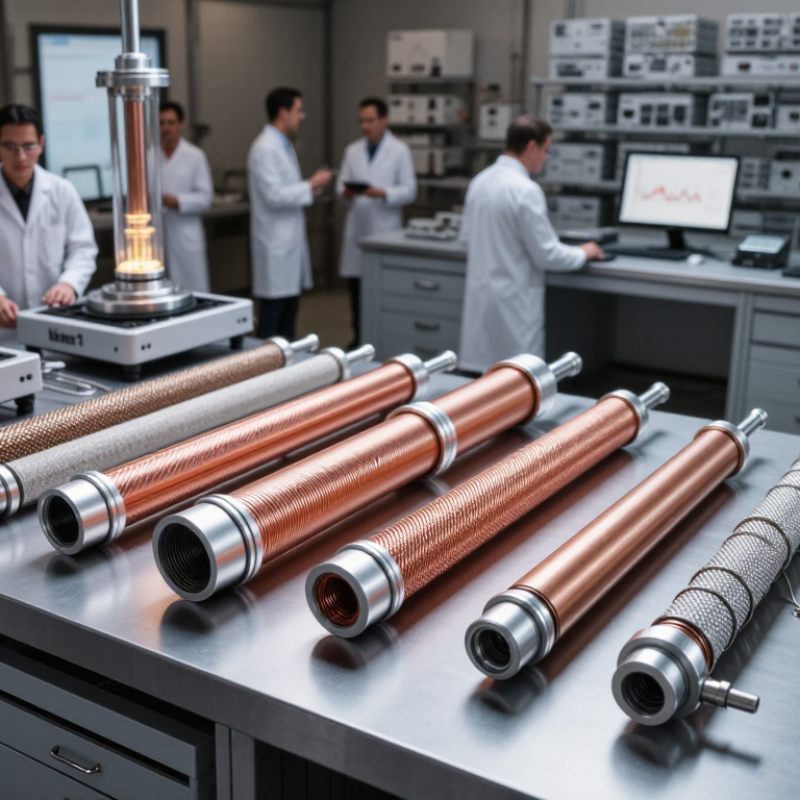
Two-phase heat pipes move heat through evaporation and condensation inside a sealed tube. A small amount of working fluid fills the internal space. When one end becomes hot, the fluid evaporates and absorbs heat. Vapor travels toward the cooler end, condenses, and releases that heat. A wick or grooved structure then returns the liquid by capillary action.

This cycle needs no pump. It can transfer heat with very little electrical energy. Common designs include straight heat pipes, vapor chambers, and loop heat pipes. Copper tubes often suit electronics cooling, while other materials may handle higher temperatures or special environments. The working fluid must match the operating range. Water, alcohol, and other fluids behave differently.

When comparing two-phase heat pipe suppliers worldwide, check more than advertised wattage. Ask for thermal resistance data, orientation limits, vacuum quality, leak testing, and production consistency. A useful evaluation places the pipe on a heated block with a measured load and records temperatures at both ends. Small installation errors matter. Poor contact can make a good pipe appear ineffective. The first calculation is rarely perfect. Engineers should also review bend radius, surface treatment, wick structure, and expected service life. Supplier documentation should explain test conditions clearly, not only provide a single impressive number.

What Are Two-Phase Heat Pipes?

Two-phase heat pipes transfer heat through the repeated evaporation and condensation of a sealed working fluid. The chart shows typical design temperature windows for commonly used working fluids. Actual operating limits depend on pressure, wick structure, orientation, heat load, and system design.

How Two-Phase Heat Pipe Suppliers Are Evaluated

Top 10 Two Phase Heat Pipe Suppliers Worldwide?

How Two-Phase Heat Pipe Suppliers Are Evaluated

Evaluating two-phase heat pipe suppliers requires more than comparing catalog prices. Performance begins with thermal resistance, heat transport capacity, startup behavior, and operating orientation. A supplier should provide measured data, not only theoretical curves. Test conditions matter. Ask for heat-load results at 25%, 50%, and 100% capacity, with clear evaporator and condenser temperatures.

The working fluid must match the intended temperature range and material system. Copper, aluminum, steel, wick structures, and internal coatings can affect reliability. Experienced suppliers explain compatibility risks before sampling. They should also disclose vacuum procedures, filling ratios, pressure limits, and allowable bending conditions. Small details often decide whether a heat pipe survives vibration, repeated cycling, or uneven installation.

Testing reveals practical maturity. Look for thermal cycling records, leak testing, batch traceability, dimensional inspection, and sample-to-sample consistency. A reliable supplier can discuss failure analysis without avoiding uncomfortable questions. Engineering support also matters when the design changes after testing. A polished datasheet can still hide weak production control. I have seen specifications look excellent while fixture design caused misleading temperature readings. That possibility deserves attention. No supplier gets every point right. Compare documented evidence, factory communication, prototype results, and response speed before ranking the top ten.

Top 10 Two Phase Heat Pipe Suppliers Worldwide? - How Two-Phase Heat Pipe Suppliers Are Evaluated
Rank Supplier ID Primary Product Coverage Typical Two-Phase Technologies Common Working Fluids Typical Operating Temperature Range Key Industry Applications Customization Capability Quality & Validation Focus Global Delivery Coverage Evaluation Score
1 Supplier Profile 01 Loop heat pipesVapor chambers Capillary-pumped loop systems; flat vapor chambers Water; methanol; acetone; ammonia Approximately −40°C to 150°C, application dependent Space electronics, telecom equipment, high-performance computing High: geometry, wick structure, fittings and thermal interfaces Thermal cycling, vacuum integrity, leak testing and thermal-resistance measurement North America, Europe and Asia-Pacific 92 / 100
2 Supplier Profile 02 Heat pipesVapor chambers Sintered-wick heat pipes; grooved heat pipes; vapor chambers Water; acetone; methanol Approximately 5°C to 200°C, depending on fluid and construction LED lighting, power electronics, servers and industrial control systems High: diameter, length, bend angle and interface configuration Dimensional inspection, vacuum charging, pressure testing and thermal-performance testing Worldwide distributor and direct-shipping capability 90 / 100
3 Supplier Profile 03 ThermosyphonsHeat exchangers Gravity-assisted thermosyphons; heat-pipe heat exchangers Water; refrigerants; hydrocarbons for selected systems Approximately 20°C to 250°C, system dependent Industrial cooling, waste-heat recovery, renewable-energy systems High: tube arrays, headers, fin packs and mounting arrangements Flow testing, pressure testing, corrosion review and efficiency validation Europe, Asia-Pacific and selected Middle East markets 88 / 100
4 Supplier Profile 04 Vapor chambersUltra-thin heat pipes Flat sintered-wick chambers; miniature heat pipes Water; methanol; acetone Approximately 0°C to 125°C for electronics cooling Mobile devices, graphics processors, notebooks and compact electronics High: thin profiles, shaped chambers and multi-source integration Thermal-resistance mapping, flatness inspection and reliability cycling Asia-Pacific, North America and Europe 87 / 100
5 Supplier Profile 05 Loop heat pipesCapillary systems Loop heat pipes; capillary pumped loops; remote condensers Ammonia; water; methanol Approximately −60°C to 120°C, depending on design Satellite payloads, aerospace electronics and remote thermal control High: transport lines, evaporators, condensers and charge quantity Vacuum qualification, vibration testing, thermal-vacuum testing and life testing Specialist global aerospace supply chains 86 / 100
6 Supplier Profile 06 Industrial heat pipesThermal modules Copper-water heat pipes; aluminum-ammonia systems; finned modules Water; ammonia; acetone Approximately 10°C to 300°C, design dependent Power converters, battery systems, industrial automation and transportation Medium to high: module layout, fin design and installation hardware Leak testing, thermal performance, vibration resistance and material compatibility North America, Europe and Asia-Pacific 84 / 100
7 Supplier Profile 07 Heat pipesCustom assemblies Axial-groove and sintered-wick heat pipes; embedded assemblies Water; methanol; acetone; selected refrigerants Approximately −20°C to 180°C, application dependent Consumer electronics, medical equipment and instrumentation Medium to high: bends, flattened sections and mechanical integration Incoming-material inspection, vacuum integrity and thermal qualification Direct and contract-manufacturing channels in major markets 82 / 100
8 Supplier Profile 08 Heat exchangersThermosyphons Two-phase thermosyphon modules; heat-pipe-assisted exchangers Water; refrigerants; low-temperature working fluids Approximately −30°C to 220°C, system dependent Data-center cooling, HVAC, process cooling and energy recovery Medium: exchanger size, tube spacing and airflow configuration Capacity testing, pressure drop, leak testing and energy-efficiency verification Europe, North America and selected international projects 80 / 100
9 Supplier Profile 09 Standard heat pipesCooling kits Standard copper-water heat pipes; finned heat sinks; ready-to-install kits Water; acetone; methanol Approximately 10°C to 150°C for standard electronics applications LEDs, embedded computers, communications equipment and test fixtures Medium: standard sizes with limited custom machining Dimensional checks, thermal-resistance testing and production sampling Broad online and distributor-based international availability 77 / 100
10 Supplier Profile 10 Specialty heat pipesPrototype systems Miniature heat pipes; flexible thermal links; prototype two-phase assemblies Water; methanol; acetone; application-specific fluids Approximately −40°C to 180°C, dependent on prototype design Research equipment, robotics, sensors and early-stage product development Very high for prototypes; production scalability varies Prototype validation, leak testing, thermal characterization and design documentation International project-by-project delivery 74 / 100

Evaluation basis: thermal performance, technology breadth, customization capability, quality validation, application experience, delivery coverage and production scalability. Supplier names and brand-specific information are intentionally omitted; operating ranges are indicative engineering ranges and must be confirmed against the final design, working fluid, orientation, heat load and qualification requirements.

Top 10 Two-Phase Heat Pipe Suppliers Worldwide

Top 10 Two-Phase Heat Pipe Suppliers Worldwide

A reliable comparison of the top ten two-phase heat pipe suppliers worldwide should examine engineering evidence, not marketing language. Leading suppliers usually provide copper, aluminum, or stainless-steel pipes for electronics, battery systems, satellites, and industrial equipment. Their designs use controlled evaporation and condensation to move heat with little electrical power.

Performance depends on more than thermal conductivity. Buyers should request operating temperature ranges, heat-load curves, vacuum integrity data, wick structure details, and resistance measurements. A supplier with in-house welding, charging, and leak testing can often control quality more consistently. Sample testing matters. A pipe that performs well in a laboratory may behave differently after vibration, bending, or repeated thermal cycling.

Supplier support also reveals technical maturity. Clear drawings, tolerances, fluid compatibility data, and installation guidance reduce costly design changes. Experienced manufacturers can customize diameter, length, flattening, and mounting surfaces for specific assemblies. However, global rankings are never flawless. Public data may be incomplete, and some suppliers report different test conditions. That makes direct comparison difficult. Buyers should verify results using identical loads, orientations, and temperatures before approving volume production. Short lead times help, but dependable process control matters more. A carefully documented supplier often offers greater long-term value than the cheapest quotation.

Comparison of Supplier Products and Technical Capabilities

Top 10 Two Phase Heat Pipe Suppliers Worldwide: Comparing Products and Technical Capabilities

Supplier rankings matter less than measurable performance. MarketsandMarkets projects the global heat pipe market to reach approximately USD 5.3 billion by 2028, with electronics and aerospace driving demand. This growth increases the need for verified thermal data, not attractive catalog claims.

Leading suppliers typically offer grooved, sintered, loop, and vapor-chamber designs. Grooved pipes suit stable orientations and moderate heat loads. Sintered structures provide stronger capillary return, especially in compact electronics. Loop heat pipes support longer transport distances, but they require careful startup testing.

Reported thermal resistance, maximum heat transport, operating temperature, and bend limits should appear in technical documents. Test conditions must be visible.

Small details reveal engineering maturity. Ask whether performance was measured under gravity, vibration, vacuum, or changing orientations.

For aerospace projects, qualification evidence and traceability are essential. For consumer devices, flatness, thickness, and repeatable filling processes may matter more.

Working-fluid selection also affects compatibility and temperature range. Industry research from IDTechEx links advanced thermal management demand with higher-power computing and denser electronic packaging.

A supplier may offer impressive prototypes but lack stable production control. That gap deserves attention. ISO 9001 certification helps, yet it does not replace application-specific validation.

In practice, I would compare sample data, failure analysis, tooling capability, and engineering response time. A lower quoted price can become expensive after redesigns. The best comparison is rarely the longest product list.

Key Applications and Purchasing Considerations

Top 10 Two Phase Heat Pipe Suppliers Worldwide?

Two-phase heat pipes support thermal control in electronics, telecom cabinets, battery systems, aerospace equipment, and industrial sensors. They move heat without pumps, using evaporation and condensation inside a sealed tube. In practical design work, application details matter more than supplier rankings. A pipe for a laptop enclosure differs greatly from one inside a satellite panel.

Purchasing teams should check heat load, operating temperature, orientation, bend limits, tube material, and required service life. Working-fluid compatibility also matters, especially near sensitive electrical components. Request thermal resistance data under your actual installation conditions. A tidy datasheet is not proof of performance. Ask for sample testing, pressure-control records, leak inspection methods, and batch traceability. Manufacturing tolerance can affect contact with the heat source. Small gaps create unwanted thermal resistance. Lead time, custom tooling, inspection reports, and technical support deserve equal attention. Cost alone can mislead.

Tips: Share a simple drawing with mounting points, heat-source size, allowable temperature, and installation angle. Test at low, typical, and peak loads. Include vibration or cycling tests when equipment moves or operates outdoors. Do not assume a standard pipe will fit every design. I would also keep one backup specification, because an elegant first choice may fail during assembly. Supplier communication can be uneven. Record every change in writing.

CONTACT US