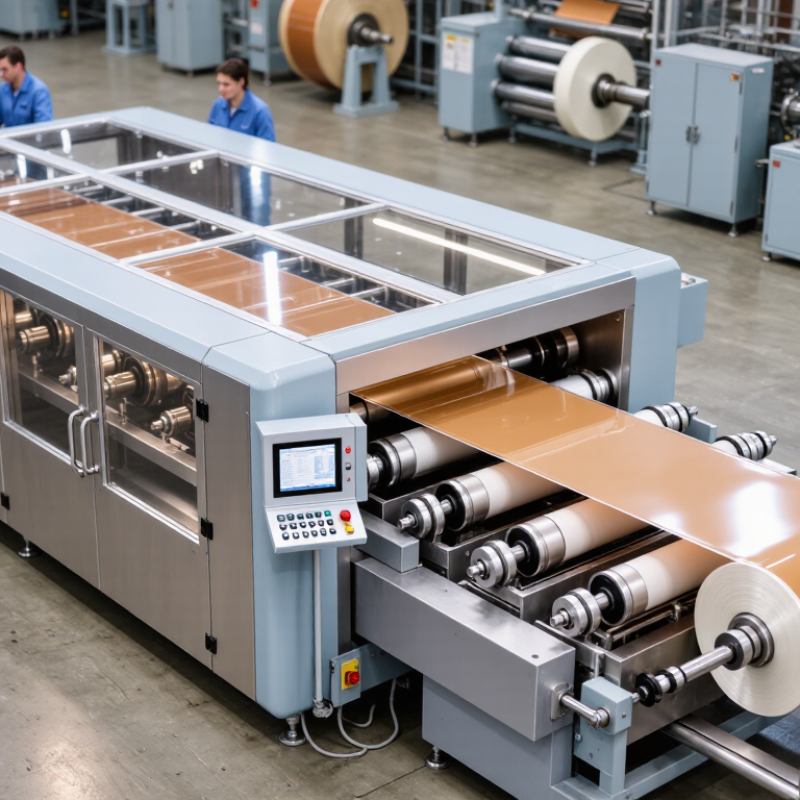
| 1 | Match the machine to the adhesive chemistry | Confirm that the roller, hose, pump, tank, and seals are compatible with the selected hot melt adhesive. Consider viscosity, thermal stability, moisture sensitivity, and the adhesive's recommended processing temperature. | Common adhesive types: EVA, polyolefin, and pressure-sensitive hot melt adhesives.
Processing temperature: Often approximately 120–200°C, depending on formulation. | Packaging laminations, labels, tapes, nonwoven products, furniture components, and technical textiles. |
| 2 | Select the correct coating width and working speed | Choose a usable coating width that covers the product without excessive overspray or edge waste. The machine should also provide a stable speed range for both laboratory trials and production. | Coating width: Common industrial systems may be configured from several hundred millimetres to more than 1 metre.
Line speed: Often ranges from low-speed trial operation to several hundred metres per minute, depending on the substrate and coating weight. | Narrow rolls, sheets, webs, panels, and continuous roll-to-roll production. |
| 3 | Check coating-weight control and uniformity | Evaluate roller-gap adjustment, pressure control, metering accuracy, temperature stability, and the ability to maintain a consistent adhesive film across the web. | Coating weight: Common hot melt applications may use approximately 10–150 g/m², although the required value depends on bonding strength, substrate porosity, and end use.
Key control: Stable gap and synchronized roller speed. | Thin-film laminating, breathable nonwovens, labels, tapes, and products requiring low adhesive consumption. |
| 4 | Understand the roller coating process | The adhesive is melted in a heated tank, transferred by a heated roller, metered through the roller gap, and applied to a substrate. Review roller surface finish, heating zones, nip pressure, and substrate tension control. | Process sequence: Melt → transfer → meter → coat → laminate or cool.
Important variables: Adhesive temperature, roller temperature, gap, line speed, nip pressure, and web tension. | Direct coating, transfer coating, pre-coating, and adhesive laminating of flexible or semi-flexible materials. |
| 5 | Prioritize thermal and process safety | Look for insulated heated surfaces, over-temperature protection, emergency stops, guarded nip points, temperature alarms, and safe procedures for adhesive loading and cleaning. | Safety risks: Hot surfaces, molten adhesive, rotating rollers, and trapped pressure.
Recommended practice: Use machine guarding, heat-resistant gloves, eye protection, ventilation where required, and documented lockout procedures. | Production environments where operator protection, repeatable operation, and reduced downtime are essential. |
| 6 | Evaluate cleaning, changeover, and maintenance requirements | Check access to the tank and rollers, adhesive drain points, removable parts, temperature-controlled cleaning functions, replacement seals, and the time required to change adhesive types or colours. | Maintenance priorities: Remove charred adhesive, inspect roller surfaces, check seals and hoses, and verify temperature sensors.
Best practice: Follow the adhesive supplier's recommended shutdown and cleaning temperature. | Multi-product operations, short production runs, frequent material changes, and facilities where uptime is critical. |
| 7 | Confirm substrate and end-use compatibility | Test the actual substrate combination for wetting, adhesion, flexibility, heat sensitivity, release behaviour, and ageing performance before approving the machine configuration. | Typical substrates: Paper, cardboard, films, foams, fabrics, nonwovens, wood-based panels, and metal-coated materials.
Validation tests: Peel strength, bond strength, coat weight, visual coverage, blocking, and heat or humidity resistance. | Packaging, hygiene products, construction materials, automotive interiors, furniture, medical products, and consumer goods. |
| — | Process result: direct roller coating | The metered adhesive layer is applied directly to the target substrate, followed by bonding to a second material when required. | Provides a continuous adhesive film with adjustable coat weight. Performance depends on temperature, viscosity, roller gap, pressure, and line speed. | Direct coating of webs, sheets, panels, textiles, foams, and nonwoven materials. |
| — | Process result: transfer coating and laminating | The hot melt layer is first formed on a release or carrier surface and then transferred to another substrate during a controlled bonding step. | Useful when direct coating could damage a heat-sensitive or porous substrate. Nip pressure, cooling, and release properties influence transfer quality. | Films, textiles, breathable membranes, labels, tapes, and substrates requiring controlled adhesive placement. |