
7 Tips for Choosing a Laser Quenching Machine
Choosing a Laser Quenching Machine is not just a matter of comparing laser power or asking for the lowest price. The right system must suit your parts, production pace, and required hardening depth. A small steel shaft and a broad gear tooth present different challenges. Their shapes affect beam access, heat flow, and process consistency.
Professor Lin Li is a recognized researcher in laser materials processing. The following is an editorial paraphrase, not a verbatim quotation: “Match the laser process to the material, geometry, and performance target.” Keep that principle in view as you assess machine options. Ask suppliers how they control spot size, scanning speed, temperature, and repeatability. Request test results using parts like yours, not only polished demonstration samples. Look closely at the treated surface and the transition into the underlying metal. Those details can reveal problems that a specification sheet misses.
This guide covers seven practical checks, from laser configuration and automation to service support and total operating cost. It also flags trade-offs that deserve a second look. Higher power may improve throughput, but it does not automatically produce better hardening. A compact system may fit your workshop, yet leave little room for future production. Be cautious. The best choice depends on verified trials and clear acceptance criteria. No machine suits every shop. A careful evaluation takes time, and even a strong test run cannot promise identical results on every part.
Understanding Laser Quenching and Its Industrial Applications
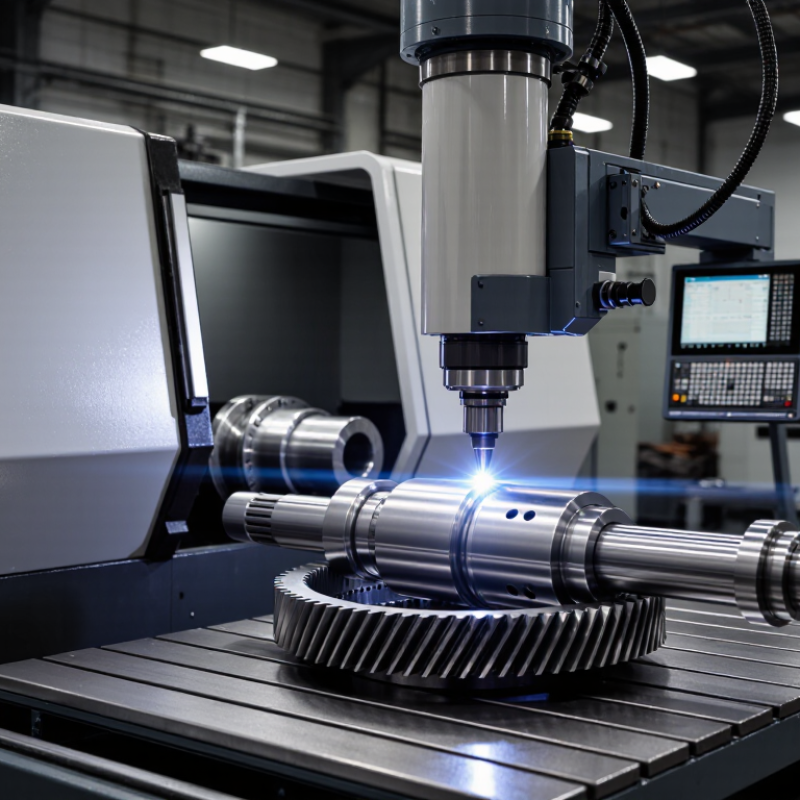
Laser quenching hardens selected areas of a metal part using a focused beam. The beam heats the surface quickly, while the cooler material beneath it draws heat away. This rapid cooling can transform the surface structure and increase its resistance to wear. The core often retains more of its original toughness. That balance matters.
The process is useful for gear teeth, shaft journals, rail surfaces, and mold edges that face repeated friction. A narrow treatment zone can reduce distortion compared with heating an entire component, though results depend on the alloy, geometry, and setup. Operators must control beam power, travel speed, and overlap. Even a small change can leave a soft strip or cause unwanted cracking.
Part inspection should include hardness checks and, where needed, metallographic examination. A shiny track is not proof of a sound treatment. The first trial may miss the target, especially on parts with corners or uneven thickness. That is worth admitting. Testing representative parts before production helps reveal problems that a machine specification alone cannot predict.
7 Tips for Choosing a Laser Quenching Machine - Understanding Laser Quenching and Its Industrial Applications
Laser quenching is a surface-hardening process in which a focused laser heats a material surface, followed by rapid self-quenching into the cooler material beneath it. The figures below are general planning references; suitable settings depend on the alloy, part geometry, target hardness, and process trials.
| Tip | What to Evaluate | Practical Reference | Industrial Application | Questions to Ask Before Purchase |
|---|---|---|---|---|
| 1. Match the machine to the material | Check whether the workpiece alloy can form a hardened layer through rapid heating and cooling. Verify the material grade, initial condition, and carbon or alloy content. | Medium-carbon and many alloy steels are common candidates. Results vary by grade and prior heat treatment; some stainless steels and cast irons require specific process validation. | Hardening steel gears, shafts, guideways, and other wear-prone surfaces. | Can the supplier process representative samples made from the exact material and condition used in production? |
| 2. Define the required hardened zone | Specify the target surface hardness, case depth, treated width, and allowable distortion—not just the laser power. | For many applications, hardened depths are on the order of tenths of a millimetre to a few millimetres. Actual depth depends on alloy, beam profile, energy input, and scanning strategy. | Localized hardening of bearing seats, gear teeth, cam tracks, and die edges. | Can the process demonstrate the required hardness profile and depth on a cross-section? |
| 3. Size the laser and beam delivery for the part | Consider laser type, available power, spot shape, focus control, optical configuration, and how the beam reaches the treatment area. | Industrial systems use different power levels and beam shapes for different part sizes and production rates. A larger nominal power rating alone does not guarantee a suitable hardened pattern. | Processing broad flat surfaces, narrow tracks, or complex contours on production components. | Is the beam profile appropriate for the required track width, edge quality, and access to the workpiece? |
| 4. Check motion and part-handling capability | Match the number of motion axes, work envelope, rotary fixtures, and positioning accuracy to the component geometry and batch size. | Simple flat parts may need fewer axes; curved or multi-face parts often need coordinated motion, a rotary axis, or a dedicated fixture. | Hardening cylindrical shafts, gears, rails, and components with repeating features. | Can the machine maintain consistent focus and track overlap across the full part without excessive repositioning? |
| 5. Evaluate process control and monitoring | Look for stable power control, repeatable scanning, temperature monitoring where appropriate, and recipe management for different parts. | Temperature feedback can help manage variations in surface condition and heat accumulation, but it should be validated for the material and process setup. | Repeatable production hardening of automotive, machinery, and tooling components. | Which process variables are recorded, and can recipes and quality records be linked to each part or batch? |
| 6. Account for surface condition and process preparation | Assess scale, oil, coatings, roughness, surface reflectivity, and whether cleaning or a surface treatment is required for consistent energy absorption. | Surface condition can affect heating uniformity. Any coating or absorptive treatment should be compatible with the material, cleanliness requirements, and downstream use. | Hardening worn or machined components where surface condition may vary between batches. | What surface preparation is required, and how sensitive is the process to normal production variation? |
| 7. Compare total operating and safety requirements | Include installation, extraction, cooling, maintenance, operator training, laser enclosure, interlocks, and applicable workplace safety requirements. | Laser class, enclosure design, ventilation needs, and cooling requirements depend on the system configuration and local regulations. Confirm these during facility planning. | Integrating a hardening cell into a machine shop or automated production line. | What utilities, extraction, maintenance schedule, safety controls, and operator qualifications are needed for the intended installation? |