Top 5 Tips for Choosing 5G Fixed Wireless Access CPE Solutions
Choosing the right 5g Fixed Wireless Access Cpe Solution is crucial for seamless internet connectivity. As technology advances, businesses and individuals seek reliable wireless access. A good CPE solution can significantly enhance your experience.
When selecting a 5G Fixed Wireless Access CPE Solution, consider various factors. Coverage and speed are essential. However, many overlook installation ease and technical support. It’s possible to miss the nuances that differentiate one solution from another. Sometimes, a feature may seem attractive but isn’t necessary for your needs.
Moreover, user reviews can provide insight into real-world performance. It’s important to validate claims made by manufacturers. Explore options thoroughly and reflect on what truly matters for your connectivity. The goal is not only to choose based on specifications but also to ensure long-term satisfaction. Your perfect 5G Fixed Wireless Access CPE Solution is out there waiting for consideration.
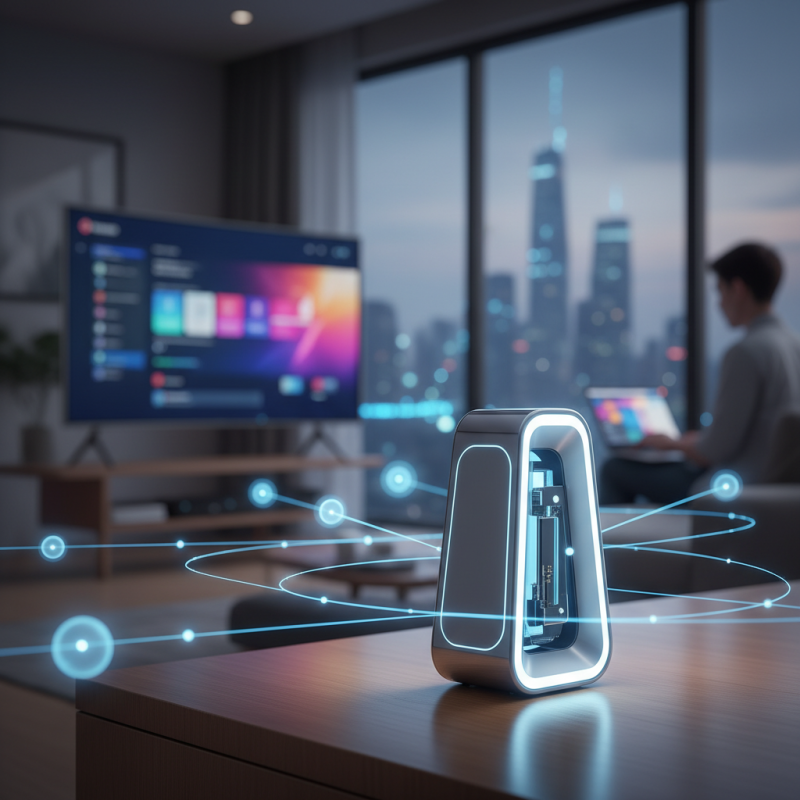
Understanding the Role of CPE in 5G Fixed Wireless Access Solutions
As 5G technology expands, Fixed Wireless Access (FWA) becomes crucial. Customer Premises Equipment (CPE) plays a vital role in delivering this service. According to a recent report by the International Telecommunication Union (ITU), the global number of 5G connections is projected to reach 2.8 billion by 2025. The performance and reliability of CPE directly impact user experience.
Choosing the right CPE for 5G FWA is not as straightforward as it seems. It's important to consider network compatibility and operational simplicity. Many CPE devices are designed to work across various frequencies, ensuring flexibility. However, some devices may struggle in densely populated areas or under extreme weather conditions, leading to inconsistent performance.
A study from Gartner emphasizes that 70% of companies face challenges when upgrading their networks. Many underestimate the importance of device selection and integration. Prioritizing customer feedback in the selection process can reveal insights into practical usage and potential issues. Finding a balance between features and cost requires careful analysis of user needs and network capabilities.
5G Fixed Wireless Access CPE Solutions Comparison
Evaluating Key Performance Metrics for 5G CPE Selection
When selecting 5G Fixed Wireless Access CPE solutions, focusing on key performance metrics is essential. Speed is a primary consideration. Research indicates that 5G technology can deliver speeds exceeding 1 Gbps under optimal conditions. However, real-world speeds often vary. Factors like distance from the tower and environmental obstacles can impact performance significantly.
Another crucial metric is latency. A report by the Global Wireless Industry revealed that peak latency for 5G can drop to under 10 milliseconds. This improvement is vital for applications requiring real-time interaction. However, some users may experience higher latency, especially in congested areas or during peak usage times.
Evaluate reliability and coverage as well. A 5G network may promise high speeds, but without dependable coverage, users face disruptions. The accuracy of coverage maps from various service providers often varies, making it critical to analyze real-world user feedback.
Lastly, consider the equipment's compatibility with different frequency bands. The 5G spectrum includes various bands, each affecting range and speed. Not all CPE solutions support every band, leading to potential performance issues in certain locations.
Assessing these performance metrics helps ensure you choose the right solution for your specific needs. Balancing speed, latency, reliability, and compatibility will impact the overall user experience significantly.
Analyzing the Compatibility of CPE with Existing Network Infrastructure
Choosing the right CPE (Customer Premises Equipment) for 5G Fixed Wireless Access is crucial. One key factor is compatibility with existing network infrastructure. Evaluate current routers and switches before making a decision. Check if they can handle increased data speeds and traffic. Often, legacy equipment creates bottlenecks that undermine the benefits of a new 5G system.
Assess how the CPE integrates with your existing setup. Not all devices are built equally. Understanding the technology behind your current infrastructure will help you make a more informed choice. Sometimes, it may require upgrading certain components to fully realize 5G performance. Consider engaging with professionals who have hands-on experience in network design.
Addressing compatibility can be challenging. It’s essential to evaluate not just performance metrics but also the longevity of your existing systems. Some CPE solutions may lead to more frustrations based on poor integration. Take time to analyze potential issues through testing or simulations, as this can reveal unforeseen problems. Seeking expert advice can provide a clearer picture of what to expect.
Top 5 Tips for Choosing 5G Fixed Wireless Access CPE Solutions - Analyzing the Compatibility of CPE with Existing Network Infrastructure
| Tip Number | Tip | Considerations | Benefits |
| 1 | Assess Bandwidth Needs | Evaluate current and anticipated data usage | Ensures adequate performance for users |
| 2 | Check Compatibility with Current Network | Identify requirements of existing infrastructure | Avoids operational disruptions |
| 3 | Verify Signal Coverage | Analyze coverage maps and existing signal strength | Improves access reliability |
| 4 | Evaluate Device Scalability | Consider future growth and additional device needs | Facilitates expansion without major upgrades |
| 5 | Analyze Hardware Specifications | Review processing power, memory, and ports | Ensures optimal performance and connectivity |
Exploring the Cost-Effectiveness of 5G CPE Solutions for Businesses
5G Fixed Wireless Access (FWA) is becoming increasingly popular among businesses looking for reliable connectivity. When considering 5G CPE solutions, cost-effectiveness is paramount. Businesses should analyze not just the initial investment but also long-term operational costs. Installation fees, maintenance, and potential downtime can add to overall expenses. A seemingly affordable solution may incur hidden costs that diminish its value.
Additionally, businesses should evaluate the performance metrics of different CPE solutions. Speed, latency, and reliability are crucial. Not all solutions provide the same level of service. A low-cost option might result in slower speeds or frequent disruptions, leading to productivity losses. Employees may experience frustration if the connection is unreliable. Organizations need to balance cost and quality carefully.
Lastly, consider the scalability of the 5G CPE solution. As businesses grow, their connectivity needs may change. Solutions that are inflexible can lead to future headaches. Reflecting on how your chosen solution will adapt to evolving demands is essential. A cost-effective choice today may not serve well tomorrow.
Future-Proofing Your Investment: Trends in 5G CPE Technology
As the demand for high-speed internet escalates, investing in 5G fixed wireless access (FWA) solutions is crucial. This technology promises faster speeds and lower latency. According to a report by the GSMA, global 5G connections are expected to reach 1.7 billion by 2025. This surge emphasizes the need for reliable customer premises equipment (CPE) that can adapt to evolving standards.
Choosing future-proof 5G CPE involves understanding key trends. First, adaptive beamforming technology enhances signal quality. This feature can improve user experience significantly, especially in crowded areas. Additionally, support for both standalone and non-standalone modes is essential. The latter provides immediate access to existing LTE infrastructure while transitioning to 5G. Research indicates that over 70% of service providers prioritize these capabilities in their long-term strategies.
Finally, consider the lifespan of CPE devices. A report from ABI Research indicates that equipment longevity is critical. Devices should be able to integrate future software updates seamlessly. However, many users underestimate the importance of this aspect. Balancing immediate needs and future readiness is vital for achieving long-lasting performance and satisfaction.