What is a Photoelectric Sensor and How Does It Work?
Photoelectric Sensors are crucial devices in automation and control applications. According to a recent industry report by MarketsandMarkets, the global market for photoelectric sensors is projected to reach $3.6 billion by 2024. Their ability to detect objects, measure distances, and ensure safety makes them indispensable in various sectors.
John Smith, an expert in industrial automation, stated, “Photoelectric sensors are the backbone of modern manufacturing systems.” They help enhance efficiency and reduce error rates in production lines. However, the complexity of installation and environmental factors can affect their reliability.
Despite their numerous advantages, photoelectric sensors can be sensitive to dirt, dust, or ambient light. These factors create challenges that require thoughtful consideration. Operators must ensure proper alignment and maintenance to achieve optimal performance. Attention to these details can prevent malfunction and maximize the benefits these sensors offer.
What is a Photoelectric Sensor?
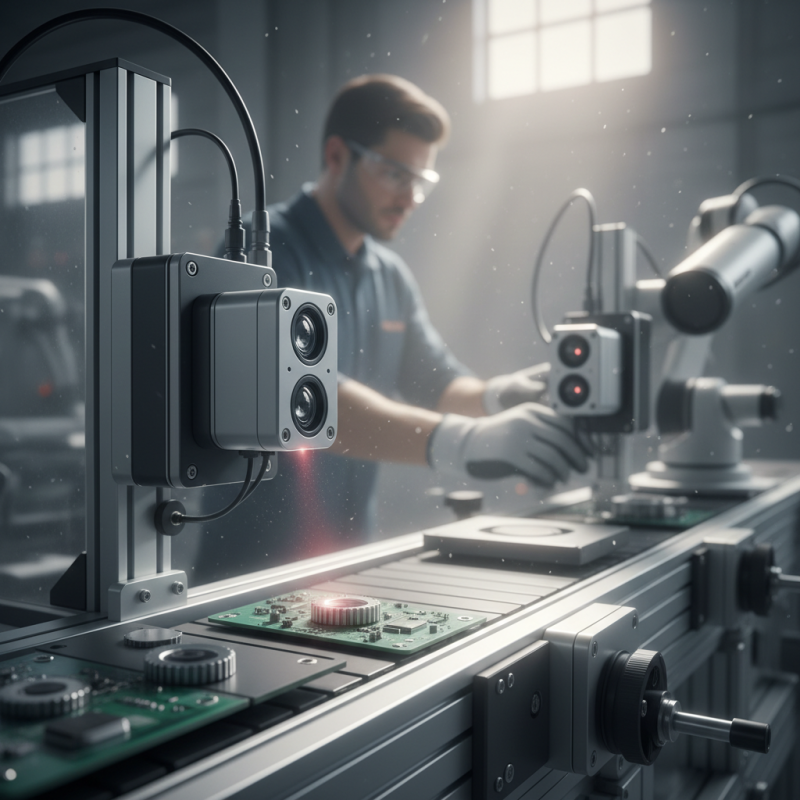
A photoelectric sensor is a crucial device widely used in industrial automation. It detects the presence of objects by emitting light and measuring the reflected signal. This technology enables real-time monitoring and precise control in various applications, from packaging to material handling.
Studies show that photoelectric sensors can enhance efficiency by up to 30% in production lines. Their ability to operate in harsh conditions makes them ideal for factories. They are often used to automate processes like counting and sorting. However, they can be sensitive to dirt and obstructions. Regular maintenance is essential to ensure their optimal performance.
Tip: Keep the sensors clean. Dust can impair their functionality significantly. Consider using a protective cover in dusty environments.
Photoelectric sensors come in various types, including through-beam, retro-reflective, and diffused models. Each type has advantages and limitations. For example, retro-reflective sensors are easy to install but may have difficulty detecting transparent objects. Knowing the environment and the specific task is vital for choosing the right type.
Tip: Assess your needs carefully. The wrong choice can lead to frequent malfunctions. Regularly review your sensor's performance to ensure reliability and efficiency.
Types of Photoelectric Sensors and Their Applications
Photoelectric sensors are versatile devices that detect objects or changes in the environment using light. There are several types of photoelectric sensors, each suited for different applications. Their designs allow for various functionalities, but the core concept remains the same: sensing light.
The most common types include through-beam, retro-reflective, and diffuse sensors. Through-beam sensors utilize a light source and a receiver. They provide a robust solution for applications like counting items on a conveyor belt. Retro-reflective sensors bounce light off a reflector. They are useful in situations where space is limited. Diffuse sensors work by detecting changes in light reflected from an object. They are often used in packaging lines and other scenarios requiring accurate detection.
However, photoelectric sensors are not flawless. Environmental factors like dust or fog can impede their performance. Misalignment can also cause failures in detection. Sometimes they may react to unintended light sources. Understanding these limitations is crucial for effective implementation. It requires careful consideration of the environment and application needs.
What is a Photoelectric Sensor and How Does It Work? - Types of Photoelectric Sensors and Their Applications
| Type of Photoelectric Sensor | Working Principle | Typical Applications | Detection Range |
| Through-beam Sensor | Transmits a beam of light to a receiver; object interrupts the beam | Packaging, safety barriers | Up to 30 meters |
| Reflective Sensor | Transmits light to a reflector; detects light reflected back | Conveyor systems, object counting | Up to 10 meters |
| Diffuse Reflective Sensor | Transmits and receives light on the same side; detects light scattered by an object | Material detection, quality inspection | Up to 2 meters |
| Laser Sensor | Uses laser light to detect objects with high precision | Automated guided vehicles, distance measurement | Up to 50 meters |
| Capacitive Sensor | Detects changes in capacitance caused by objects | Liquid level detection, non-metallic object detection | Up to 10 centimeters |
How Photoelectric Sensors Work: Operating Principles
Photoelectric sensors are essential devices used in various applications. They detect objects without direct contact. This contactless detection is achieved by using light. The operation is simple yet effective. A photoelectric sensor emits a beam of light, usually infrared. When an object interrupts this beam, the sensor detects the change.
The working principle revolves around light transmission and reception. The sensor has two components: a transmitter and a receiver. The transmitter sends out a continuous light beam, while the receiver monitors it. If the beam is broken, it sends a signal indicating that an object is present. This process occurs in milliseconds, allowing for quick response times.
However, not all setups run smoothly. Factors like dust or mist can impact performance. Sometimes sensors may misinterpret reflections, leading to false signals. Adjustments might be necessary for optimal function. In some cases, environmental conditions can affect detection range. This variability calls for consistent monitoring and maintenance to ensure reliability.
Key Advantages of Using Photoelectric Sensors
Photoelectric sensors have become essential in automation. They use light to detect objects, offering precise measurements over distances. Industries are increasingly adopting these sensors for their accuracy and reliability. According to a report by Research and Markets, the global photoelectric sensor market is expected to grow at a CAGR of 9.3% by 2026. This growth reflects the demand for efficient sensing technologies across various sectors, including manufacturing and logistics.
One of the key advantages of photoelectric sensors is their ability to function in challenging environments. They can work in dusty, humid, or harsh conditions without losing performance. This flexibility is evident in their application. For example, in material handling, they can detect the presence or absence of objects without direct contact. However, incorrect positioning or poor alignment can lead to faults, highlighting a need for careful installation and adjustments.
Another significant advantage is energy efficiency. Many models offer low power consumption while maintaining high performance. This can reduce operational costs substantially over time. Studies show that implementing photoelectric sensors can increase productivity by up to 20% in certain processes. Yet, integration with existing systems can sometimes pose challenges, and users must be prepared to address compatibility issues.
Common Applications of Photoelectric Sensors in Industry
Photoelectric sensors play a vital role in various industries by detecting objects, movements, and changes in light. These sensors use light beams to trigger actions. One common application is in conveyor systems. They help determine if an object is present. If an item blocks the beam, machinery can halt automatically to prevent jams.
In packaging, photoelectric sensors ensure the right items are placed in boxes. They can detect missing products and alert operators. This helps maintain quality control. In assembly lines, sensors monitor the position of components. They assist robots in picking and placing items efficiently. However, sometimes sensors can give false readings due to dust or misalignment. Regular maintenance is crucial to minimize these issues.
Another area of application is safety systems. Photoelectric sensors can detect the presence of personnel near machinery. They create an invisible safety barrier. If someone steps into this zone, the machine stops. This prevents accidents but requires precise calibration. Otherwise, the system might fail to work effectively. Overall, photoelectric sensors enhance productivity but must be carefully managed.
Common Applications of Photoelectric Sensors in Industry