What is Optical Communication Filters and How Do They Work?
In the realm of modern telecommunications, Optical Communication Filters play a pivotal role. These filters stand at the intersection of light and information, enabling efficient transmission of data across vast distances. Dr. Emily Chen, a leading expert in optical systems, remarked, "Optical Communication Filters are crucial for enhancing signal quality in fiber optic networks." Her insights highlight the significance of these devices in today’s fast-paced digital world.
Understanding Optical Communication Filters begins with recognizing their function. They selectively allow certain wavelengths of light to pass while blocking others. This feature is essential in managing the ever-growing volume of data traffic. As the demand for high-speed internet rises, the importance of reliable filtering cannot be overstated.
However, challenges exist. The technology must continuously adapt to new wavelengths and increasing data rates. Innovations in this field often face hurdles in efficiency and performance. As we explore Optical Communication Filters further, it’s essential to remain aware of both their capabilities and limitations. This balance is critical for future advancements in optical communication technology.
Definition of Optical Communication Filters
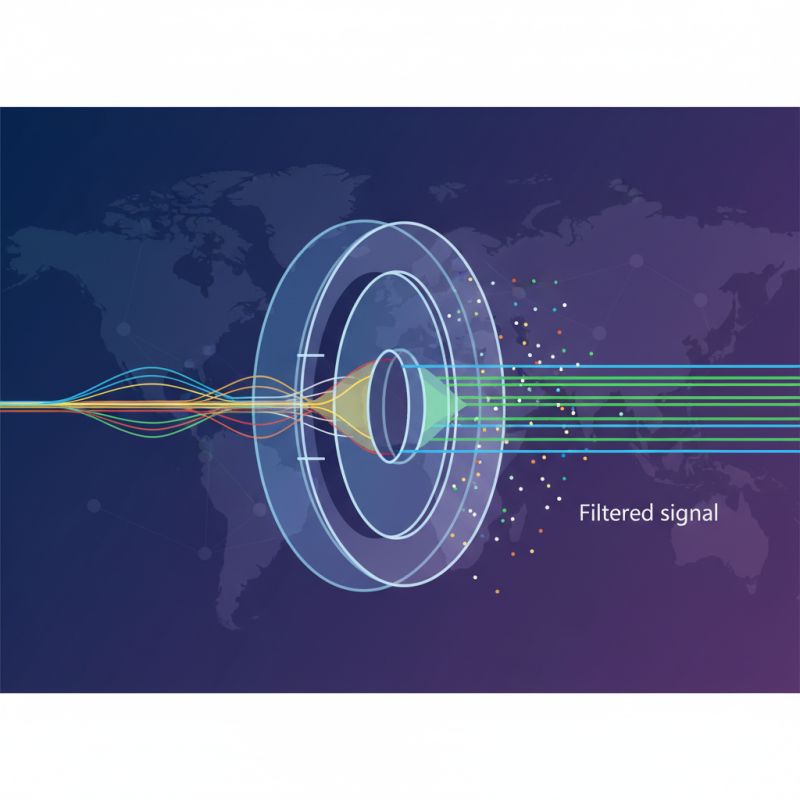
Optical communication filters are crucial components in modern communication systems. These filters selectively transmit or block specific wavelengths of light. They play a vital role in ensuring that the right signals are received without interference from unwanted noise. Filters enhance signal clarity while reducing background noise, which is especially important in dense wavelength division multiplexing (DWDM) systems.
Recent industry reports suggest that the global optical communication filter market was valued at over $1 billion in 2022. This figure is projected to grow at a compound annual growth rate (CAGR) of approximately 15% through 2028. Such growth highlights the increasing reliance on optical networks for high-speed data transmission. Filters help manage bandwidth effectively, which is critical as the data consumption continues to rise.
However, designing these filters involves complex trade-offs. High-performance filters may be expensive and difficult to manufacture. Achieving perfect selectivity can lead to challenges in spectral efficiency. Additionally, the integration of new materials and technologies remains an area of research. These factors require continuous evaluation to balance performance and cost-effectiveness. The advancement of optical filters could significantly impact the future of communication technologies.
Types of Optical Communication Filters
Optical communication filters play a critical role in managing light signals. They selectively transmit certain wavelengths while blocking others. This capability is essential in a wide range of applications, from telecommunications to medical instruments. Different types of filters are designed to meet specific needs.
One common type is the bandpass filter. It allows a specific range of wavelengths to pass through. For example, bandpass filters can be used to isolate a particular color in a fiber optic communication system. Another type is the notch filter, which rejects a narrow band of wavelengths. Notch filters can eliminate unwanted noise, ensuring clearer signals. Wideband filters cover broader ranges, making them useful in applications that require flexibility.
Despite their benefits, the effectiveness of these filters can vary. Factors such as temperature and environmental conditions can affect their performance. Users must consider these variables when selecting a filter. While they enhance optical communication, the right choice requires careful reflection and understanding of the specific application.
What is Optical Communication Filters and How Do They Work? - Types of Optical Communication Filters
| Filter Type | Function | Applications | Advantages | Limitations |
| Bandpass Filter | Allows a specific range of wavelengths to pass through | Telecommunications, Spectroscopy | High transmission rate for selected wavelengths | Limited range outside the passband |
| High-pass Filter | Blocks signals below a certain frequency | Data transmission, Noise reduction | Improves signal clarity | May eliminate useful low-frequency signals |
| Low-pass Filter | Allows signals below a certain frequency to pass | Audio processing, Signal smoothing | Reduces high-frequency noise | Can distort high-frequency signals |
| Notch Filter | Blocks a specific wavelength while allowing others | Optical sensors, Laser applications | Very specific target suppression | Can narrow filtering range, affecting other signals |
Working Principles of Optical Communication Filters
Optical communication filters play a crucial role in modern communication systems. Their primary function is to selectively allow certain wavelengths of light to pass while blocking others. This selectivity is vital for maintaining signal integrity and minimizing noise. According to market analysts, the optical filter market is expected to reach over $3 billion by 2026, driven by advancements in telecommunications.
These filters work based on various principles, including absorption, interference, and diffraction. Absorption filters use materials that absorb specific wavelengths. Interference filters, on the other hand, rely on thin-film technology, where multiple layers of material reflect and transmit light at precise angles. The quality of these filters significantly impacts the performance of fiber-optic networks, where data transmission speeds can reach up to 100 Gbps.
Implementing optical filters can be complex. Factors like temperature fluctuations and material aging can alter their performance. It is essential to regularly assess their effectiveness to ensure optimal communication. A recent study indicated that nearly 15% of signal loss in fiber networks occurs due to inadequate filtering. This statistic highlights the need for reliability in filter design and regular maintenance. Achieving the perfect balance between cost, performance, and longevity remains a challenge.
Applications of Optical Communication Filters in Modern Technology
Optical communication filters play a crucial role in modern technology. They selectively transmit light of specific wavelengths, which is essential for applications in telecommunications. By filtering out unwanted signals, these filters enhance signal clarity and improve data transmission rates. This is vital in high-speed communication networks that rely on precise data transfer.
In fiber optic systems, filters are employed to separate different channels. This allows multiple data streams to travel simultaneously without interference. In addition, optical filters are essential in sensor applications. They help detect specific environmental parameters by allowing only certain wavelengths of light to reach the sensors.
Tips: When choosing an optical filter, consider its spectral range and bandwidth. This ensures compatibility with your application. Regularly check the filter for degradation, as performance can decline over time due to environmental factors.
Optical communication filters also find uses in medical technology. They are integral in imaging systems, enhancing contrast and clarity. This greatly aids in diagnostics and surgical procedures. However, designing filters for specific applications is complex and requires careful consideration. For example, achieving the right balance between transmission and blocking can be challenging.
Overall, optical filters significantly impact various sectors. Their ability to manage light selectively proves invaluable in advancing technology. Optics is a persistent field of innovation, but the journey is not without its hurdles.
Advantages and Limitations of Optical Communication Filters
Optical communication filters play a key role in transmitting data through light signals. These filters can enhance signal quality by allowing specific wavelengths to pass while blocking others. This selectivity helps reduce noise and maintains the integrity of data over long distances. One of the significant advantages of these filters is their ability to improve overall system performance. They can effectively manage bandwidth, ensuring that high-priority signals remain clear. This is critical in environments with multiple data streams.
However, optical filters have their limitations. They can add complexity to communication systems. Installation and calibration may require specialized knowledge and equipment. Additionally, the cost of high-quality filters can be a barrier for smaller companies. These challenges might discourage their widespread adoption in certain sectors. Users must weigh the benefits against these drawbacks carefully. It is essential to understand that while they enhance performance, the added intricacies may lead to potential points of failure.
For optical communication systems to work effectively, a balance is necessary. Engineers must consider environmental factors that may affect filter performance. In some scenarios, filters might perform differently than expected. This could lead to unexpected outages or data loss. It's crucial for technicians to have a thorough understanding of the limitations and advantages of these devices to ensure reliable communication.