What is a laboratory sample pulverizer and how does it work?
In the realm of material testing, the laboratory sample pulverizer plays a crucial role. This equipment is designed to crush and grind various materials into fine particles for analysis. According to a recent industry report, the global market for laboratory pulverizers is projected to grow at a CAGR of 5.5% over the next five years. This growth is driven by increasing demands in the mining, pharmaceuticals, and chemical sectors.
Dr. Johnathan Smith, an expert in material testing, stated, "The laboratory sample pulverizer is essential for obtaining accurate results." His insight highlights the importance of precision in testing, which can often be overlooked. Each sample must be representative, yet many laboratories struggle with achieving consistency in their pulverizing processes.
The effectiveness of a laboratory sample pulverizer is not just in its design but also in how it's operated. Many users may underestimate the significance of parameters like speed, time, and feed size. Errors at any stage can lead to inaccurate assessments. Hence, continual evaluation of these practices is essential to improve outcomes.
Definition and Purpose of Laboratory Sample Pulverizers
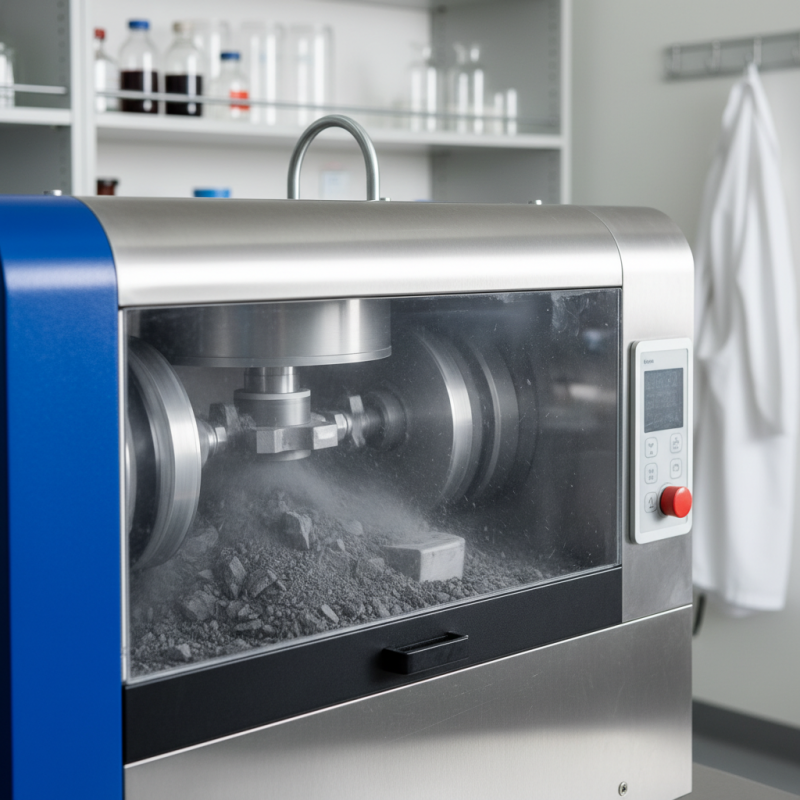
Laboratory sample pulverizers play a crucial role in material analysis. These machines reduce large samples of materials into fine powders. This is essential for various scientific studies. The pulverizers work by mechanically breaking down the samples using blades or grinding balls. This process ensures that the sample size is uniform for testing.
Using a laboratory pulverizer can save time and improve results. Properly pulverized samples lead to more accurate analysis. It’s important to note that not all materials require the same pulverizing method. Some samples may need gentle handling, while others can withstand aggressive grinding.
Tips: Always check the sample type before using a pulverizer. Identify the right settings for your materials. Over-grinding may alter the sample's properties, leading to inaccurate results. Be aware of contamination risks too. Clean the equipment thoroughly between uses to avoid any cross-sample interference.
Types of Laboratory Sample Pulverizers Used in Various Industries
Laboratory pulverizers are essential tools in various industries. They play a critical role in material testing and research. Different types of pulverizers are designed for specific applications, making them versatile.
In the mining industry, for instance, the use of laboratory sample pulverizers helps achieve accurate mineral analyses. According to a recent industry report, over 70% of mining companies rely on these machines to prepare samples for further testing. The most common type in this sector is the ring and puck mill. It efficiently reduces large samples to a fine powder, ensuring uniformity for analysis. This precision can dramatically impact profitability in operations.
In the food industry, a different approach is necessary. Here, high-speed grinders are often employed to pulverize grains and spices. These machines must maintain the integrity of the material. The fine texture can affect processing and flavor retention. Reports indicate that improper grinding can lead to decreased quality by up to 20%. Thus, food manufacturers must invest in reliable pulverizers to ensure product quality.
Despite their importance, many labs continue to face challenges in optimizing pulverization processes. Often, equipment is underutilized. Operators may fail to adjust settings for different materials, leading to inconsistent results. Continuous training and investment in technology could mitigate these issues and improve efficiency.
Operating Principles: How Laboratory Sample Pulverizers Function
Laboratory sample pulverizers play a crucial role in material analysis. They reduce samples into fine particles, essential for accurate testing. The method relies on mechanical forces, including compression and impact. Typically, samples are placed in a chamber where grinding elements crush them. This achieves a uniform particle size, vital for many scientific applications.
In practice, the efficiency of these devices can vary. Studies show that some pulverizers yield particles as fine as 10 micrometers. However, achieving consistent particle size remains a challenge. Sample hardness, moisture content, and feed size affect results. For instance, softer materials are easier to grind. Yet, harder substances require more energy, leading to potential wear on equipment.
It’s important to consider the operating environment. Variations in temperature and humidity can alter sample characteristics. Users may overlook maintaining equipment, which impacts performance. Regular calibration is necessary for precise outcomes. Ignoring these factors could result in misleading analytical data. An effective pulverizer balances quality, speed, and durability.
Key Features and Specifications of Laboratory Sample Pulverizers
Laboratory sample pulverizers are essential tools in many labs. They grind and crush materials into fine particles. This process is crucial for various analyses, including chemical and physical tests. A typical pulverizer employs high-speed blades or grinding plates. These components reduce the size of the sample quickly and efficiently.
Key specifications include size reduction capability, sample volume, and material type. Many models can process samples ranging from soft materials to hard minerals. The particle size is adjustable, allowing for customized results. Some machines have features like dust collection systems. These systems improve safety and maintain lab cleanliness.
However, challenges exist. Over-grinding can alter sample properties. Users must monitor the process carefully. Choosing the right machine depends on the intended application. Each option has strengths and weaknesses that need thoughtful consideration. Selecting a pulverizer is not straightforward. A clear understanding of the specific requirements is essential for optimal performance.
Laboratory Sample Pulverizer Performance Comparison
Applications and Benefits of Using Pulverizers in Material Testing
Pulverizers play a crucial role in material testing. They are designed to crush and grind various materials into fine powders. This process aids in analyzing material properties. For laboratories, the accuracy of these samples is vital. A uniform particle size leads to more reliable testing results.
In industries such as mining and construction, pulverizers are essential. They enable the testing of ores, rocks, and soils. By providing a fine, homogenous material sample, they improve quality control processes. However, not all pulverizers can handle every type of material. Some may struggle with harder substances. It's vital to select the right equipment for specific tasks. Missteps here can lead to flawed data and misguided decisions.
Pulverizers also save time and resources. They reduce the need for manual grinding, which is labor-intensive. Automated processes ensure consistency in sample preparation. Nevertheless, there could be a learning curve in operating these machines. Users might need to fine-tune settings to achieve desired results. This requires practice and patience, but the benefits are often worth the effort.
What is a laboratory sample pulverizer and how does it work? - Applications and Benefits of Using Pulverizers in Material Testing
| Dimension | Description | Applications | Benefits |
| Size Reduction | Pulverizers reduce the particle size of materials to facilitate analysis. | Material testing, mineralogy, and metallurgy. | Increased accuracy in testing results. |
| Consistency | Provides uniform particle size distribution. | Pharmaceuticals, food testing, and chemicals. | Improved reliability of experimental outcomes. |
| Speed | Fast processing of samples for quick results. | Environmental testing, material research, and quality control. | Enhanced productivity in laboratories. |
| Customizability | Can be adjusted for specific material types and sizes. | Various industries requiring tailored solutions. | Versatile usage for different applications. |