What is an Interlocking Nail Implant and How Does it Work?
The Interlocking nail implant is a breakthrough in orthopedic surgery. It provides stability and support for fractured bones. This innovative device is designed to help patients recover faster.
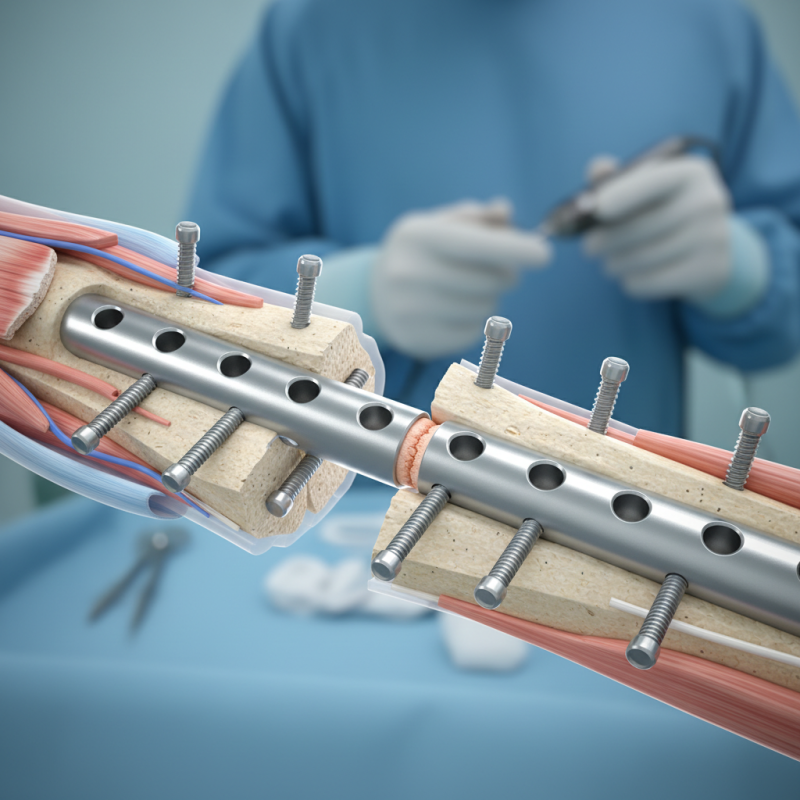
During the procedure, a nail is inserted into the medullary canal of the bone. Special locking screws secure it in place. This system helps maintain the alignment of the fracture. It offers a minimally invasive option for patients.
Despite its advantages, challenges exist. Some patients may experience complications, such as infection or pain. Each case requires careful consideration. The interlocking nail implant serves as a powerful tool, but it is not a one-size-fits-all solution.
What is an Interlocking Nail Implant?
An interlocking nail implant is a modern solution in orthopedic surgery for the treatment of long bone fractures. This device is designed to stabilize broken bones while allowing for mobility. It is typically made of stainless steel or titanium, ensuring durability and strength. As the name suggests, these nails interlock with the bone, providing a secure fit that promotes healing.
The implantation process involves inserting a narrow nail within the marrow cavity of the bone. Surgeons create small incisions to minimize trauma to the soft tissue. Once in place, the nail is locked into the surrounding bone through transverse bolts. This technique is minimally invasive and results in less recovery time compared to traditional methods. However, proper alignment is crucial during the procedure, and small missteps can lead to complications.
Patients often find that the initial recovery phase requires patience. Discomfort may linger, and full mobility can take time to achieve. Staying vigilant about rehabilitation is essential for optimal recovery. It’s important to follow medical advice on physical therapy and gradual weight-bearing activities. Reflecting on these challenges can help individuals prepare mentally for the journey ahead.
What is an Interlocking Nail Implant and How Does it Work?
| Aspect | Details |
| Definition | An interlocking nail implant is a type of internal fixation device used to stabilize and support fractured long bones. |
| Indications | Used primarily for the treatment of diaphyseal (shaft) fractures of the femur, tibia, and humerus. |
| Material | Made from titanium or stainless steel for biocompatibility and strength. |
| Insertion Method | Inserted through a small incision and aligned with the bone, using guide rods for precise placement. |
| Mechanism of Action | Provides structural support to the fracture site while allowing for the natural healing process of bone. |
| Benefits | Minimally invasive, preserves the fracture site, and allows for early mobilization of the limb. |
| Risks | Infection, malunion or nonunion of the fracture, and potential for implant failure. |
| Post-Operative Care | Includes pain management, physical therapy, and regular follow-up to monitor healing. |
The Design and Components of Interlocking Nail Implants
Interlocking nail implants play a crucial role in orthopedic surgery. Their design is unique and tailored to enhance stability in fractured bones. The implant consists of a long nail, typically made from durable metal, and various locking screws. These components work together to hold the bone fragments in alignment.
The long nail is inserted into the medullary cavity of the affected bone. As it slides into place, it must fit snugly. This precise fit is vital; any misalignment can compromise healing. Locking screws are then placed through the nail and into the bone. This interlocking mechanism prevents movement, which is essential for proper healing.
While effective, interlocking nails are not without challenges. Surgical precision is crucial. If the nail is too short, it can fail to provide adequate support. Additionally, if the screws are improperly placed, they may cause discomfort or fail to stabilize the bone. Continuous monitoring and potential adjustments are necessary drawbacks. Surgeons must reflect on these risks to ensure the best outcomes for patients.
How Interlocking Nail Implants are Surgically Installed
Interlocking nail implants are effective tools in managing complex bone fractures. Surgeries using these implants require precision and careful planning. The procedure typically starts with the patient positioned under anesthesia. The surgical team conducts a thorough assessment, ensuring all has been prepared for the process.
During the surgery, the surgeon makes an incision at the fracture site. They access the medullary canal, where the implant will fit securely. The interlocking nail is then inserted, passing through the bone. Fluoroscopy aids surgeons, providing real-time images of the implant alignment. It’s crucial to ensure proper positioning to avoid complications.
After the nail is in place, locking screws are inserted to secure it firmly. This step is vital; if done incorrectly, it can lead to instability. Surgeons must reflect on their technique to minimize patient risk. Following this, the wound is closed, and the patient will begin recovery. Pain management and rehabilitation play a significant role in healing. Each surgery offers a chance for improvement through learning and adaptation.
The Mechanism of Action of Interlocking Nail Implants
Interlocking nail implants are innovative devices used for stabilizing fractured bones, especially in long bones like the femur and tibia. Their design features a central canal with interlocking mechanisms. This junction helps secure the implant in place. As a result, it promotes better healing by preventing movement at the fracture site.
The mechanism of action relies heavily on precision. Once inserted, the implant aligns the broken bone fragments. The interlocking features enhance stability. This minimizes the risk of misalignment during recovery. It’s essential for the screws within the implant to maintain their position. If they shift or loosen, it can lead to complications.
Healing takes time and patience. Patients often face challenges, such as pain or limited mobility. Regular follow-ups are necessary to monitor progress. Awareness of potential complications is vital. While interlocking nails offer many advantages, they are not a cure-all. Reflection on one’s recovery process is crucial. Each healing journey is unique and should be approached with care.
Advantages and Limitations of Using Interlocking Nail Implants
Interlocking nail implants are vital in orthopedic surgery. They provide stability for fractured bones. Many studies highlight their effectiveness. According to a 2021 report, interlocking nails have a high success rate. Complications occur in about 5% of cases, which is relatively low. These devices are especially useful for long bone fractures.
One major advantage is the minimal invasiveness. Surgeons can insert these nails with smaller incisions. This often translates to quicker recovery times. A survey by orthopedic professionals showed that 80% prefer interlocking nails for certain fractures. However, there are limitations. Some patients may experience discomfort. Infection risks can also arise. Proper surgical technique is essential for reducing complications.
Patient outcomes vary. Some report excellent recovery, while others face challenges. Bone healing doesn’t always occur as expected. Factors like age and overall health impact results. Awareness of these limitations is necessary. Continuous research aims to improve the effectiveness of interlocking nail implants. The goal is to enhance patient care and surgical techniques.
Interlocking Nail Implant: Advantages and Limitations
The chart above illustrates the advantages and limitations of interlocking nail implants. The advantages are significantly higher, highlighting their effectiveness in bone stabilization, while limitations include the risks of complications and the requirement for surgical intervention.