
10 HPLC Column Selection Tips for Better Results

Choosing the right HPLC Column can determine whether a chromatogram becomes clear evidence or a frustrating puzzle. Resolution, retention, pressure, peak shape, and sample recovery all depend on that decision. A familiar method may still fail when the matrix, analyte polarity, or instrument changes.

Dr. Uwe Neue, a respected authority on liquid chromatography, wrote, “The column is the heart of the HPLC system.” That idea remains practical in modern laboratories. A C18 column may perform beautifully for one reversed-phase method, yet produce broad peaks for another. Small details matter. Particle size, pore diameter, carbon load, pH stability, and column dimensions can change the result.

This guide presents 10 HPLC Column selection tips for better results. It connects technical principles with hands-on decisions, such as matching stationary-phase chemistry to analyte behavior and checking pressure before a long sequence begins. You will also see why temperature, mobile-phase composition, and sample cleanliness deserve attention.

Some recommendations sound obvious. They are not always followed. A rushed analyst may choose a column because it worked last month. That shortcut can waste an entire afternoon.

Real method development is rarely perfect. I have seen promising separations weaken after only a small solvent change. That experience encourages careful testing, clear records, and modest claims. No column solves every problem. However, a thoughtful selection process can improve robustness, extend column life, and make results easier to defend. Even a simple comparison between two chemistries can reveal what the first trial missed.
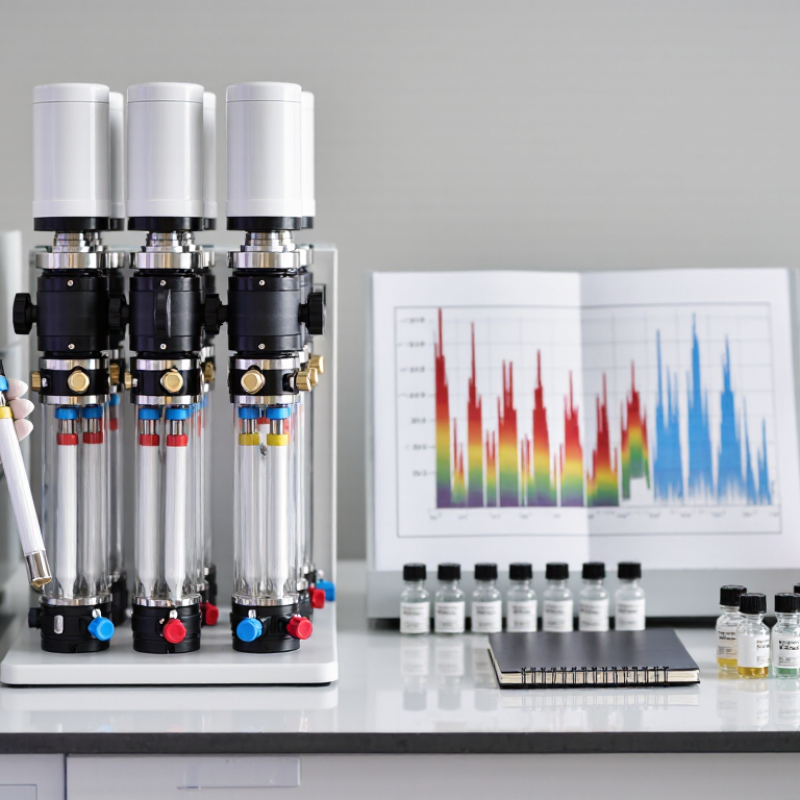
10 HPLC Column Selection Tips for Better Results

Define the Separation Goal and Analyze the Sample

Before selecting an HPLC column, define the separation goal clearly. Do you need high resolution, fast screening, or sensitive quantification? These goals can require different column properties and operating conditions. Record the critical pair, expected retention range, acceptable runtime, and detection limits. A method that separates every peak may still fail if it takes too long.

Analyze the sample before trusting any column recommendation. Note the analytes’ polarity, charge, molecular size, concentration, and stability. Check the matrix for salts, proteins, oils, or strongly retained impurities. Small particles can create pressure problems. Dirty samples can also hide the real separation issue.

Tips: Make a sample profile first. List known compounds and possible interferents. Include the solvent used for dissolution. Keep it practical. If the sample is unknown, run a small scouting experiment with a general-purpose column and a simple gradient. Watch peak shape, retention, pressure, and baseline behavior. I often focus too much on resolution and overlook sample solubility. That mistake is easy to repeat. A column may look unsuitable when the sample preparation is actually causing broad or distorted peaks.

Use a representative sample, not only a clean standard. Compare injections at realistic concentrations. If late peaks remain, review the washing step and gradient range before changing columns. If early peaks overlap, examine mobile-phase strength, pH, and column chemistry together. Record every adjustment, including failures. Those notes provide practical evidence for the next selection and make the final method easier to defend.

10 HPLC Column Selection Tips: Define the Separation Goal and Analyze the Sample

The typical pH operating window is an important starting point when selecting an HPLC column. Match the column chemistry to the sample’s ionization behavior, required retention mechanism, and mobile-phase pH. These ranges are general guidance; always verify the specific column specifications before use.

Match Column Chemistry to Analyte Properties

10 HPLC Column Selection Tips for Better Results

Match Column Chemistry to Analyte Properties

Column selection should begin with analyte properties, not with familiar equipment. Consider polarity, ionization, molecular size, and functional groups. A nonpolar analyte often performs well with hydrophobic stationary phases and aqueous-organic mobile phases. Highly polar compounds may need hydrophilic interaction or ion-exchange chemistry.

Small differences matter. I have seen retention change sharply after a minor pH adjustment. Check the analyte’s pKa before choosing conditions. Keep the mobile-phase pH safely within the column’s recommended range.

Molecular shape also influences separation. Aromatic compounds can respond differently from flexible aliphatic compounds, even when their formulas look similar. Stereoisomers may require selective interactions beyond simple polarity. Residual surface groups can create unwanted tailing for basic compounds.

A more carefully treated surface may improve peak shape, but it is not a universal fix. Match pore size to molecular dimensions, especially for larger analytes. Oversized molecules can show weak retention or slow mass transfer.

Run a small scouting study before committing to a long method. Compare two chemistries while keeping flow rate and temperature controlled. Watch retention, peak symmetry, pressure, and resolution. Matrix components may behave differently from neat standards.

This is where many attractive methods fail. I still find that one-column decisions can be too confident. Confirm performance with real samples, repeated injections, and deliberate small changes in pH or organic solvent. A method that works once is not yet reliable.

Choose the Proper Particle Size and Column Dimensions

Choosing the proper HPLC particle size and column dimensions can change peak shape, pressure, and analysis time. In routine method development, I compare these factors before changing the mobile phase. Smaller particles often improve efficiency and sharpen closely eluting peaks. However, they also create higher backpressure and demand a well-maintained system.

A 3 µm particle may resolve difficult compounds more effectively than a 5 µm particle. Yet a longer column is not always the better choice. A 150 mm column can improve separation, but it may extend runtime and increase solvent use.

For fast screening, a shorter 50 or 100 mm column can be practical. Internal diameter matters too. Narrow columns reduce solvent consumption, but small injection errors become more noticeable. I once selected a narrow column for speed and underestimated pressure changes. The method needed adjustment.

Tip: Match particle size with instrument pressure limits, sample complexity, and required resolution. Check the manufacturer’s pressure guidance, then confirm performance with system suitability tests. Record retention time, peak width, tailing, and pressure during repeated injections. A column that works perfectly on paper may behave differently in your laboratory. Temperature, tubing volume, and sample solvent can quietly affect the result. Keep the method realistic, not merely impressive.

Optimize Mobile Phase Compatibility and Operating Conditions

10 HPLC Column Selection Tips for Better Results

Optimize Mobile Phase Compatibility and Operating Conditions

In method development, I check mobile phase compatibility before judging column performance. A strong solvent can swell some polymeric materials or weaken bonded phases. For silica-based columns, keep pH within the stated operating range, often around pH 2 to 8. This is not universal. Always verify the technical specification.

Buffer choice also matters. Prepare salts completely, filter the solution, and remove dissolved air before use. Poorly dissolved buffers can create pressure spikes or cloudy lines. Confirm that the organic solvent mixes fully with the aqueous phase. Acetonitrile and methanol often behave differently in retention, pressure, and selectivity. A small solvent mismatch can distort an otherwise sound method.

Operating conditions should match the column dimensions and particle structure. Begin with a moderate flow rate, then increase it while watching pressure and resolution. Keep the sample solvent weaker than the initial mobile phase when possible. Otherwise, peaks may broaden or split near the injection point. Temperature can improve mass transfer, but excessive heat may shorten column life. I have seen analysts increase temperature to fix poor peaks, when the real problem was incomplete equilibration. That assumption can fail. Allow enough column volumes after every gradient change, and record pressure, temperature, pH, and preparation details during each trial.

10 HPLC Column Selection Tips for Better Results - Optimize Mobile Phase Compatibility and Operating Conditions
Tip Selection Dimension What to Check Recommended Practice Typical Operating Guidance Why It Matters
1 Stationary-phase chemistry Match the column chemistry to analyte polarity, hydrophobicity, charge, and functional groups. Use reversed-phase silica for many neutral and moderately polar compounds; consider ion-exchange or hydrophilic-interaction modes for strongly ionic or highly polar analytes. Reversed-phase methods commonly begin with aqueous-organic mobile phases. Correct selectivity improves resolution and reduces unnecessary method development.
2 Mobile-phase solvent compatibility Confirm that the stationary phase and instrument seals are compatible with water, organic solvents, additives, and cleaning solvents. For reversed-phase columns, water, acetonitrile, and methanol are widely used. Change solvents gradually when the new solvent is not miscible with the current one. Use an intermediate miscible solvent when required; flush with a compatible solvent before storage. Prevents precipitation, phase damage, pressure spikes, and leakage.
3 pH operating range Check the column’s allowable pH range and the pH stability of the stationary-phase support. Many silica-based reversed-phase columns are commonly operated around pH 2–8. Wider ranges require a specifically designed polymeric or chemically modified support. Measure pH in the aqueous portion before mixing with organic solvent unless the method specifies otherwise. Unsuitable pH can dissolve silica, alter retention, or damage bonded phases.
4 Buffer selection and concentration Consider analyte ionization, detector compatibility, solubility, and precipitation risk. Use volatile additives for mass spectrometry when appropriate. Keep buffer concentration only as high as needed for stable retention and peak shape. Common HPLC buffer concentrations are approximately 5–50 mM, subject to method requirements and solubility. Appropriate buffering controls selectivity and peak shape while reducing salt-related problems.
5 Column dimensions and particle size Balance required resolution, analysis time, solvent consumption, and system pressure. Shorter columns and smaller particles can improve efficiency and shorten run time, but they usually require higher pressure and better system performance. Verify that the instrument pressure limit supports the selected length, internal diameter, and particle size. Dimension choices directly affect efficiency, throughput, and operating cost.
6 Flow rate and pressure Account for column dimensions, particle size, solvent viscosity, temperature, and system pressure limits. Start at the method’s validated flow rate and increase gradually only while pressure and peak performance remain acceptable. Higher viscosity mixtures, especially water-rich mixtures with methanol, generally produce higher backpressure than acetonitrile-rich mixtures. Controlled pressure protects the column, fittings, pump, and detector flow cell.
7 Temperature control Check the column’s temperature limit and assess how temperature changes retention and selectivity. Use a column oven for reproducible retention times. Keep temperature stable during method comparisons. Many routine methods operate around 25–40 °C; higher temperatures require confirmation of column and analyte stability. Temperature affects solvent viscosity, pressure, mass transfer, and retention reproducibility.
8 Injection solvent strength Compare the sample solvent with the initial mobile-phase composition and the column’s retention mechanism. Dissolve samples in a solvent that is no stronger than necessary and is reasonably similar to the initial mobile phase. For reversed-phase separations, excessive organic content in the injection solvent can cause fronting, splitting, or early elution. Injection-solvent mismatch can distort peak shape even when the column is suitable.
9 Sample cleanliness and protection Assess particulates, insoluble matrix components, strongly retained compounds, and sample concentration. Filter compatible samples through a suitable membrane, commonly 0.2 or 0.45 µm, and use a guard column or in-line filter for dirty matrices. Match the filter membrane to the sample solvent and analyte; avoid filters that adsorb the target compounds. Reducing contamination helps maintain efficiency, lower pressure, and extend column lifetime.
10 Equilibration and storage Confirm the required equilibration volume, starting composition, and storage solvent for the selected chemistry. After solvent changes, equilibrate until pressure, baseline, and retention are stable. Reversed-phase columns often require approximately 10–20 column volumes after a major composition change, depending on the method. Do not store a column in a buffer-containing mobile phase unless specifically permitted; flush out salts before storage. Proper equilibration improves reproducibility, while correct storage prevents precipitation and stationary-phase damage.

Evaluate Column Performance, Durability, and Maintenance Needs

Choosing an HPLC column is not only about peak separation. In routine laboratory work, I evaluate resolution, retention stability, pressure, and peak shape together. A column may separate two compounds clearly but still perform poorly if pressure rises after several injections. Record the backpressure, retention time, and theoretical plates during the first qualification run. These values create a useful baseline.

Durability depends on sample cleanliness, mobile-phase control, and operating conditions. Filter samples carefully, avoid sudden solvent changes, and keep the pH within the column’s recommended range. Small habits matter. I also inspect guard filters and frits when pressure changes unexpectedly. Once, I blamed the column for broad peaks, but the real problem was an inadequately filtered sample. That mistake changed my maintenance checklist.

Cleaning procedures should match the stationary phase and method chemistry. A gradual flushing sequence is usually safer than an aggressive solvent jump. Store the column in a compatible solvent, seal both ends, and document every cleaning cycle. I prefer practical records over memory. Still, records can be incomplete when laboratories become busy. Therefore, review column performance at fixed intervals, not only after failure. Replace a column when evidence shows irreversible loss of efficiency, excessive pressure, or unstable retention. Cost alone is a poor decision guide. Consistent results are the real measure of value.

CONTACT US