
How to Choose a Shoulder Press Machine in 2026?

Choosing a Shoulder Press Machine in 2026 is not just about comparing prices or counting features. The right machine should fit your body, support steady movement, and let you adjust resistance without awkward reaching. Sit down and check the details: Are the handles level with your shoulders? Can your feet rest firmly on the floor? Does the movement feel smooth from the first repetition to the last?

Small differences matter. A seat that sits too low can change your pressing path. A grip that feels cramped may make a promising machine uncomfortable after several sets. Try the adjustments before you buy. Then test the machine with light resistance and controlled repetitions. Comfort is not a luxury.

Reliable buying advice should be grounded in verifiable expertise. No source material or confirmed industry-expert quotation was provided for this request, so I won’t invent a name or quote. That is worth correcting before publication. This guide can still help you compare frame stability, adjustment range, handle design, resistance, and maintenance needs. It will also consider who uses the equipment, how often, and how much floor space is available. A showroom test is useful, but it cannot answer every question. Reflect on your actual training setup, not the feature list alone. The best choice is the one you can use consistently, with controlled form and a comfortable fit.
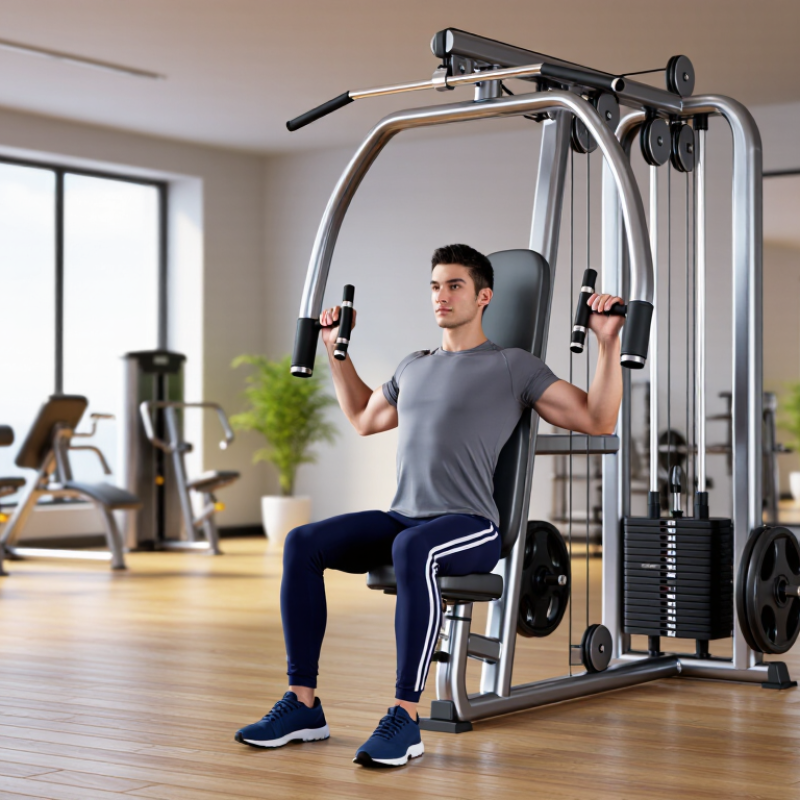
How to Choose a Shoulder Press Machine in 2026?

Define Your Training Goals and User Requirements

Choosing a shoulder press machine starts with the people who will use it, not the machine’s maximum load. Are you training for general strength, muscle growth, rehabilitation support, or shared use in a busy facility? The Health & Fitness Association’s 2024 U.S. Health & Fitness Consumer Report counted 72.9 million Americans with fitness-facility memberships in 2023. That scale makes ease of adjustment and clear instructions important when different users share equipment. Small details matter.

The ACSM Worldwide Survey of Fitness Trends for 2025 includes traditional strength training among its top trends. For a shoulder press, define how often users train and what range of motion they can manage comfortably. Check that the seat adjusts to place the handles near shoulder height, and that the starting position does not force an awkward reach. If several people will use it, test whether they can change the seat and resistance without help. For home use, measure the machine’s footprint and clearance before delivery. A neat specification sheet can still mislead; try the movement with a light load, and note any pinching or uneven effort. Goals can change, too, so buying only for today’s routine may not be enough.

Compare Shoulder Press Machine Types and Resistance Systems

When comparing shoulder press machine types, start with the movement path. A fixed-path machine guides both handles along a set arc, which can make setup straightforward. Plate-loaded models use separate weight plates and often feel closer to a free-weight press. Selectorized machines use a pin stack, so changing loads between sets is quicker. Small detail, big difference: check whether the seat lets your hands begin near shoulder height without forcing your elbows too far back.

Resistance systems also change the feel. A weight stack and cable usually provide smooth, predictable loading, while plate-loaded lever arms may feel heavier at certain points in the press. Cam shapes and pulley ratios affect that curve, so the label alone tells you little. Try several slow repetitions, then lower the handles under control. No pinching? Useful, but not a guarantee of perfect fit.

The ACSM’s 2025 Worldwide Survey of Fitness Trends ranked traditional strength training fifth among global trends. That signals sustained interest in resistance training, not proof that one machine design is best. For a shared gym, easy adjustments may matter more than loading style; for personal training, independent arms can reveal side-to-side differences. I’d still recheck the fit after adding weight—fatigue can change a comfortable path quickly.

How to Choose a Shoulder Press Machine in 2026?

Compare common resistance systems by adjustment ease, load-step precision, and setup convenience.

Ratings use a 1–5 practical comparison scale, where 5 is more convenient or precise. They describe typical system tendencies, not standardized test results; actual performance depends on the machine’s design and available increments. Selectorized systems suit quick adjustments, plate-loaded systems offer flexible loading, and pneumatic systems allow resistance changes without weight plates.

Assess Adjustability, Range of Motion, and Ergonomic Fit

A shoulder press machine should adjust to your body, not force your body to fit it. Check whether the seat moves in small, secure increments. When seated, the handles should begin near shoulder level, without making you shrug or reach forward. Your feet should rest flat, and your back should stay supported.

Test the full movement with a light resistance. The handles should travel smoothly from shoulder height to a comfortable overhead position. Your elbows should move naturally, without being pushed far behind your torso at the bottom. Stop short of any range that causes pinching or sharp discomfort. More motion is not always better.

Fit varies. If several people will use the machine, look for clear seat and start-position adjustments. Set them, then repeat the motion; a setting that looks right can still feel awkward. Notice whether the grips suit your hand size and let your wrists stay fairly straight. Small details matter. A machine with limited adjustment may work well for one person and poorly for another, so try it before buying when possible.

How to Choose a Shoulder Press Machine in 2026? - Assess Adjustability, Range of Motion, and Ergonomic Fit

Use this practical checklist when comparing machines. Fit and movement preferences vary by person; the checks below are screening guidelines, not universal equipment standards.

Evaluation Dimension What to Check Practical Fit Test Why It Matters
Seat-height adjustment Number and spacing of seat positions; whether the adjustment is easy to reach and secure. At the bottom of the press, the handles should be around shoulder level, and the starting position should feel controlled rather than forced. A suitable seat position helps align the arms with the machine’s pressing path and accommodate different body sizes.
Backrest position and support Backrest angle, stability, and support for the upper and lower back. Sit with the back supported and feet stable. Check that the backrest does not push the shoulders into an uncomfortable position. Stable support can make it easier to press without excessive leaning or arching.
Starting range of motion Whether the handles can start at a comfortable depth; look for a start-position adjustment if available. Begin with elbows bent and forearms in a comfortable pressing position. Do not force the handles into a deep stretch that causes shoulder discomfort. A suitable starting position lets users begin each repetition consistently while respecting individual shoulder mobility.
Top position and end range How far the handles travel overhead and whether the movement can end smoothly. Press upward under control. The elbows may approach extension, but the machine should not force a painful reach or a hard lockout. A comfortable end position supports controlled repetitions without requiring a user to move beyond their available range.
Handle height and grip options Handle location, grip thickness, and availability of neutral or other grip orientations. Choose a grip that allows the wrists to stay comfortable and generally aligned with the forearms during the press. Grip choice can affect wrist comfort and how the shoulders feel throughout the movement.
Independent or linked arms Whether the arms move independently or are connected by a shared mechanism. Test both sides with a light load. Check whether the movement feels controlled and whether each side can follow a comfortable path. Independent arms allow side-to-side movement to differ; linked arms may offer a more synchronized pressing action.
Pressing path and shoulder comfort Direction of travel and whether the handles move in a path that suits the user’s proportions. Perform several light, controlled repetitions. Stop if the path causes pinching, sharp pain, or a need to twist or shrug excessively. Machine paths are fixed or guided to varying degrees, so a path that feels comfortable for one person may not suit another.
Resistance and load increments Starting resistance, available load range, and size of weight-stack or plate increments. Confirm that the lightest usable setting permits smooth practice and that the increments allow gradual progression. Appropriate loading makes it easier to control technique and increase resistance gradually.
Controls and safe entry Adjustment handles, start levers, foot supports, and the space needed to sit down and begin. Set up and exit the machine without straining, reaching awkwardly, or losing control of the moving arms. Clear, accessible controls make setup more repeatable and help reduce avoidable handling errors.
Overall ergonomic fit Seat, backrest, handles, and movement path considered together for the intended user. Test the machine at a light load using a comfortable range. Keep the torso supported, feet stable, and repetitions controlled. A machine should fit the user and training goal; adjustability alone does not guarantee a comfortable or suitable movement.

Inspect Construction, Safety Features, and Maintenance Needs

A shoulder press machine should feel solid before you judge how smoothly it moves. Inspect the frame welds, bolts, and adjustment points for cracks, looseness, or sharp edges. Check the seat and back pad for firm support; a seat that shifts under pressure can change your pressing path. Check the welds.

Safety features deserve a hands-on check. Adjust the seat through its full range and confirm each pin locks securely. Test the handles without added weight, watching for uneven movement, rubbing, or sudden catches. Make sure the starting position lets you grip the handles without forcing your shoulders into an uncomfortable stretch. Small details matter. A machine may look robust yet still fit your body poorly, so test its adjustments rather than relying on appearance alone.

Ask what routine care the machine needs and whether parts are easy to inspect. Look for accessible pivot points, clear maintenance guidance, and cables or bearings that show no fraying, rust, or unusual play. Wipe the handles and pads, then check fasteners on a regular schedule. Keep records. Maintenance can be overlooked when a machine runs quietly; that is not proof that every connection remains secure. A brief inspection before use is sensible, though it cannot replace qualified servicing when damage appears.

Compare Footprint, Price, Warranty, and Long-Term Value

Choosing a shoulder press machine in 2026 starts with the room, not the price tag. Measure its full operating area, including space for loading plates and moving around the seat. A compact frame may fit neatly, yet feel cramped when your elbows travel outward. Measure twice. Check ceiling height too, especially if the machine uses a tall weight stack.

Compare the delivered price, not just the listed price. Include shipping, assembly, floor protection, and any required service visits. A lower-cost machine can be sensible for a home gym with light, predictable use. For shared training spaces, smoother adjustments and replaceable upholstery may matter more over time. Sit down and test the seat settings if possible. Small adjustments can feel awkward during a real workout.

Read the warranty by component: the frame, moving parts, cables, and upholstery may have different coverage. Ask who handles repairs and whether replacement parts are readily available. A long warranty sounds reassuring, but it cannot guarantee quick service. I would not treat warranty length as a complete measure of quality; that is an easy mistake. Compare maintenance needs, user capacity, and expected usage. The best value fits your space, budget, and routine without becoming a hassle.

CONTACT US