How to Choose the Best Ride On Toy for Kids
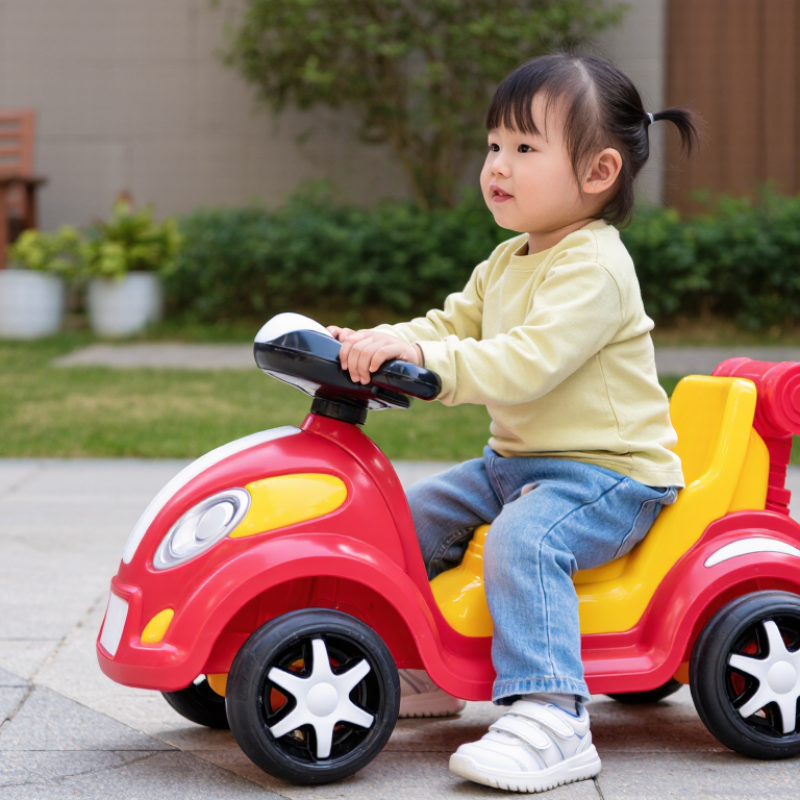
Choosing the right RIDE ON TOY is about more than bright colors or a favorite character. A good match should suit a child’s age, coordination, size, and play space. Picture a small rider steering across a smooth patio, feet close enough to the ground to stop. That practical fit matters. So does the child’s confidence.
Pediatrician Dr. Aleeya Healey, co-author of an American Academy of Pediatrics report on choosing toys, wrote: “The best toys are those that support caregivers and children playing, pretending, and interacting together.” That idea applies to ride-on toys, too. A toy can invite imaginative play, but adults should also check its stability, steering, brakes, seat support, and recommended age range. Look closely at where it will be used: a living-room rug, a driveway, and a playground surface behave differently. Supervision matters, even when a toy seems simple.
There is no perfect choice for every family. Some children need time to learn steering; others quickly outgrow a low seat or limited space. A little hesitation is useful. Compare powered and manual models, inspect materials and construction, and think about storage before buying. This guide will help you weigh those details without treating a long feature list as proof of quality. The best choice is the one a child can use comfortably, while an adult can assess and supervise with confidence.
Match the Ride-On Toy to the Child’s Age, Size, and ASTM F963 Age Grade
How to Choose the Best Ride On Toy for Kids
Age labels are a starting point, not a fit test. Match the toy to the child’s age, height, weight, and coordination. Check the maker’s stated age grade and weight limit. When seated, the child should reach the ground comfortably and steer without stretching. The U.S. Consumer Product Safety Commission’s 2023 toy-injury report estimated 231,700 emergency-department-treated injuries among children 14 and younger. That figure covers toys broadly, not ride-on toys alone, but it reinforces the value of choosing carefully.
ASTM F963 is the U.S. toy-safety standard. Look for clear age guidance and safety information, then consider whether the child can use the toy as intended. A preschooler may manage a low, foot-powered model but struggle with a heavier design or complex controls. Check stability, seat fit, and the surface where it will be used. Age grades cannot capture every child’s confidence. I have found that fit can change quickly as children grow, so reassess rather than relying on last season’s choice.
Tips: Have the child sit on the toy before purchase, if possible. Feet should reach the ground; controls should feel easy to reach. Start on a flat, open surface, and supervise every ride.
Compare Ride-On Types, Power Sources, and Manufacturer-Listed Speeds
Choosing a ride-on toy starts with how a child will use it. Push-and-ride models suit younger children who need simple movement and close supervision. Pedal versions ask for more coordination and work well on flat paths. Battery-powered vehicles add switches and charging, so check that the controls match the child’s abilities. Small details matter: a wide seat, reachable pedals, and enough room to turn indoors.
Compare power sources with the play space. A child-powered toy does not need charging, but rough grass can make it harder to move. Battery-powered models are convenient on smooth driveways; check the stated charging time and play duration before buying. Manufacturer-listed speed is a maximum, not a promise of the speed a child will experience. Surface, rider weight, battery charge, and slope can affect it. Read the age and weight limits, too. They are easy to skim past.
A lower listed speed may be a better fit for a first-time rider, especially near other children or tight corners. Look for speed information in the product specifications or manual, and confirm whether it is given in miles or kilometers per hour. Numbers can sound reassuring. Still, they do not replace supervision or a suitable riding area. I may be cautious here, but a toy that feels manageable on a smooth path can behave differently on uneven ground.
Check Weight Limits, Battery Runtime, Brakes, and Stability
Choose a ride-on toy with a stated weight limit, then leave room below it for clothing and any carried items. A high seat or narrow wheelbase can make sharp turns feel less steady, especially on uneven ground. Check that the child can reach the controls and keep both feet supported. Small details matter. The U.S. Consumer Product Safety Commission estimated 209,500 toy-related injuries treated in emergency departments in 2022. That figure covers toys broadly, not ride-on toys alone, but it is a useful reminder to inspect fit and condition carefully.
Battery runtime depends on rider weight, surface, speed, and stops. Treat the advertised figure as a guide, not a promise. Test the brake at walking speed in a clear, flat area, and watch whether the toy stops smoothly without veering. Check stability during gentle turns; avoid testing on slopes. It is easy to focus on battery life and overlook braking feel. I would recheck it after a few rides, since loose parts can change how a toy handles.
Tips: Compare the toy’s weight limit with your child’s current weight, not a future estimate. Test it empty first, then supervise a slow ride on firm ground. Keep the manual handy for battery care and inspection intervals.
How to Choose the Best Ride-On Toy for Kids
Check the toy’s weight limit, battery runtime, braking, and stability before buying. The scores below are editorial shopping priorities on a 1–5 scale, not measured product ratings; specifications vary by model.
Verify ASTM F963 and CPSC Safety Requirements, Including Pinch-Point Protection
Before buying a ride-on toy, check whether it meets the applicable requirements of ASTM F963 and the U.S. Consumer Product Safety Commission. Look for clear safety information on the packaging and product, then ask the seller or manufacturer for compliance documentation when details are missing. For children’s products, a Children’s Product Certificate may be required; it should be based on appropriate testing. A broad claim like “safe for kids” is not enough. Check the intended age, weight limit, and assembly instructions too.
Inspect moving parts closely. Pinch points can appear where a steering column turns, a seat folds, or wheels meet the frame. Run a finger near each joint without forcing it, and look for gaps that narrow as parts move. Small fingers can reach places adults overlook. Try the toy on a flat surface and watch the wheels and steering mechanism while moving them through their full range. Nothing should catch, scrape, or close unexpectedly. Recheck screws and connections after assembly, since a loose part can change how a gap behaves. Standards and labels matter, but they cannot replace a careful inspection. I might miss a narrow gap on the first pass, so checking again is sensible.
Choose a Helmet: CDC Reports a 48% Lower Bicycle Head-Injury Risk
Choosing a ride-on toy means checking more than color or seat height. Match the toy to your child’s age, size, coordination, and the surface where they will ride. A wide, stable base and manageable speed can help beginners feel in control. Use it on flat ground, away from driveways, traffic, stairs, and pools. Stay close; a child can move farther than expected in seconds.
A helmet matters, even for a slow ride. The CDC reports that bicycle helmets are associated with a 48% lower risk of head injury in a bicycle crash. That figure applies to bicycling, not specifically to ride-on toys, so it should not be treated as a precise estimate for every toy. Still, a properly fitted helmet is a sensible layer of protection. It should sit level and low on the forehead, with side straps forming a V below each ear. The chin strap should feel snug, not painful. Small details matter.
Tips: Check the fit before each ride, especially after a growth spurt. Ask your child to open their mouth; the helmet should press down slightly. Replace a helmet after a serious impact, and follow its care instructions. I sometimes see adults focus on the toy’s features and overlook the riding surface. A smooth patio can still become slippery after rain. Keep rides short until your child shows steady steering and stopping.
How to Choose the Best Ride On Toy for Kids - Choose a Helmet: CDC Reports a 48% Lower Bicycle Head-Injury Risk | Decision factor | What to check | Safety information |
| Age and size suitability | Follow the age, weight, and use limits printed on the specific toy and its instructions. | Limits differ between products; a child should be able to sit securely and reach the controls or footrests as intended. |
| Toy type and speed | Choose a ride-on toy suited to the child’s abilities. For powered toys, check the instructions for operating conditions and supervision requirements. | Ride-on products vary in operation and risk. Use them only as directed, away from traffic and other hazards. |
| Standards and product condition | Check the product label and instructions for applicable toy-safety requirements; inspect wheels, steering, fasteners, and structural parts before use. | In the United States, ASTM F963 is the mandatory toy safety standard incorporated into federal regulation. A standard does not replace age limits or regular inspection. |
| Helmet selection | For bicycle riding, use a properly fitted bicycle helmet that meets the applicable safety requirements, such as the U.S. CPSC bicycle helmet standard. | A bicycle helmet is intended for bicycle-related use; follow its label and instructions and replace it after a crash or if damaged. |
| Helmet fit | Position the helmet level and low on the forehead. Adjust the straps so they form a “V” below each ear, then fasten the chin strap snugly. | The helmet should not rock freely; check the fit each time it is worn and follow the helmet maker’s fitting instructions. |
| 48% head-injury figure | The 48% figure appears in the supplied headline. Confirm the specific study and outcome before treating it as a general estimate. | Helmet effectiveness estimates depend on the study, injury definition, and population. CDC recommends helmet use, but a single percentage should not be presented as applying to every rider or crash. |
| Riding environment and supervision | Use ride-on toys on appropriate, level areas away from streets, driveways, pools, stairs, and steep slopes. Match supervision to the child and product instructions. | A helmet does not prevent every injury or make an unsafe location safe. |
| Sources: U.S. Consumer Product Safety Commission (CPSC), bicycle helmet requirements under 16 CFR Part 1203 and toy safety requirements under 16 CFR Part 1250; Centers for Disease Control and Prevention (CDC), bicycle safety guidance. Always check the current product label and instructions. |