How to Choose the Best Microwave Oven Baffle Die?
Choosing the right Microwave Oven Baffle Die can determine production stability, product accuracy, and long-term tooling costs. The die forms a component that must fit cleanly inside the microwave assembly. Small errors may cause uneven gaps, sharp edges, or difficult installation. In a busy stamping line, these problems become expensive quickly.
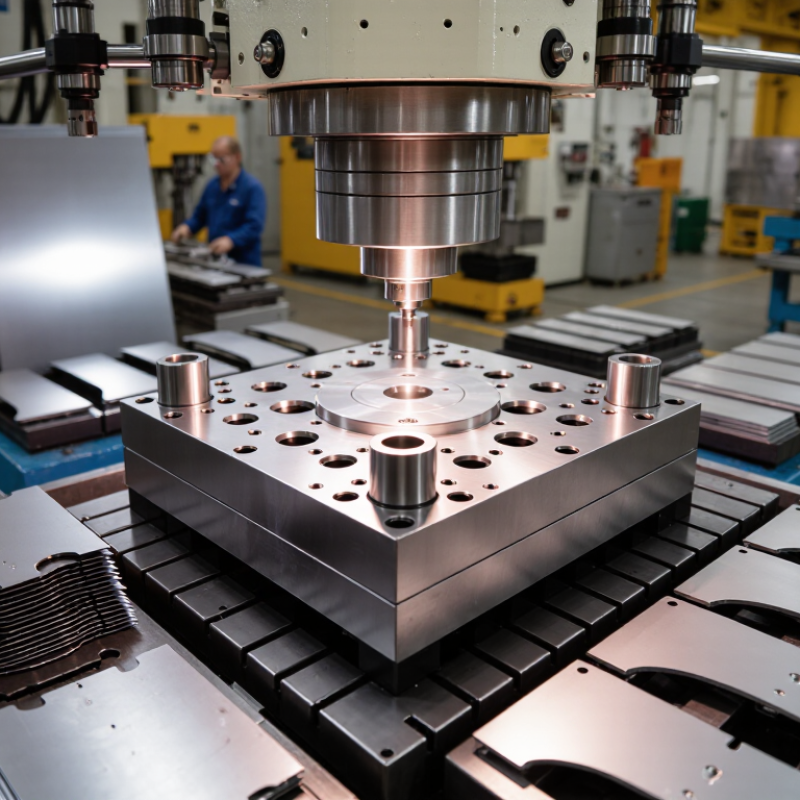
A practical evaluation should begin with material thickness, metal grade, baffle shape, and required production volume. The die must match the press capacity, working speed, and feeding system. Check forming depth, bend radius, punch clearance, and part tolerances carefully. These details affect surface quality and dimensional consistency. Experienced tooling engineers also inspect guide posts, wear plates, and replaceable inserts. Reliable construction matters more than a polished quotation.
Supplier capability deserves equal attention. Ask for material certificates, machining records, trial samples, and inspection data. A responsible manufacturer should explain how the die handles burrs, springback, and repeated cycling. Request evidence from similar appliance components, not only general promises. The best design may include sensors, better cooling, or simpler maintenance access. However, added features are not automatically valuable. They must solve a real production problem.
Do not choose by price alone.
A cheaper die may require frequent adjustment. A premium die may still fail if its design ignores your press conditions. I would not pretend that one formula suits every factory. Production trials can reveal weaknesses that drawings miss. Review sample parts under actual speed, temperature, and material conditions. With technical evidence, clear communication, and honest evaluation, buyers can select a Microwave Oven Baffle Die that supports dependable manufacturing rather than short-term savings.
Understanding the Role of a Microwave Oven Baffle Die
How to Choose the Best Microwave Oven Baffle Die?
Understanding the Role of a Microwave Oven Baffle Die
A microwave oven baffle die shapes a thin metal component with controlled openings, edges, and mounting points. Its accuracy affects airflow, assembly fit, and protection around the heating chamber. During die selection, engineers should review material thickness, tensile strength, springback, and required production volume. A progressive die may suit high-volume work, while a compound die can simplify smaller batches.
Material behavior deserves careful attention. The World Steel Association reported 1.89 billion tonnes of crude steel production in 2023. This scale reflects a complex supply chain, but it does not guarantee consistent sheet performance. Coil hardness can still vary between lots. That variation may create burrs, distortion, or unstable clearances. The U.S. Department of Energy’s appliance test procedures also emphasize repeatable operating conditions, reminding designers that dimensional consistency matters beyond appearance. A visually clean baffle may still fail after thermal cycling.
Tips: Ask for a first-off inspection report. Check burr height, flatness, hole position, and die wear records. Use trial stamping before approving full production. It is tempting to select the lowest tooling quote, but this can hide maintenance costs. I have found that small errors near mounting holes often become expensive assembly problems. Perfect alignment is difficult. Design reviews should leave room for correction.
Comparing Die Manufacturing Methods and Precision
Choosing a microwave oven baffle die starts with its required precision, not its advertised speed. In die trials, I compare the baffle aperture, bend location, edge condition, and repeatability after several hundred strokes. A small profile error can disturb assembly clearance and create uneven forming pressure. That detail is easy to miss.
Conventional CNC milling suits robust die blocks and larger production runs. It removes material quickly, but tiny internal radii may need extra grinding. Wire EDM produces cleaner narrow slots and complex profiles. It also leaves a heat-affected surface that may require polishing.
Laser cutting is faster for prototypes, yet its thermal distortion can weaken dimensional confidence. Powder metallurgy can improve wear resistance, although material selection becomes less forgiving.
ISO 230-2:2014 provides methods for evaluating machine positioning accuracy and repeatability. ISO 1101:2017 also helps define form and location tolerances clearly. These standards do not choose the die method for you. They expose weak specifications. A 2023 global smart-manufacturing survey reported that 86% of manufacturers viewed smart production as a future competitiveness driver. That supports using probing, digital inspection, and recorded process data. Still, automation cannot repair a poor datum scheme. I would request a first-article report, CMM results, surface-finish readings, and trial-stamping records before approval. Perfect numbers on paper can still fail beside a real press.
Evaluating Durability, Compatibility, and Production Efficiency
How to Choose the Best Microwave Oven Baffle Die?
Evaluating Durability, Compatibility, and Production Efficiency
A reliable baffle die must withstand repeated forming pressure and temperature changes. Die steel with proper hardness can reduce edge wear and dimensional drift. However, extreme hardness is not always better. Brittle tooling may chip during setup or accidental overloads. Check the die’s surface finish, cutting edges, and stress points before purchasing. In my production experience, small cracks often appear near corners first.
Compatibility deserves careful measurement. Confirm the baffle’s length, width, thickness, hole pattern, and forming depth. Match these details with the press stroke, working area, and material grade. A die can look correct but still produce uneven flanges. Request a trial run using the actual sheet material. Measure five to ten samples, not just one. This reveals variation that a single inspection may hide.
Production efficiency depends on more than cycle speed. A good die should support quick alignment, stable clamping, and simple cleaning. Replaceable wear inserts can shorten maintenance downtime. Clear inspection points also help operators detect burrs before they affect assembly. I once selected a die based mainly on its low price. The tooling performed well initially, but frequent adjustments reduced output within weeks. That mistake changed my evaluation process. Now, I compare expected service life, setup time, scrap rate, and maintenance access together. Some suppliers provide impressive specifications, yet practical testing remains essential. Measure twice. Then test.