
How to Choose the Best Home Charging Station?

Choosing a Home Charging Station is less about buying the fastest unit and more about finding a dependable fit for your car, home, and daily routine. EV charging reviewer Tom Moloughney’s practical advice can be summarized this way: match the charger to your vehicle’s capability and your home’s electrical setup. That sounds simple. Yet a charger’s advertised power may exceed what your car can accept, or what your electrical panel can safely support.

A useful comparison starts with real-life details. How many miles do you drive on a typical day? Is your parking space beside an indoor outlet, or across a garage from the electrical panel? Check the connector, charging speed, cable length, weather rating, and warranty. A longer cable can reach around a parked car, but it should not become a trip hazard. Smart features may help schedule charging or track energy use, though not every household needs them. Ask a qualified electrician to assess installation needs before purchase.

This guide explains how to compare charger types, power levels, safety features, installation costs, and everyday usability. It also considers whether a basic unit may serve you better than a feature-packed model. There is no perfect choice for every home. Even careful research can miss an awkward parking angle or a cable that feels too short in winter. The aim is a well-informed decision, not a showroom checklist.
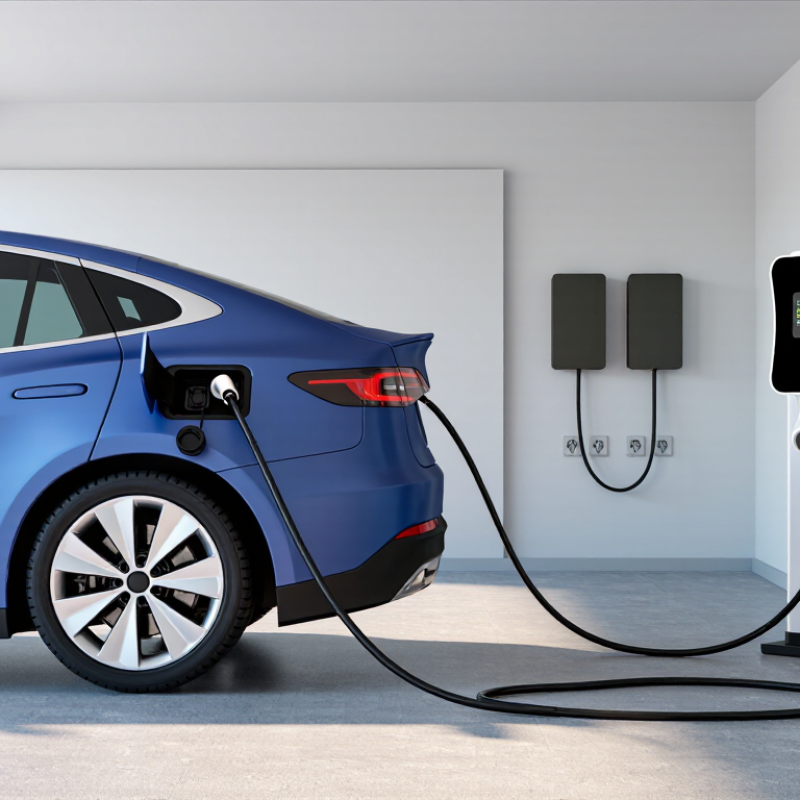
How to Choose the Best Home Charging Station?

Assess Daily Driving Needs: DOE Estimates Level 2 Adds 10–30 Miles per Hour

Choosing a home charging station starts with an ordinary question: how far do you drive each day? The U.S. Department of Energy estimates that Level 2 charging can add about 10–30 miles of range per hour. That is a wide range, not a promise. Actual charging speed depends on the station’s power, your vehicle’s onboard charger, and conditions such as cold weather. A car driven 40 miles daily may need only a few hours of charging overnight. A longer commute, or frequent evening trips, calls for more careful planning.

Tips: Track your daily mileage for a week, then compare it with the charging time you have available. If your car needs 40 miles back and charges at 10 miles per hour, allow roughly four hours, plus some margin. Check your vehicle manual for its maximum AC charging rate; a higher-rated station may not make your car charge faster. Small detail, big difference.

DOE’s estimate helps frame the decision, but your routine matters more than the headline number. Consider whether the car sits parked for eight hours or just two. Also think about winter range and occasional longer drives. It is easy to size a station around an average day and forget the messy ones. That is worth reconsidering: a modest buffer can make overnight charging feel dependable without paying for capacity you rarely use.

Match Charger Output to Vehicle Limits: SAE J1772 Supports Up to 19.2 kW AC

When choosing a home charging station, compare its rated output with your vehicle’s onboard AC charger, not just the connector. SAE J1772 can support up to 19.2 kW of AC power with a 240-volt, 80-amp supply. That figure is a ceiling, not a promise. If your car accepts only 7.2 kW, a higher-output station will not make it charge faster. Check the vehicle manual for its maximum AC charging rate.

The numbers help make the choice concrete. At 240 volts, a 32-amp station provides about 7.7 kW, while a 48-amp station provides about 11.5 kW. Actual charging can vary with the supply and vehicle. Your home’s electrical panel matters, too. Ask a qualified electrician to check its capacity and the installation requirements before choosing an output.

It is easy to overvalue the biggest number. A higher-rated station may offer headroom for a future vehicle, but it could also require electrical upgrades you do not need today. Consider how much charge you use overnight and how long your car usually sits at home. Sometimes a modest rate is enough. The right match is the highest output your vehicle can use comfortably, supported by your home’s electrical setup.

Check Home Electrical Capacity: Have a Licensed Electrician Assess the 240-V Circuit

A home charging station can draw power for hours, so a 240-volt circuit needs more than a glance. Have a licensed electrician inspect the panel, wiring, breaker rating, grounding, and available capacity. A neat-looking panel can still be close to its limit. That detail is easy to miss.

The electrician should consider household loads, not just read the breaker label. An oven, dryer, or air conditioner may run while the vehicle is charging. Ask whether the circuit can support the planned charging load, needs a dedicated circuit, or would benefit from load management. Request the recommended amperage and expected charging speed in writing. It helps avoid mismatched expectations. If wiring is old, damaged, or undersized, pause installation until it is corrected. It is tempting to assume a quick visual check proves everything is safe; it does not.

Tips: Before the visit, note major appliances and take a clear photo of the electrical panel. Ask what changes are needed and why. Keep the assessment for your records. A little uncertainty is normal; get a clear answer before choosing the station.

Verify Connector and Installation Compatibility for Your Vehicle and Parking Space

Before buying a home charging station, match its connector to the inlet listed in your vehicle manual. Connector standards can vary by market and model year, so do not rely on a product photo alone. The U.S. Department of Energy’s Alternative Fuels Data Center describes Level 2 charging as using a 208- or 240-volt supply, typically adding about 10 to 20 miles of range per hour, depending on the vehicle and equipment. That is an estimate, not a promise. Fit matters more than headline speed.

Your parking space matters just as much. Measure from the proposed mounting point to the vehicle’s inlet while the car is parked normally. Check that the cable can reach without crossing a doorway, walkway, or sharp edge. Small detail. Big annoyance. In a shared garage or outdoor space, confirm that the location has suitable protection from weather and accidental impact.

Have a qualified electrician check the panel capacity, available circuit, and installation route before choosing equipment. A cramped panel or long cable run can change the installation plan and cost. The International Energy Agency’s Global EV Outlook 2024 reports nearly four million public charging points worldwide in 2023, up about 40 percent year over year. That growth is useful context, but it cannot tell you whether a home unit fits your car or parking space. I would double-check the measurements. Reconsidering the mounting spot early is easier than living with an awkward cable every day.

How to Choose the Best Home Charging Station? - Verify Connector and Installation Compatibility for Your Vehicle and Parking Space

Check What to verify Practical guidance
Vehicle inlet and region Identify the AC charging inlet on the vehicle and confirm the connector standard used in your market. J1772 is common for AC charging in North America; Type 2 is common in Europe and many other markets. Some newer North American vehicles use the NACS / SAE J3400 connector. Check the vehicle manual or manufacturer specifications for the exact model year.
Adapter compatibility If the station plug and vehicle inlet differ, confirm that an approved AC adapter is available and permitted. Adapters are not universally interchangeable. Confirm connector direction, current rating, vehicle support, and any warranty or safety restrictions before use. A DC fast-charging connector is not a substitute for an AC home-charging plug.
Vehicle AC charging limit Find the vehicle’s maximum AC charging power and, where published, its onboard-charger current limit. The vehicle’s onboard charger sets the maximum AC charging rate. A higher-rated station will not make a vehicle charge faster than that limit; actual power can also vary with supply voltage and charging conditions.
Supply voltage and phases Check the electrical supply available at the parking location and the station’s voltage and phase requirements. Residential supplies differ by country and property. In North America, home AC charging commonly uses a 208–240 V circuit. In Europe, installations may use single-phase or three-phase supply. Confirm local supply and vehicle support rather than relying on a headline power rating alone.
Circuit capacity Have an electrician assess the panel capacity, circuit rating, wiring, protective devices, and permitted continuous load. For example, under the common North American 80% sizing rule for continuous loads, a 40 A circuit can supply up to 32 A of continuous charging, while a 60 A circuit can supply up to 48 A. Applicable rules and equipment requirements vary by jurisdiction.
Existing electrical load Consider other large household loads and whether the electrical service can support the charger at its intended setting. A load calculation may show that a panel or service upgrade, a lower charging-current setting, or a code-compliant load-management system is needed. Do not assume spare breaker spaces indicate spare electrical capacity.
Parking position and cable reach Measure the distance from the proposed mounting point to the vehicle’s charging inlet in its usual parked position. Allow enough cable reach for the inlet location without stretching the cable, crossing a walkway, or creating a trip hazard. Check the cable length and whether the vehicle can park in either direction.
Indoor or outdoor installation Confirm that the station is rated for the planned location and that the connector can be stored safely when not in use. For outdoor locations, check the equipment’s weather and enclosure ratings, local exposure conditions, mounting instructions, and required protection. Follow the installation manual and local electrical code.
Mounting surface and route Assess the wall, post, or pedestal location and the route for conduit or wiring. Check for obstructions, door movement, vehicle impact risk, and a secure mounting surface. Detached garages and outdoor parking areas may require a longer wiring route or additional site work.
Permissions and installation Check local permits, inspection requirements, property rules, and installer qualifications before work begins. Requirements depend on location and property type. Renters, condominium owners, and residents of shared parking may need written approval or coordination with a property manager. Use a qualified electrician where required.

Note: Electrical requirements and connector availability vary by country, vehicle, and installation. Verify specifications for the exact vehicle and charging location, and have the installation assessed against local codes.

Compare Safety Certification, Smart Features, Warranty, and Total Cost of Ownership

Choose a home charger as electrical equipment, not a gadget. Look for independent safety certification against a recognized standard, such as UL 2594 where applicable. Verify the exact model in the certifier’s directory. A printed logo alone is not proof. Check the label.

The U.S. Department of Energy’s Alternative Fuels Data Center says Level 2 charging typically adds about 10–20 miles of range per hour. Match charger output to your vehicle, daily driving, and circuit capacity. Smart scheduling can shift charging to cheaper hours; load management may help avoid costly electrical upgrades. Useful, not magic.

The International Energy Agency’s Global EV Outlook 2024 reports that public charging points grew 40% in 2023, exceeding four million worldwide. Nearby charging can be a useful comparison, but it may not fit your routine.

Compare warranty length and coverage for the cable, electronics, and service. Check whether key features depend on an app or internet connection. Calculate total cost: equipment, installation, possible panel work, electricity, subscriptions, and repairs. An inexpensive unit can become costly after installation. A higher price does not guarantee better value. Ask an electrician to assess your panel before trusting an online installation estimate; it is easy to overlook this step.

CONTACT US