How to Choose the Best Diamond Hole Saw?
Choosing the right Diamond Hole Saw is less about buying the hardest tool. It is about matching the diamond bond, diameter, cutting speed, and material.
A bathroom installer may drill glazed porcelain, while a countertop fabricator may cut engineered stone. These surfaces look similar, but they behave differently under pressure. Porcelain can chip at the exit point. Granite can generate heat quickly. Glass may crack before the operator notices excessive force. The correct hole saw must control all three risks: heat, vibration, and edge damage.
Industry data supports careful tool selection. The U.S. Geological Survey’s Mineral Commodity Summaries 2025 identifies industrial diamond as a critical material for cutting, grinding, and drilling applications. However, the USGS also notes that detailed production statistics are limited, making supplier claims difficult to compare directly. That limitation matters. A larger diamond-tools market does not automatically mean every Diamond Hole Saw performs equally.
Grand View Research’s Diamond Tools Market analysis reports continued demand from construction, stone processing, and infrastructure work. Its findings reflect broader diamond tooling, not hole saws alone. This distinction is easy to miss. Product descriptions often emphasize diamond concentration, but omit bond design, cooling requirements, and expected hole count.
A practical evaluation should begin with the workpiece. Check its thickness, hardness, surface finish, and installation position. Then consider wet or dry cutting, drill compatibility, and replacement cost. A low-priced tool may become expensive after one overheated hole. Conversely, the most aggressive model may damage a polished tile.
This guide examines those trade-offs. It also questions common buying assumptions, because real jobs rarely match laboratory conditions. Always verify technical data through manufacturer documentation and controlled field testing.
Understanding Diamond Hole Saw Designs and Cutting Principles
How to Choose the Best Diamond Hole Saw?
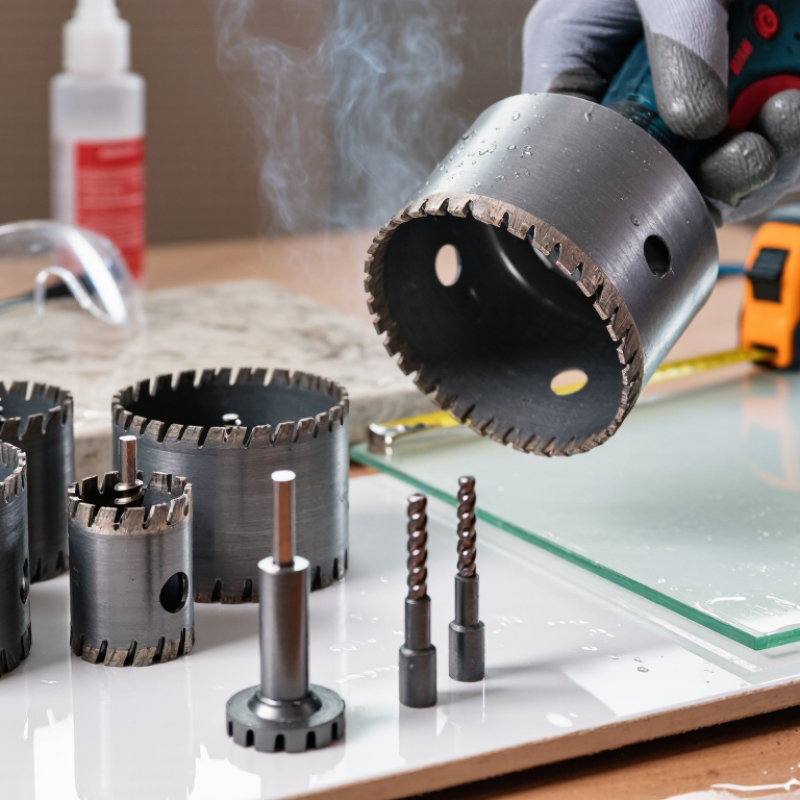
A diamond hole saw cuts through abrasive materials by grinding, not by sharp teeth. Its exposed diamond particles remove tiny fragments from tile, glass, stone, and concrete. The design controls how efficiently heat, dust, and debris escape. A continuous rim usually produces cleaner edges on delicate tiles. Segmented rims cut faster and release debris more easily. Turbo rims offer a practical balance between speed and surface finish.
Match the saw to the material, hole size, and drilling method. Dense porcelain needs a durable diamond bond and steady cooling. Softer ceramic tile may require less aggressive cutting. Wet cutting reduces heat and extends tool life, while dry cutting improves portability but demands careful pauses. Keep the drill aligned. Tilting can enlarge the hole and damage its edge. I have found that excessive pressure feels productive, but it often overheats the rim. There is no perfect design.
Tips: Mark the center clearly and begin slowly. Use a guide or template when possible. Apply light, even pressure, then pause to cool the tool. Check for hidden pipes and cables before drilling. Wear eye protection, gloves, and suitable respiratory protection when dust is present. A small test hole on scrap material can reveal whether the speed, cooling, and pressure are appropriate. Mistakes still happen. Reflect on the surface response and adjust early.
How to Choose the Best Diamond Hole Saw?
Understanding Diamond Hole Saw Designs and Cutting Principles
Diamond hole saw selection should match the workpiece hardness and structure. Softer materials generally cut efficiently with a continuous diamond rim, while dense porcelain, granite, and other hard materials benefit from an exposed-segment or vacuum-brazed diamond design that improves debris removal and reduces heat buildup.
The chart uses representative Mohs hardness values. Actual hardness can vary according to mineral composition, glazing, aggregate, and surface treatment. Water cooling is recommended for most hard, heat-sensitive materials unless the tool instructions specify otherwise.
Matching the Hole Saw to Your Material and Project Requirements
How to Choose the Best Diamond Hole Saw?
The right diamond hole saw begins with the material, not the drill. Ceramic wall tile cuts differently from dense porcelain or natural stone. Porcelain often needs a continuous diamond rim, steady pressure, and water cooling. Softer tile may accept a segmented rim, but excessive force can chip the glaze. Glass requires extra control and very light pressure.
Match the diameter to the finished opening, allowing for fittings or anchors. Check the hole saw’s cutting depth against the material thickness. A short tool may leave an uneven exit hole. For handheld drilling, choose a shank that fits your drill securely. Use a guide when possible. It reduces wandering, especially on smooth surfaces.
Project conditions matter too. Wet cutting controls heat and extends diamond life, but water must stay away from unsafe electrical connections. Dry cutting is more convenient for some masonry jobs, although dust and heat increase quickly. Pause often. I once rushed a porcelain opening and damaged the edge, even with a suitable tool. The mistake was pressure, not product choice. Test on a spare tile first. A small test can reveal whether your speed, cooling method, and alignment actually suit the material.
Selecting the Correct Size, Grit, and Cutting Configuration
Choosing a diamond hole saw starts with the hole, not the tool. Measure the required diameter, then allow clearance for the pipe, anchor, or cable. A 52 mm opening may not suit a 50 mm fitting if dust or alignment errors reduce usable space. Check the drill’s arbor, speed range, and available torque before buying. U.S. Geological Survey Mineral Commodity Summaries 2024 identifies synthetic diamond as the dominant industrial diamond supply, so “diamond” alone does not prove cutting quality.
Grit affects speed, finish, and tool life. Coarser grit usually removes softer, abrasive materials faster. Finer grit can produce cleaner edges in dense materials, but it may cut slowly or clog. Bond hardness also matters. A softer bond can expose fresh diamonds sooner when cutting hard concrete or stone. Choose a continuous rim for cleaner ceramic edges. Select a segmented configuration for faster concrete cutting and better debris release. Electroplated rims offer strong initial cutting, though exposed diamonds can wear quickly. My field experience says charts help, but one test cut often reveals the truth.
Tips: Keep the saw square, use steady pressure, and avoid forcing the tool. For wet cutting, manage slurry instead of letting it dry. For dry work, OSHA’s silica standard limits respirable crystalline silica exposure to 50 micrograms per cubic meter over eight hours. Use dust extraction and suitable respiratory protection. A slightly slower cut is usually safer and more consistent.
Checking Tool Compatibility, Quality, and Safety Features
Choosing the best diamond hole saw begins with compatibility, not cutting speed. Match the saw diameter, arbor thread, and pilot system to your drill. Check the machine’s maximum RPM against the saw’s rating. Material matters too. Tile, glass, concrete, and masonry need different diamond bonds and segment designs. Wet cutting can reduce dust and heat, while dry cutting offers easier setup.
I learned this through a costly mistake. A hole saw fitted the drill, but its arbor was too long for the guide plate. The result was vibration and a chipped tile. Now I inspect the arbor, side clearance, and cutting direction before drilling. Examine the diamond segments closely. They should appear evenly distributed, firmly attached, and free from visible cracks. A clean core path also reduces binding. Cutting rate alone can mislead; compare hole quality, wear, and vibration after several cuts.
Safety features deserve equal attention. OSHA’s respirable crystalline silica standard sets a 50 micrograms-per-cubic-meter exposure limit over eight hours, with a 25 micrograms action level. HSE’s EH40 guidance lists 0.1 milligrams per cubic meter as the workplace limit for respirable crystalline silica. Use water delivery or suitable dust extraction when conditions allow. Wear eye protection, hearing protection, gloves, and respiratory protection selected for the hazard. OSHA estimates that nearly 1,000 workplace eye injuries require medical treatment daily. I still sometimes rush setup. That is exactly when small defects become expensive.
Using and Maintaining a Diamond Hole Saw Effectively
How to Choose the Best Diamond Hole Saw?
Using and Maintaining a Diamond Hole Saw Effectively
A diamond hole saw should match the material, hole size, and drilling method. For porcelain tile, glass, or masonry, check the manufacturer’s recommended speed range. A variable-speed drill gives better control than a single-speed model. Use a guide jig when accuracy matters. It prevents wandering and protects the surface from ugly chips.
Tips: Keep the saw level. Start slowly. Use steady, light pressure. Apply continuous water when the tool and material allow wet cutting. Water cools the cutting edge and carries abrasive dust away. Never force the saw through a hard section. I have overheated tools by pressing too firmly, even when the hole seemed nearly finished.
After each hole, inspect the diamond rim for uneven wear or missing segments. Rinse away slurry, then dry the saw completely before storage. A small wooden block can protect the cutting edge from concrete floors or metal drawers. Clear the core regularly, because trapped material increases friction. Replace a badly worn saw rather than extending its use with excessive pressure. That choice is not always convenient, but it is more reliable. I still check my setup twice; rushing remains an easy mistake.