How to Choose the Best Cast Iron Casserole for Cooking?
Choosing the right cast iron casserole can greatly enhance your cooking experience. A good casserole can make or break your dish. The right one retains heat and distributes it evenly.
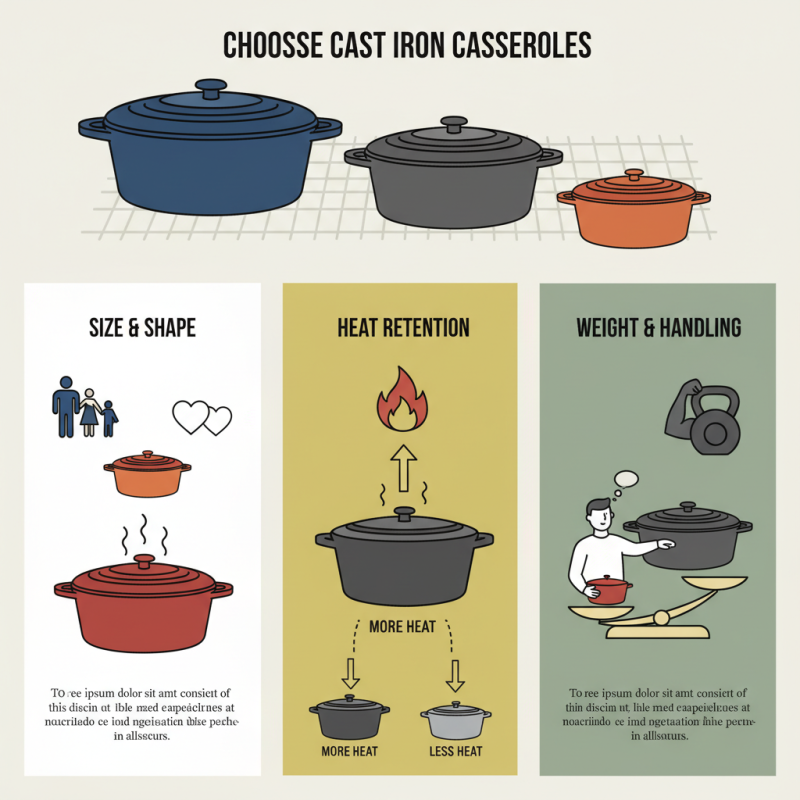
When selecting a cast iron casserole, consider its size and shape. A larger casserole is better for family meals, while a smaller one suits intimate dinners. Look for a lid that fits well. A tight lid traps steam and enhances flavors.
The weight of your cast iron casserole matters too. Heavier options typically provide better heat retention. However, they can be cumbersome to handle. You may wonder if you can manage it without struggle. Reflecting on these details can guide you to make a better choice.
Factors to Consider When Choosing a Cast Iron Casserole
Choosing the right cast iron casserole can enhance your cooking experience. There are several factors to consider. The size of the dish is crucial. Think about what you often cook. If you host dinner parties, a larger casserole is better. For smaller meals, a compact size works perfectly.
Weight matters too. Heavier casseroles retain heat well. They provide even cooking but can be cumbersome. Ensure you can handle it comfortably. The finish is another factor. Some prefer enameled surfaces for easy cleaning. Others like the traditional seasoning method. Both have their pros and cons.
When selecting, check for solid construction. Inspect the handles and lids. They should feel sturdy and fit securely. A good lid seals in moisture. This enhances flavor, making your dishes delightful.
Tip: Always consider how often you'll use it. If it’s for special occasions, aesthetics might matter more. For everyday use, focus on durability and functionality. Remember, it’s okay to feel overwhelmed. Take your time to decide. Each choice brings a unique cooking experience. Enjoy the journey!
Understanding the Different Types of Cast Iron Casseroles Available
When choosing a cast iron casserole, understanding the types available is key. There are enameled and non-enameled versions. Enameled casseroles have a smooth surface. They don’t require seasoning. This makes them easier to clean. It’s perfect for acidic dishes. On the other hand, non-enameled casseroles develop a natural non-stick surface over time.
Size matters too. Smaller casseroles are great for side dishes or baking. Larger ones can handle family meals. Consider the shape as well. Round casseroles are versatile. They fit in most ovens. Oval casseroles can be better for roasting meats. Each design serves different cooking styles.
Weight can be an important factor. Heavier casseroles retain heat well. They can make your dish more flavorful. Yet, some might find them difficult to handle. Additionally, check for the handle’s sturdiness. A flimsy handle can ruin your cooking experience. Balancing features with your cooking habits is essential. Choose carefully, and you may find the perfect casserole to fit your kitchen needs.
Evaluating the Importance of Weight and Size for Cooking Needs
When selecting a cast iron casserole, evaluating weight and size is crucial. A heavier casserole typically retains heat better and distributes it evenly. According to industry reports, a casserole weighing around 5 to 7 pounds is ideal for most cooking needs. It offers balance, making it easier to handle while still achieving great results.
Choosing the right size is equally important. For small families or couples, a 3-quart capacity might suffice. Larger families may require at least a 7-quart casserole. This differentiation affects cooking times and heat distribution. Cooking experts suggest that a larger size can accommodate bigger portions, but it may also lead to uneven cooking if not monitored carefully.
Tips: Consider how often you cook and for how many people. Think about storage space in your kitchen. Look for casseroles with handles that are comfortable for you. Weight should feel manageable, not burdensome. Reflect on your cooking style—using a heavier casserole may initially feel daunting, but the results often justify the weight.
Assessing Enameled vs. Traditional Cast Iron: Pros and Cons
When choosing between enameled and traditional cast iron casseroles, it’s essential to know their strengths and drawbacks. Enameled cast iron is easy to clean. It does not react with acidic ingredients. You can make tomato-based dishes without worry. However, the enamel coating can chip. This may affect its durability over time. If you cook often, you might find this frustrating.
Traditional cast iron, on the other hand, is a timeless choice. It retains heat well and develops a natural non-stick surface with seasoning. When properly maintained, it can last for generations. However, it requires more care. Frequent seasoning is necessary to avoid rust. It also tends to be heavier. Some might find it difficult to handle, especially when full of food.
Both options have their merits, so your cooking style matters. If you prioritize convenience, enameled might be your pick. If you crave authenticity and tradition, opt for traditional cast iron. Weighing these pros and cons can guide your decision, but reflect on what fits your needs best.
How to Choose the Best Cast Iron Casserole for Cooking?
| Feature | Enameled Cast Iron | Traditional Cast Iron |
| Maintenance | Easy to clean; no seasoning required | Requires regular seasoning to maintain |
| Durability | Can chip or scratch; more fragile | Very durable; can last generations |
| Heat Distribution | Even heat distribution; excellent for slow cooking | Very good heat retention and distribution |
| Versatility | Can be used on stovetops and in ovens | Ideal for high-heat searing and baking |
| Cost | Generally more expensive due to coating | Typically more affordable |
| Aesthetic | Available in various colors; visually appealing | Classic rustic look; less variety in color |
Analyzing Brand Reputation and User Reviews for Quality and Durability
When choosing a cast iron casserole, brand reputation is crucial. A well-regarded brand often indicates quality. Customers leave valuable insights through their reviews. These reviews offer a glimpse into durability and performance. Look for common patterns in feedback. Some users may report chipping or rusting over time, despite careful use. This might prompt questions about the manufacturing process.
Not all cast iron is created equal. Some products may perform well initially but fail over time. User experiences often highlight these flaws. Pay attention to comments about weight and handling. A heavy casserole can feel cumbersome for everyday use. It’s a reminder that comfort should not be overlooked. Furthermore, consider varying prices. A high price does not always guarantee longevity or effectiveness.
Reflecting on customer reviews allows for informed decisions. Sometimes, personal preferences can cloud judgment. An aesthetic design might appeal but not guarantee functional success. Prioritize reviews about cooking performance and ease of cleaning. Each report contributes to a clearer picture of what to expect. Ultimately, user feedback and brand reputation are essential in your search for the perfect cast iron casserole.