How to Choose the Best Acoustic Panels for Your Space?
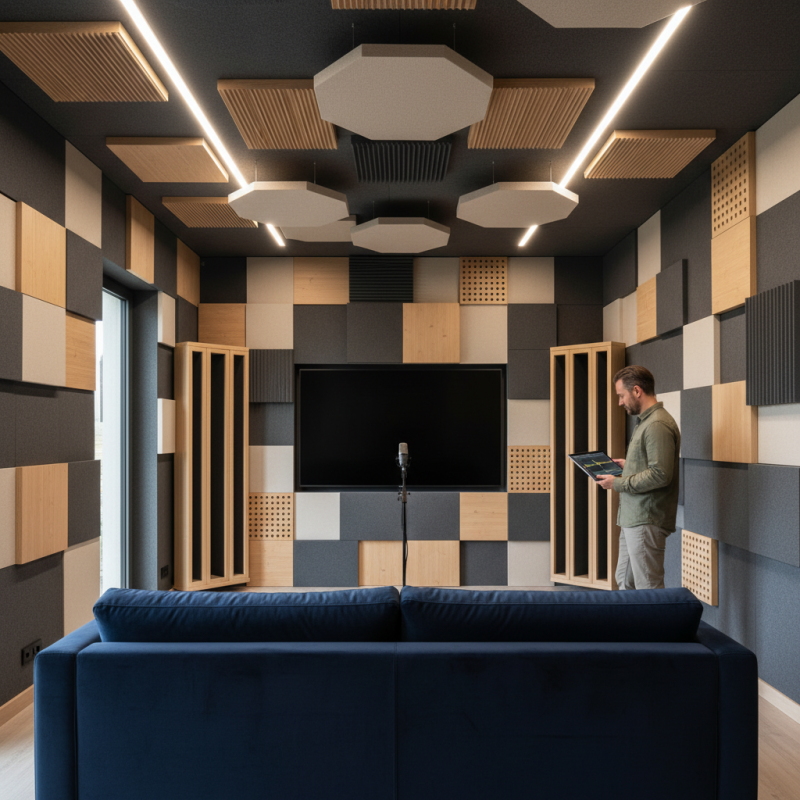
Acoustic Panels are essential for improving sound quality in various spaces. Research from the Acoustical Society of America indicates that proper acoustic treatment can reduce reverberation by up to 50%. This reduction enhances clarity in music studios, offices, and home theaters alike.
Choosing the right panels involves understanding your specific needs. Not all acoustic panels are created equal. Some are designed for sound absorption, while others target sound diffusion. Consider the materials, thickness, and placement for the best results.
Installation can be tricky. Misplacement can lead to uneven sound, causing frustration. Evaluating your room's unique acoustics is crucial. Use audio testing tools or consult with experts to refine your choices. The investment in quality acoustic panels pays off with improved audio experience and comfort.
Understanding Acoustic Panel Materials: Types and Their Properties
When considering acoustic panels, understanding materials is crucial. Common options include foam, fiberglass, and fabric-wrapped panels. Each has unique properties, influencing sound absorption rates and installation requirements.
Foam panels are lightweight and affordable. They are effective in reducing high-frequency echoes. However, they often lack durability over time, leading to wear and tear. On the other hand, fiberglass panels offer superior sound absorption, especially in mid to low frequencies. A report by the Acoustical Society of America indicates that fiberglass can absorb up to 90% of sound in certain frequencies. Their lifespan is longer, but they require more careful installation.
Fabric-wrapped panels combine aesthetics with function. They can match any decor while maintaining high durability. However, they may cost more than other options. It’s essential to evaluate the specific needs of your space. Too often, people overlook the importance of proper panel placement. This can lead to suboptimal performance despite using high-quality materials. The right choice balances effectiveness with your budget and design needs.
Comparison of Acoustic Panel Materials
Measuring Your Space: Determining the Ideal Panel Coverage Ratio
Measuring your space is crucial when choosing acoustic panels. Start by assessing the room's dimensions. Calculate the area by multiplying length and width. Aim for a panel coverage ratio between 15% to 30% of the total wall area. This range effectively reduces echo and improves sound clarity. However, the exact percentage may vary based on the room's purpose.
Consider room features that influence sound. Hard surfaces like glass and concrete reflect sound waves. In contrast, carpets and curtains absorb them. If your room has many reflective surfaces, increasing panel coverage might be necessary. Take note of how sound travels in your space. Is it too loud? Does it feel dull? These reflections often guide your decision on placement and quantity.
Testing different layouts can reveal unexpected results. Move panels around to judge their effect. You might need to rethink your initial measurements. It takes time to find the perfect balance. Acoustic treatment isn’t a one-size-fits-all solution. Each room has unique characteristics that affect sound. Adjusting your plans can lead to better outcomes.
Assessing Sound Absorption Coefficients: Key Metrics to Consider
When selecting acoustic panels, understanding sound absorption coefficients is essential. These coefficients indicate how well a material absorbs sound at specific frequencies. According to the National Institute of Standards and Technology (NIST), different materials exhibit varying levels of sound absorption. For example, soft materials like textiles generally perform better at mid to high frequencies.
An effective acoustic panel should have a high Noise Reduction Coefficient (NRC). The ideal NRC rating ranges from 0.5 to 1.0. A panel with an NRC of 0.9 absorbs 90% of sound at a specific frequency. This means that such a panel can dramatically improve sound quality in spaces like recording studios or classrooms.
However, one must consider the unique acoustic needs of a space. Not all areas require the same level of sound absorption. Over-treating a space can lead to an unnatural listening environment. Sometimes the balance between absorption and reflection is key for achieving desired acoustics. Thus, careful evaluation of sound absorption coefficients is crucial for making informed decisions.
How to Choose the Best Acoustic Panels for Your Space? - Assessing Sound Absorption Coefficients: Key Metrics to Consider
| Panel Material | Thickness (inches) | NRC (Noise Reduction Coefficient) | Dimensions (inches) | Weight (lbs) |
| Foam | 2 | 0.9 | 24 x 24 | 1.5 |
| Fiberglass | 1 | 0.85 | 48 x 24 | 3 |
| Mineral Wool | 2 | 0.95 | 24 x 48 | 2.5 |
| Fabric Wrapped | 1.5 | 0.80 | 30 x 60 | 4 |
| Wood | 1 | 0.70 | 48 x 48 | 5 |
Identifying Design Aesthetics: Balancing Function and Style in Panels
Choosing acoustic panels involves more than just functionality. The design aesthetics play a crucial role in your space's overall vibe. Panels come in various shapes, sizes, and colors, giving you numerous options. Selecting the right panel can enhance the room’s ambiance while controlling sound.
Consider the room's purpose. A cozy home theater may call for dark, plush panels. In contrast, a bright, modern office might benefit from lighter colors with smooth textures. Mixing materials can create an inviting environment. Remember, however, that balance is key; too many colors can overwhelm the senses.
You might find that perfect style is elusive. Assess how light affects your chosen panels. The wrong choice could lead to a stark contrast that feels off-putting. Think beyond mere aesthetics. The ideal acoustic solution harmonizes style with sound control. It’s a challenge that requires thoughtful reflection and keen attention to your unique space.
Evaluating Installation Methods: DIY vs. Professional Assistance Options
When considering acoustic panels, installation is a crucial factor. You have two primary options: DIY or professional assistance. DIY installation can save money. However, it often requires careful planning and some trial and error. Not everyone is familiar with the best placement for panels. Misalignment can reduce their effectiveness.
On the other hand, hiring a professional can ensure optimal results. Experts understand how sound waves interact with different surfaces. They can suggest the best type and location for each panel. This saves time and may lead to a better acoustic environment. That said, professional installation comes with a cost.
Reflect on your skills and knowledge. If you're confident in your abilities, a DIY approach could work well. However, if you have doubts, professional help might be the better choice. Balancing cost and quality is essential. The goal is to create an acoustically pleasant space tailored to your needs.