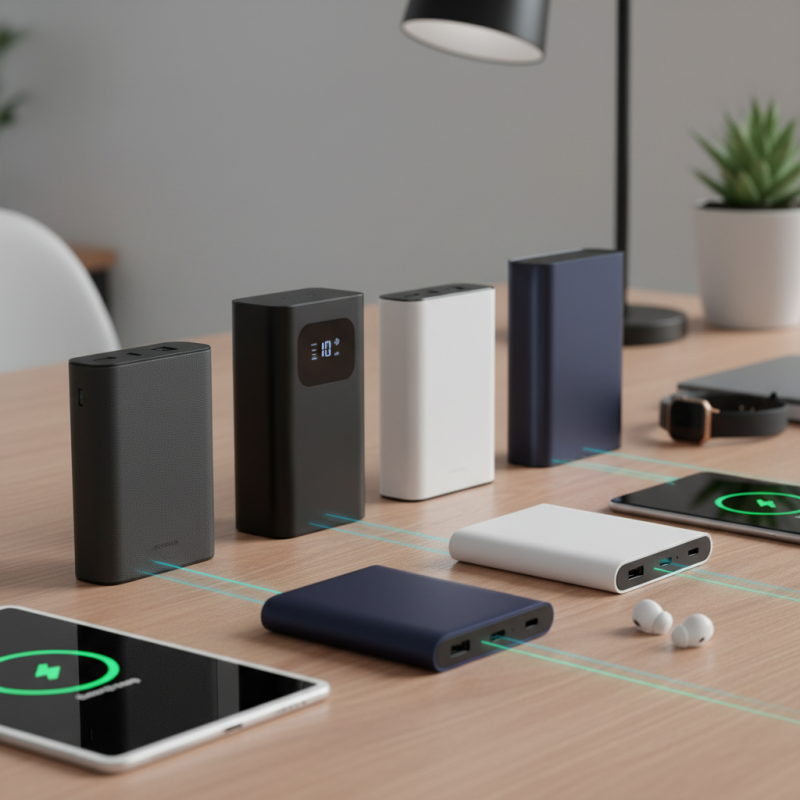
How to Choose the Best Wireless Power Bank for Your Devices?
In an increasingly connected world, choosing the right Wireless Power Bank is essential. These devices provide convenience and freedom, allowing you to charge multiple gadgets on the go. However, not all power banks are created equal.
When selecting a Wireless Power Bank, consider your device compatibility and charging speed. Some models offer fast charging, while others may be slower. This can affect your daily routine. It’s useful to compare features, but also important to acknowledge potential downsides.
Many consumers overlook build quality and safety features. A poorly designed power bank can lead to overheating or damaged devices. Reflecting on these factors can ensure you make an informed decision. Ultimately, a thoughtful choice will enhance your mobile experience.
Understanding Wireless Power Bank Basics: What is Wireless Charging?
Wireless charging is a modern convenience that allows you to power up your devices without the hassle of tangled cords. Wireless power banks harness this technology, enabling you to recharge your smartphones, tablets, and other devices on the go. They utilize electromagnetic fields to transfer energy, making charging simple and efficient.
For those new to wireless charging, it’s important to understand that not all devices support this feature. Make sure your smartphone or tablet has wireless charging capabilities. Also, check your power bank's compatibility. Some models work only with specific brands or devices.
Tips: Look for a power bank with a clear capacity rating. A higher capacity means more charges for your device. Consider the size and weight of the power bank too. A bulkier option may not fit easily in your bag. A light power bank is more portable, but it may offer lower capacity.
Reflect on your daily routine. Do you frequently forget to charge your devices? A wireless power bank can be a game changer. Always keep it charged for emergencies. Just remember, while it's convenient, it’s not always the fastest charging method.
Evaluating Compatibility: Ensuring Your Devices Work with Wireless Power Banks
When choosing a wireless power bank, compatibility is key. Start by checking the power requirements of your devices. Different gadgets have varying charging needs. A power bank with a higher wattage can handle more demanding devices. But be cautious. An overly powerful charger may harm smaller devices.
It's also essential to consider the wireless charging standard. Most modern devices use Qi technology for wireless power transfer. Many power banks support this standard, but not all. Verify your device's compatibility before purchasing. Sometimes, a power bank that looks perfect may not work with an older device. Compatibility issues are frustrating.
Lastly, reflect on everyday usage. How often do you charge on the go? Some power banks are bulkier than others. They may not fit well in your bag or pocket. Prioritize size and weight along with compatibility. A lightweight option may be more convenient. Compatibility is more than just the specs; it involves real-world usability.
Wireless Power Bank Compatibility - Device Evaluations
Key Features to Consider: Capacity, Portability, and Charging Speed
When choosing a wireless power bank, capacity is crucial. It indicates how much energy it can store. A power bank with higher capacity can charge devices multiple times. Look for at least 10,000 mAh for smartphones. However, a larger power bank can be bulkier. It might not fit well in smaller bags or pockets. You have to balance power with convenience.
Portability matters too. Some power banks are slim and lightweight. They are easier to carry. But, they often have lower capacity. Be cautious about that trade-off. If you travel a lot, a portable design is essential. Consider the weight and size. Smaller ones can slip into your pocket, while larger ones may need a dedicated space in your backpack.
Charging speed also plays a key role. Fast charging can save you time. Many power banks support quick charge technology. Make sure your devices are compatible. Alternatively, slower charging might be adequate for overnight use. Reflect on your needs. How often are you in a hurry? Everyone's use case varies, so think about your habits.
Safety Standards and Certifications: What to Look for in a Power Bank
When selecting a wireless power bank, safety standards and certifications are crucial. Look for models that comply with recognized safety certifications. These include UL, CE, and FCC. A certified power bank assures a level of safety during use. It can prevent overcharging, overheating, and short circuits.
Tips: Always check the specifications. A power bank without certifications may pose risks. Some cheap options might look appealing but could lead to devices getting damaged. Ensure your portable charger adheres to safety regulations.
Also, consider the materials used in the power bank’s construction. Sturdy build quality is essential for longevity. Avoid flimsy plastic models that may not withstand occasional drops. Continuous performance matters too.
Tips: Check for user reviews about safety issues. Sometimes, users highlight problems with specific models. An informed choice minimizes the risk of mishaps and enhances safety. Remember, safety should never be an afterthought.
Comparing Popular Wireless Power Banks: Pros and Cons of Top Models
When comparing popular wireless power banks, it's essential to consider various factors. Size and weight can greatly affect portability. A compact model is easier to carry, fitting in pockets and small bags. However, smaller power banks often come with lower capacity. Some users may find themselves needing more power than they anticipated. That's a key drawback.
Another significant aspect is charging speed. Certain models support fast charging, which is convenient for urgent situations. But, fast charging may generate heat, potentially harming devices over time. Some users might overlook this risk, focusing solely on speed. It's critical to evaluate how charging features align with device compatibility, as not all devices benefit from the same charging method.
Finally, battery life is equally important. Some power banks offer multiple charges, while others may drain quickly. Users need to reflect on how often they’ll use it. Their lifestyle is crucial in this decision-making process. Ultimately, understanding the trade-offs among size, charging speed, and battery life can lead to a more informed choice.