How to Choose the Best Plastics Processing Equipment for Your Needs?
Choosing the right Plastics Processing Equipment is crucial for success in manufacturing. According to the latest report by Grand View Research, the global market for plastics processing equipment is expected to reach $35 billion by 2027. This growth reflects the essential role that efficient and advanced machinery plays in production lines worldwide.
Dr. Emily Chen, a leading expert in the field, emphasizes, "Selecting the appropriate equipment can make or break a production process." Her insights highlight the importance of aligning equipment with specific business needs. Factors such as production volume, material type, and end-use applications must be carefully considered.
However, the decision is often not straightforward. Many businesses rush into choices without thorough research, resulting in inefficiencies or increased costs. Understanding both current demands and potential future needs can be challenging. Reliable suppliers and comprehensive market analysis can aid in making informed decisions. Therefore, approaching the selection process with diligence and expertise can significantly enhance operational effectiveness.
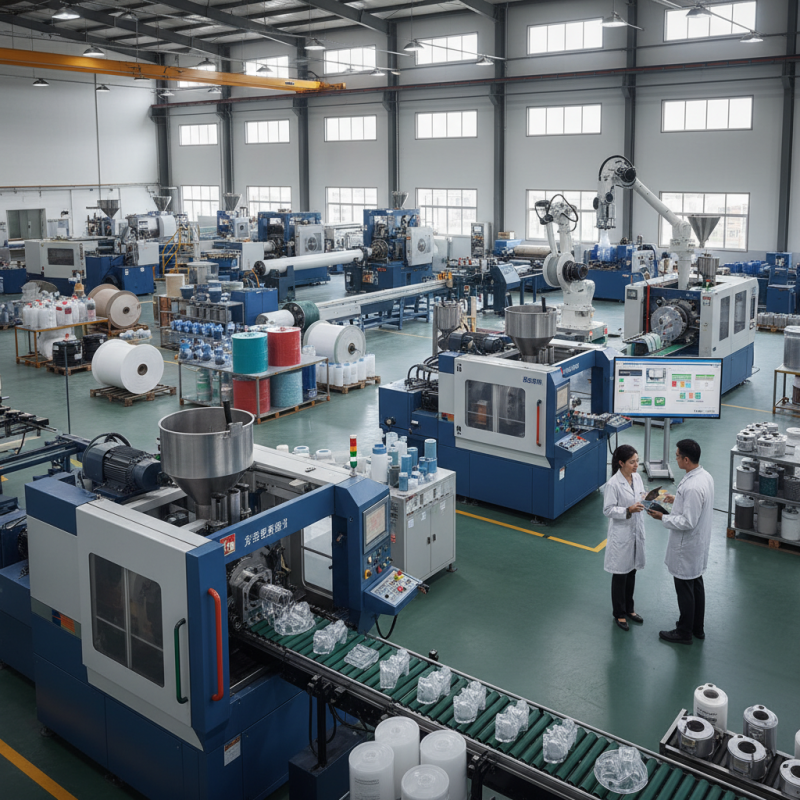
Factors to Consider When Choosing Plastics Processing Equipment
Choosing the right plastics processing equipment significantly impacts production efficiency and product quality. A recent industry report highlights that 40% of manufacturers face challenges due to improper equipment choices. Understanding specific requirements is crucial. Assess your production volume, material types, and processing techniques. Each factor plays a role in determining the best fit for your operations.
Energy efficiency is another critical consideration. Estimates show that up to 30% of operational costs can be attributed to energy use. Selecting equipment designed for low energy consumption can lead to substantial cost savings. Also, consider the maintenance and support provided by the manufacturer. A reliable supplier can ensure your equipment runs smoothly, minimizing downtime.
The technology used in plastics processing is rapidly evolving. Innovations, like automation and smart technology, increase productivity but require upfront investment. It's vital to weigh the long-term benefits against initial costs. Seek equipment that offers scalability, allowing you to adapt to market needs. Balancing these factors ensures that your choice aligns with both current and future business goals.
Types of Plastics Processing Equipment Available on the Market
When selecting plastics processing equipment, it is crucial to understand the types available on the market. Extruders are among the most common. They are used to melt and shape plastic materials into various forms. Expert operators appreciate their ability to produce consistent products. However, improper usage can lead to material degradation.
Injection molding machines are another popular option. They allow for high-volume production of intricately shaped items. These machines can be complex and require skilled management. Operators must watch for issues like uneven cooling and insufficient material flow. These problems can affect product quality and cost efficiency.
Blow molding is ideal for hollow objects, like bottles. This process involves inflating molten plastic into a mold. While effective, it demands precise control over temperature and pressure. Minor errors can lead to thin spots or inconsistencies in thickness. Choosing the right type of equipment for your application takes careful consideration of production needs and technical limitations.
How to Choose the Best Plastics Processing Equipment for Your Needs? - Types of Plastics Processing Equipment Available on the Market
| Type of Equipment | Description | Applications | Advantages |
| Injection Molding Machine | Used to create parts by injecting molten material into a mold. | Automotive, consumer goods, medical devices | High precision, fast production speed, complex shapes |
| Blow Molding Machine | Used for forming hollow plastic parts by inflating a heated plastic tube. | Bottles, containers, toys | Cost-effective for large volumes, lightweight products |
| Extruder | Processes plastic by forcing it through a shaped die. | Pipes, sheets, film | Continuous operation, versatile material processing |
| Thermoforming Machine | Shapes plastic by heating and forming it over a mold. | Packaging, medical trays, automotive interiors | Cost-effective for short runs, simple shapes |
| Compression Molding Machine | Forms products by compressing heated material into molds. | Automobile parts, household products | Ideal for large, heavy parts, material efficiency |
Evaluating the Performance and Efficiency of Equipment
When selecting plastics processing equipment, evaluating performance and efficiency is crucial. The equipment’s ability to process materials effectively impacts both output and cost. Consider metrics like throughput, energy consumption, and waste generation. Analyze how each machine fits your production goals.
Tips: Focus on energy-efficient models. They reduce long-term operational costs. Look for devices with low maintenance requirements. It ensures smoother operations.
Be mindful of technology. Advanced machines might offer better efficiency. However, they often come with higher upfront costs. Assess whether the benefits justify the investment. It's essential to weigh the complexity and training time against potential productivity gains.
Experiment with different models before making a decision. This hands-on approach can uncover unexpected performance issues. Gather feedback from operators for insights on usability. Relying solely on specifications can lead to oversights.
Assessing Your Production Needs and Capacity Requirements
When selecting plastics processing equipment, understanding your production needs is crucial. First, determine your production volume. Are you running a small workshop or a large factory? This decision impacts the size and capacity of the machinery you require. Equipment with higher throughput may be necessary for larger operations. However, overestimating your needs can lead to unnecessary expenses.
Consider the types of plastics you will work with. Different materials require specific processing techniques. For instance, thermoplastics often need different machinery than thermosetting plastics. Assess whether you need versatility or if a single-purpose machine suffices. Remember that the initial cost is just part of the equation; maintenance and operational costs matter too.
Reflect on your workforce's expertise. How comfortable are your team members with advanced machinery? If they lack experience, complex equipment may lead to operational errors. It’s essential to balance the capability of your equipment with the skill level of your operators. Investing in training could mitigate potential mistakes and enhance productivity, aligning your equipment choice with your workforce's abilities.
Production Capacity Assessment of Plastics Processing Equipment
This chart illustrates the production capacity requirements for various types of plastics processing equipment based on a hypothetical manufacturing scenario.
Budgeting and Cost Considerations for Plastics Equipment
When budgeting for plastics processing equipment, understanding costs is crucial. Equipment expenses can vary widely, from a few thousand to hundreds of thousands of dollars. According to a recent industry report, nearly 35% of manufacturers cite high initial costs as a barrier to upgrading equipment. This highlights how financial planning is vital for sustainable operations.
It’s also essential to account for ongoing operational costs. Maintenance, energy consumption, and material waste can significantly impact the total cost of ownership. Data shows that energy costs can account for up to 30% of a facility’s budget. Optimizing these factors can lead to better savings over time.
Consideration of resale value should not be overlooked. The depreciation rate for plastics processing equipment can be steep, sometimes exceeding 20% annually. Therefore, planning for a potential upgrade in the future is wise. Balancing initial costs with long-term financial implications can be challenging. Many businesses find themselves needing a careful analysis to avoid unexpected expenses down the line.