
How to Choose the Best Agricultural Drones for Your Business?
The adoption of Agricultural Drones is transforming the farming landscape. A recent report by a leading market research firm highlighted that the global agricultural drone market is expected to reach $6.5 billion by 2026. This rapid growth underscores the value these technologies bring to crop management, resource optimization, and yield improvement.
Farmers are increasingly relying on Agricultural Drones for precision agriculture. These drones offer capabilities like crop monitoring and soil analysis, improving efficiency in farming practices. A survey indicated that 65% of farmers using drones reported enhanced productivity. However, choosing the right drone can be challenging. It requires understanding specific needs and available technology.
Many options depend on factors like farm size and type of crops. An overwhelming array of features can lead to uncertainty. This can make decisions difficult. Balancing cost against requirements can also provoke questions. As the industry evolves, continuous learning and adaptation will remain key. Understanding the roles of Agricultural Drones can lead to more informed choices.
Factors to Consider When Selecting Agricultural Drones
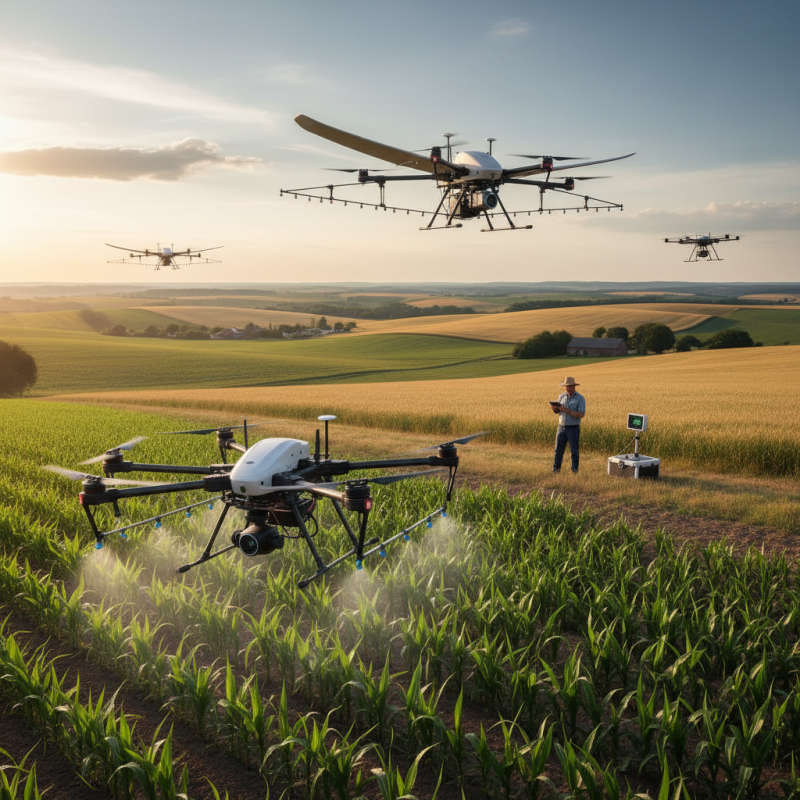
When selecting agricultural drones, several factors can influence your decision. Start by considering the payload capacity. Depending on your needs, a drone must carry necessary sensors or cameras. Larger payloads can help in detailed crop monitoring and pesticide spraying. Knowing your requirements helps narrow down the options.
Battery life is another critical aspect. Longer flight times offer better coverage of vast fields. Yet, frequent charging can disrupt workflow. It's vital to assess whether the drone will meet your operational demands throughout the day. Additionally, examine the ease of use. Some drones come with complex interfaces, while others provide user-friendly designs. Choosing the right level of sophistication can enhance efficiency.
Think about the support and warranty offered by the manufacturer. Reliable support can make a significant difference in the long run. Each drone has its quirks, and troubleshooting can be challenging. An excellent support framework can simplify this process, allowing you to focus more on your farming operations. Balancing these factors contributes to effective drone deployment in agriculture.
Types of Agricultural Drones and Their Applications
In the agricultural sector, drones have transformed how farmers manage their fields. There are several types of agricultural drones, each serving unique purposes. Fixed-wing drones are ideal for covering large areas quickly. They can fly long distances and capture high-resolution images of crops. According to a report by MarketsandMarkets, the agricultural drone market is expected to reach USD 5.9 billion by 2025. This growth highlights the increasing reliance on such technology.
Multirotor drones offer more versatility. They can hover and take detailed images of specific locations. This ability is beneficial for monitoring crop health and assessing plant stress. A study published in the Journal of Unmanned Vehicle Systems found that using drones for crop analysis can increase yield by up to 20%. However, drone management requires training. Improper use may lead to ineffective data collection.
Hybrid drones combine the advantages of fixed-wing and multirotor types. They can switch between modes depending on the task. This flexibility can increase operational efficiency. Despite their advantages, farmers must consider factors like cost and regulatory restrictions when selecting drones. Continuous advancements mean businesses must regularly evaluate their options.
Types of Agricultural Drones and Their Applications
Key Features to Look for in Agricultural Drones
When selecting agricultural drones, the key features can significantly impact your farming efficiency and productivity. One essential aspect is the drone's camera quality. High-resolution cameras provide detailed imagery, which aids in plant health monitoring. Look for drones equipped with multispectral or thermal sensors. These features help identify stressed crops and optimize resource allocation.
Another critical factor is the drone's flight time. A longer battery life allows for covering larger areas in one flight. This can save time during critical agricultural periods, like planting or harvesting. However, be mindful that flight time can be influenced by payload and weather conditions. Choose a drone that balances performance with your specific needs.
Tips: Consider the ease of use as well. Some drones have user-friendly interfaces, which can enhance the learning curve for new users. Additionally, think about the support and training offered by manufacturers. It’s valuable to have access to resources when integrating technology into your farming practices. Always reflect on your current needs and be open to adjustments. This ensures you select a drone that grows with your business demands.
Budgeting and Cost Analysis for Agricultural Drone Investment
When investing in agricultural drones, budgeting is crucial. A well-planned budget helps avoid overspending while maximizing benefits. Research from the Drone Industry Association indicates that the average cost of agricultural drones varies from $1,000 to $10,000. This range largely depends on features, technology, and capabilities.
Understanding operational costs is equally important. Farmers should consider maintenance, insurance, and training expenses. A study by the National Agricultural Aviation Association reveals that maintenance can account for 15% of total ownership costs. The cost of pilot training can also impact budgets. In some cases, training expenses can range from $500 to $2,000 per pilot, depending on the complexity of the drone’s operation.
It's critical to anticipate potential challenges. Market fluctuations can affect drone prices. Additionally, technology evolves rapidly, leading to frequent updates and new models. This could influence a farmer's decision-making process, prompting a need for ongoing education about advancements in drone technology. Keeping abreast of industry reports can help mitigate these risks. Budgeting effectively demands a balance between initial investment and long-term operational efficiency.
Regulatory and Compliance Considerations for Drone Use in Agriculture
When considering the use of drones in agriculture, regulatory and compliance factors are crucial. Farmers must understand local laws governing drone operation. These regulations often require pilots to maintain specific distances from populated areas and sensitive land. Understanding these limits can help avoid legal issues.
Registration is another important step. Many regions mandate that drones be registered before use. This process ensures accountability and promotes responsible flying practices. Additionally, operational guidelines often emphasize safety protocols. For instance, ensuring proper maintenance and checking weather conditions can prevent accidents.
Operators should also consider privacy concerns. Using drones raises questions about surveillance and land rights. Engaging with the community can build trust. As drones integrate into agricultural practices, farmers must be proactive about compliance. Staying informed about ongoing regulatory changes is essential for successful drone utilization.
How to Choose the Best Agricultural Drones for Your Business? - Regulatory and Compliance Considerations for Drone Use in Agriculture
| Feature | Description | Regulatory Compliance | Recommended Use Cases |
|---|---|---|---|
| Autonomy Level | Refers to the drone's ability to operate without human intervention, typically categorized as manual, semi-autonomous, and fully autonomous. | Need to comply with FAA regulations regarding pilot supervision, especially for semi-autonomous and fully autonomous drones. | Crop monitoring, spraying, and surveying large areas without constant human control. |
| Camera Quality | Specifies the resolution and type of camera installed (e.g., RGB, multispectral, thermal). | Must adhere to data protection laws concerning aerial photography and data capture. | Precision agriculture to assess plant health, irrigation needs, and pest detection. |
| Flight Time | The duration for which a drone can stay in the air on a single charge, typically ranging from 20 to 60 minutes. | No specific regulations, but affects operational efficiency and logistics planning. | Ideal for large-scale farms requiring extended coverage without frequent landings. |
| Payload Capacity | The weight that the drone can carry, important for spraying pesticides or fertilizers. | Must comply with weight restrictions per FAA regulations to ensure airworthiness. | Effective for crop spraying and distributing seeds or fertilizers over vast areas. |
| GPS Precision | Refers to the accuracy of the GPS used, critical for effective mapping and navigation. | Compliance with airspace regulations and no-fly zones must be considered. | Used for precise aerial imaging and efficient route planning. |