
How to Choose a Heavy Lift Drone Frame in 2026?

Choosing a Heavy Lift Drone Frame in 2026 requires more than comparing size, price, and advertised payload. The right frame must support stable flight, efficient power use, dependable components, and realistic operating conditions. A frame that looks strong on a workbench may flex under a heavy battery, camera, or delivery attachment. That difference matters.

Experienced builders usually begin with the mission. Will the drone carry inspection equipment, agricultural sensors, filmmaking cameras, or emergency supplies? Each task changes the ideal arm length, motor layout, landing gear, and center-of-gravity position. A carbon-fiber frame may reduce weight, while reinforced joints can improve durability during repeated landings. However, extra material also increases takeoff weight and power demand. There is no perfect design.

Small details reveal quality. Check the manufacturer’s load testing method, fastener design, vibration control, and replacement-part availability. Examine whether the frame protects wiring from sharp edges and leaves enough space for flight controllers, batteries, and cooling. Independent test data is valuable, but it should be read carefully. Laboratory results may not represent wind, dust, temperature changes, or long working days.

This guide explains how to evaluate these factors before buying a Heavy Lift Drone Frame in 2026. It also questions common assumptions, including the belief that a larger frame always carries more safely. Real performance depends on the complete aircraft, not the frame alone. Measure twice. Then test conservatively. Reliable decisions come from verified specifications, practical experience, and a willingness to revise the design when field evidence disagrees.
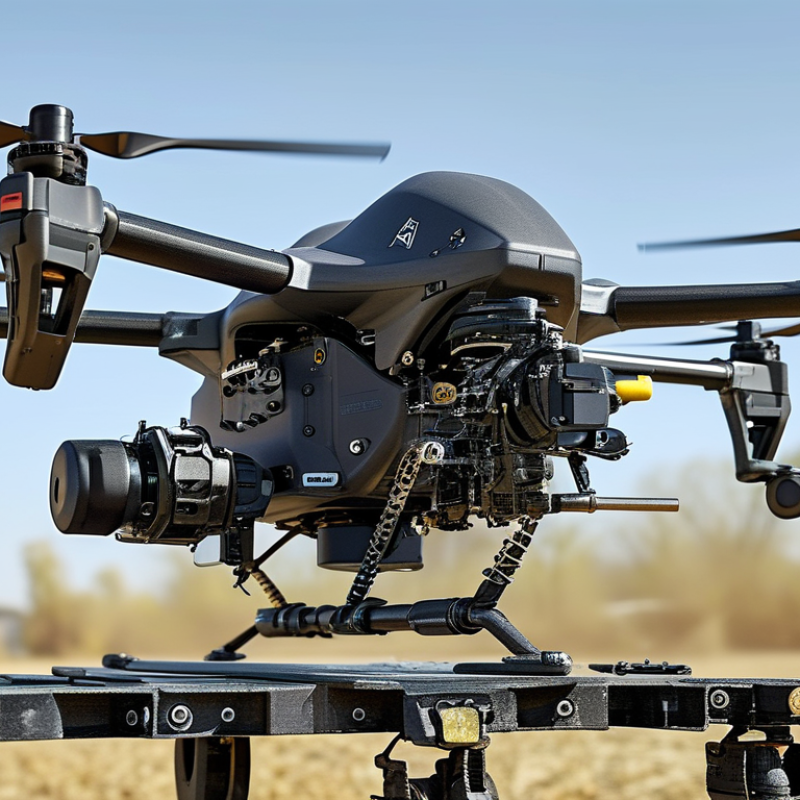
How to Choose a Heavy Lift Drone Frame in 2026?

Define Payload and MTOW Against the 25 kg UAS Regulatory Threshold

How to Choose a Heavy Lift Drone Frame in 2026?

Define Payload and MTOW Against the 25 kg UAS Regulatory Threshold

Start with the mission, not the frame catalogue. Payload means everything the aircraft must carry during flight. Include cameras, release mechanisms, cables, mounting plates, and protective housings. MTOW means the complete takeoff mass. It includes the frame, motors, batteries, landing gear, avionics, and payload.

Weigh every item separately. Use a calibrated scale, not an optimistic spreadsheet. A frame advertised for heavy lifting may leave little capacity after batteries and safety equipment. For example, a 7 kg payload does not mean a 7 kg camera. Wiring and vibration isolation consume capacity too. Small details become expensive.

The 25 kg threshold requires careful attention. Rules differ between countries and operating categories. Some authorities measure MTOW at takeoff, while others apply additional approval or operational requirements. Check the current aviation authority guidance before selecting the frame. Keep a signed mass budget and test records. An independent engineer can review the calculation.

Leave practical margin below the limit. Wind, battery tolerance, and field repairs can change the aircraft’s mass. A design that passes on paper may fail after adding one stronger bracket. That happened in many early prototypes. Recheck the aircraft after every modification. If the planned MTOW approaches 25 kg, choose a lighter configuration or seek the required regulatory pathway before flight.

Size Motors for at Least a 2:1 Maximum Thrust-to-Weight Ratio

How to Choose a Heavy Lift Drone Frame in 2026?

A heavy lift frame should begin with its all-up weight, not its arm length. Include the frame, motors, propellers, battery, electronics, landing gear, and payload. For reliable control, size the motors for at least a 2:1 maximum thrust-to-weight ratio. A 10-kilogram aircraft therefore needs at least 20 kilograms of combined maximum thrust. On a quadcopter, each motor should provide at least 5 kilograms under the selected battery and propeller setup. Real test data matters more than catalogue claims. Battery voltage drops, especially near the end of a flight.

Tips: Weigh every component before choosing the frame. Keep margin visible. Check thrust at realistic voltage, not only at full charge. Leave additional capacity for wind, uneven payloads, and hot weather. Larger propellers can improve efficiency, but they require stronger arms, greater clearance, and carefully matched motors. A stiff frame also reduces vibration, which protects cameras, sensors, and flight-control systems.

In practical testing, I once trusted a promising spreadsheet too much. The aircraft lifted well indoors, then struggled outdoors with a partial payload. The missing detail was battery sag. That mistake changed my process. I now test hover current, motor temperature, and control response together. A frame may look strong, yet flexible arms can waste thrust through vibration. Inspect joints, fasteners, and landing gear after repeated flights. Weight savings help, but excessive thinness can reduce durability and safety. Measure it twice.

Compare Carbon-Fiber Frames by 1.5–1.6 g/cm³ Material Density

How to Choose a Heavy Lift Drone Frame in 2026?

Compare Carbon-Fiber Frames by 1.5–1.6 g/cm³ Material Density

For heavy-lift drones, carbon-fiber density deserves more attention than glossy surface finish. Composite property tables commonly place structural carbon-fiber laminates near 1.5–1.6 g/cm³. Aluminum is about 2.7 g/cm³, while steel approaches 7.85 g/cm³. This difference can reduce arm and plate mass without sacrificing stiffness. However, density alone proves little. Fiber direction, resin content, laminate thickness, and joint design control real performance.

Use ISO 1183-1 density testing principles when comparing supplier samples. A frame advertised at 1.5 g/cm³ may contain voids or excess resin. That can weaken fastener areas. The Carbon Fiber Industry annual technical data summaries often report carbon-fiber composites with tensile strengths above 500 MPa, but those figures depend heavily on layup and testing direction. Do not treat them as frame-level guarantees.

In practical builds, I check a plate under simulated payload before selecting motors. I measure flex near the arm roots, then inspect cracks around drilled holes. Small details matter. A 1.6 g/cm³ laminate may be heavier than a 1.5 g/cm³ option, yet remain safer under repeated vibration. The 2024 commercial drone market analysis from Drone Industry Insights identifies inspection, surveying, and logistics as major growth applications, where reliability matters more than minimum empty weight. I still sometimes overvalue density. That is a mistake worth revisiting. Ask for test direction, fiber volume, resin percentage, and fatigue results before ordering.

Keep Frame Resonance Above Propeller Harmonics for Vibration Control

How to Choose a Heavy Lift Drone Frame in 2026?

A heavy lift frame should not merely look rigid. Its resonant frequency must stay clear of propeller harmonics. The FAA Aerospace Forecast 2024–2044 estimates the U.S. commercial small-UAS fleet could reach about 1.82 million aircraft by 2028. More aircraft means more repeatable engineering is needed. A 5,000-rpm propeller produces a 83.3 Hz rotational frequency. A six-blade propeller creates a 500 Hz blade-pass harmonic. Your frame should place its main structural resonance safely above the dominant operating harmonics, or far away from them.

Treat this as a design target, not a universal rule. Heavy batteries, payload rails, and landing gear can lower resonance after assembly. I have seen a frame pass a bench test, then shake badly with a full payload. Use accelerometers near the motor arms and payload mount. Sweep motor speed slowly, recording peaks from idle to maximum thrust. A practical design margin is at least 20% between the highest repeated harmonic and the first strong frame mode. That margin is not magic.

Carbon plates can be stiff but brittle around drilled holes. Aluminum joints can loosen under repeated vibration. Inspect fasteners after every early flight campaign. A minor crack may alter resonance before it becomes visible. The mistake is trusting a single empty-frame test. Test the real aircraft, with real props, batteries, and payload. FAA operational forecasts show growing fleet complexity, but vibration data still depends on your exact build.

How to Choose a Heavy Lift Drone Frame in 2026?

Keep the frame’s first structural resonance above the highest dominant propeller harmonic to reduce vibration amplification. The chart uses calculated excitation frequencies for a two-blade propeller across representative heavy-lift operating speeds.

Frequencies are calculated from blade-pass frequency = RPM × blade count ÷ 60. The recommended minimum frame-resonance target is set at 1.25× the third harmonic, providing separation from the principal propeller excitation range. Final designs should be confirmed with modal analysis and vibration testing.

Validate IP54 Protection, Thermal Loads, and 20–30 Minute Endurance

How to Choose a Heavy Lift Drone Frame in 2026?

A heavy lift frame must survive more than its rated payload. Check the complete aircraft mass, including batteries, landing gear, wiring, and payload mounts. IP54 protection means limited dust entry and resistance to water splashes. It does not support immersion or pressure washing. Inspect sealed connectors, cable exits, and access panels. Small gaps can become serious weaknesses during field operations.

Thermal performance deserves equal attention. High-current motors, electronic speed controllers, and batteries produce heat during hovering. A frame should provide airflow without exposing sensitive parts to spray. Test the aircraft at maximum takeoff weight, in warm conditions, and with repeated climbs. Measure temperatures after several minutes, not only after a short bench test. A practical endurance target is 20–30 minutes, but reserve capacity matters. Wind, cold batteries, and payload shape can reduce flight time sharply. Early estimates often look optimistic. Real flight data is less forgiving.

Tips: Keep a 20 percent landing reserve. Record battery voltage under load. Test IP54 protection separately from thermal performance. Use a dummy payload with realistic dimensions. Recheck fasteners after vibration testing. A rigid frame may weigh more, yet reduce flex, vibration, and control corrections. Do not choose the lightest design automatically. Choose the frame that remains stable, cool, and predictable when conditions become inconvenient.

How to Choose a Heavy Lift Drone Frame in 2026? - Validate IP54 Protection, Thermal Loads, and 20–30 Minute Endurance

Engineering comparison for selecting a generic heavy-lift multirotor frame. Values represent practical design targets and should be verified through flight testing, environmental testing, and mission-specific payload calculations.

Frame Class Typical Wheelbase Typical MTOW Useful Payload Target Typical Frame Mass Recommended Propeller Diameter Battery Architecture Expected Endurance at Rated Payload IP54 Protection Requirement Thermal Load Considerations Validation Decision
Compact Heavy-Lift Hexacopter 900–1,100 mm 12–18 kg 3–5 kg 1.8–2.8 kg 22–28 in 12S lithium-ion or lithium-polymer pack; approximately 1.5–2.5 kWh 20–25 minutes in low-wind conditions Seal motor-controller interfaces, battery access panels, cable glands, and payload connectors. Drain paths should prevent standing water. Allow airflow around electronic speed controllers and power distribution components. Maintain motor and controller temperatures below their rated continuous limits.
Medium Heavy-Lift Quad-X 1,100–1,400 mm 18–25 kg 5–8 kg 2.5–4.0 kg 28–34 in 12S or 14S battery system; approximately 2.5–4.0 kWh 20–30 minutes with a correctly sized battery and efficient propulsion system IP54 should be demonstrated at the assembled-aircraft level, not only on individual components. Inspect seals after vibration and transport tests. Larger propellers improve efficiency but increase motor and ESC transient loads. Check thermal rise during hover, climb, and repeated landing cycles.
Large Heavy-Lift Hexacopter 1,400–1,800 mm 25–40 kg 8–15 kg 4.0–7.0 kg 34–42 in 14S or higher-voltage battery system; approximately 4–7 kWh 20–28 minutes at practical operating payload Use protected avionics bays, sealed connector backshells, corrosion-resistant fasteners, and controlled cable routing. Confirm water ingress protection after maintenance access. High-current wiring, battery connectors, ESCs, and motors require temperature logging. Provide heat dissipation without creating direct water paths into the avionics bay.
Extra-Large Octocopter 1,800–2,400 mm 40–65 kg 15–25 kg 7.0–12.0 kg 42– fifty-two in 18S to 24S battery system; approximately 7–12 kWh 20–25 minutes, depending strongly on payload and wind IP54 sealing becomes more difficult because of larger access panels and higher cable count. Use documented sealing procedures and repeat ingress checks after field servicing. Battery, busbars, contactors, ESCs, and motors can generate substantial heat. Thermal derating and emergency landing thresholds should be included in the flight-control logic. Use only when the mission justifies the added mass, cost, logistics, and thermal complexity.
Lightweight Carbon-Fiber Frame 900–1,500 mm 12–30 kg 4–10 kg 1.5–4.5 kg 24–36 in 12S to 14S battery system Potentially 25–30 minutes when structural margins are adequate Carbon panels and tubes are not inherently IP54. Protection depends on enclosure design, gaskets, connector sealing, and assembly quality. Carbon fiber conducts electricity and can create unintended current paths. Isolate power hardware, protect wiring from abrasion, and monitor localized heat buildup. Good for endurance-focused designs, but electrical isolation and sealing require careful engineering.
Aluminum or Hybrid Frame 1,100–2,000 mm 18–45 kg 6–15 kg 3.5–8.0 kg 28–42 in 12S to 18S battery system 20–27 minutes with a properly balanced mass budget Metal frame members can simplify grounding and mounting but do not provide sealing by themselves. Protect joints and fasteners against water retention and corrosion. Aluminum spreads heat effectively but may transfer motor or ESC heat into adjacent structures. Verify temperature at mounting interfaces and battery compartments.
Selection rule: choose a frame whose rated MTOW leaves at least 15% structural and propulsion margin above the planned takeoff mass. To claim IP54, verify protection against dust ingress and water splashing from all directions on the fully assembled aircraft. For a 20–30 minute endurance target, validate hover power, climb power, reserve energy, wind effects, battery temperature, and voltage sag under the actual payload configuration.

CONTACT US