
How to Choose a Centrifugal Vent Fan in 2026?

Choosing a Centrifugal Vent Fan in 2026 requires more than comparing airflow and purchase prices. The fan must match the building’s pressure, duty cycle, noise limits, and maintenance conditions. A kitchen exhaust system faces grease and heat. A workshop system may handle dust, moisture, or corrosive vapors. These differences quickly change the correct selection.

Energy performance deserves close attention. The International Energy Agency reports that buildings used about 30% of global final energy in 2022 and produced approximately 26% of energy-related emissions. A poorly selected fan can increase pressure losses, motor demand, and operating costs for years. The U.S. Department of Energy also identifies fan systems as important targets for industrial efficiency improvements. Variable-speed control, efficient motors, clean filters, and correctly sized ducts can reduce unnecessary electricity use. Small details matter.

Standards provide a safer starting point. ASHRAE Standard 62.1 helps define acceptable ventilation requirements for many commercial spaces. AMCA 210 provides recognized methods for testing fan airflow and pressure performance. These documents improve comparison quality, but they do not replace site measurements. Real installations rarely behave perfectly. A catalogue rating may not reflect a long duct run, a clogged filter, or an awkward discharge elbow. That is where experience matters.

The best 2026 choice balances verified performance, lifecycle cost, acoustic comfort, service access, and application risk. Buyers should request certified test data, motor details, control compatibility, and a clear performance curve. There is no universal winner. A quieter fan may cost more. A cheaper unit may consume more power. The final decision should remain evidence-based, practical, and open to revision after commissioning.
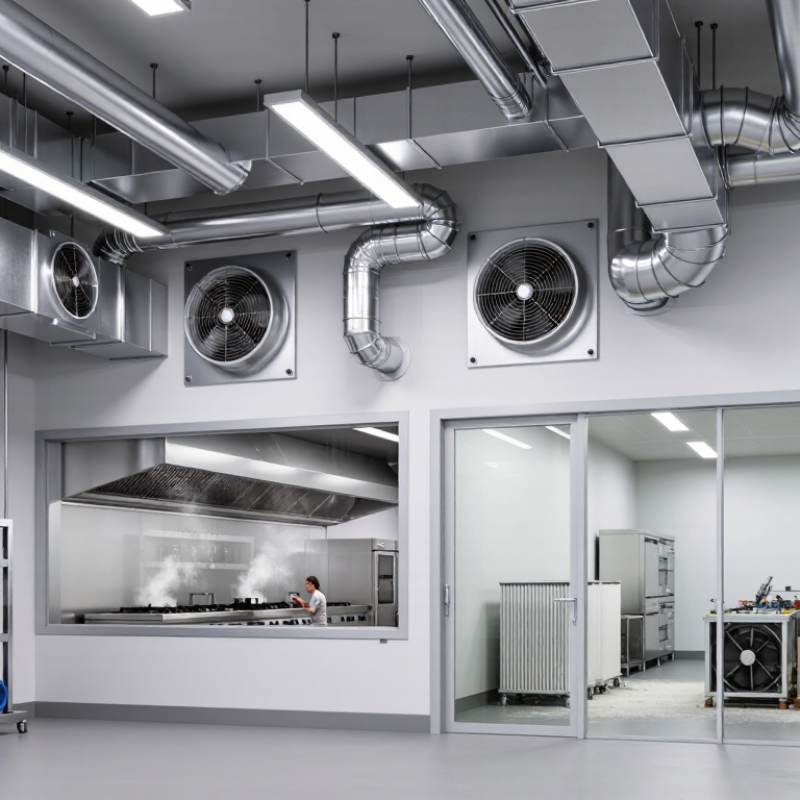
How to Choose a Centrifugal Vent Fan in 2026?

What Is a Centrifugal Vent Fan and How Does It Work?

A centrifugal vent fan moves air by changing its direction through a rotating impeller. Air enters near the center, then travels outward across curved blades. The blades add energy and pressure. A surrounding housing guides the air into the discharge duct.

This design differs from an axial fan. An axial fan pushes air straight through, like a propeller. A centrifugal fan works better against duct resistance, bends, filters, and grilles. That makes it useful in bathrooms, workshops, kitchens, and commercial spaces. The motor turns the impeller. The housing reduces turbulence and helps maintain steady airflow.

In 2026, choosing one should begin with real operating conditions. Measure the duct length, count sharp bends, and check the required airflow. A fan with a large airflow rating may perform poorly in a restrictive system. I have seen installations where the advertised airflow looked impressive, but weak duct planning caused noisy, disappointing results.

Static pressure matters. So does sound. A kitchen fan may need stronger pressure, while a bedroom requires quieter operation. Check the fan curve rather than trusting one airflow number. Energy use, maintenance access, and moisture resistance also deserve attention. A clean impeller usually performs better. It is easy to overlook.

One practical mistake is selecting by duct diameter alone. The room size, air leakage, and daily use pattern also affect performance. Specifications can be imperfect, and field conditions often differ. Recheck the calculation before installation.

How to Choose a Centrifugal Vent Fan in 2026?

What Is a Centrifugal Vent Fan and How Does It Work?

A centrifugal vent fan uses a rotating impeller to draw air into its center and discharge it outward through a housing. The chart applies the standard fan affinity laws to a constant-size fan: airflow changes directly with speed, static pressure changes with the square of speed, and power demand changes with the cube of speed. When selecting a fan, match the required airflow and static pressure while considering efficiency, noise, motor capacity, filtration, and duct resistance.

Which Airflow, Pressure, and Fan Size Requirements Matter?

A centrifugal vent fan should be selected from measured system demands, not its advertised free-air airflow. Start by estimating the required airflow in cubic feet per minute. Use room volume, contaminant load, heat, and the number of air changes. Kitchens, workshops, and washrooms rarely need identical rates. Measure the duct.

Static pressure matters. Include duct length, elbows, filters, grilles, dampers, and roof terminals in the calculation. A fan may deliver 1,000 CFM in open air but provide far less through a restrictive system. Ask for the fan curve at your expected pressure, then check the duty point. In field work, I have seen undersized motors blamed for poor ventilation when blocked filters caused the real problem.

Fan size should match the airflow, pressure, duct diameter, and available installation space. A larger wheel is not automatically better. It may consume more energy, create unwanted noise, or operate inefficiently at low demand. Check motor service access, vibration isolation, weather protection, and speed-control compatibility. Leave room for maintenance; cramped installations often become neglected.

Use calibrated airflow instruments when possible, and verify performance after installation. Readings can change with wind, temperature, and open doors. I once accepted a convenient estimate that proved too optimistic. That mistake cost extra adjustment work. Manufacturer data should be compared with applicable electrical, fire, and ventilation requirements, while local professionals should confirm the final design.

How to Choose a Centrifugal Vent Fan in 2026? - Which Airflow, Pressure, and Fan Size Requirements Matter?

Selection Factor What to Determine Practical Requirement or Range Why It Matters
Required airflow The volume of air that must be removed or supplied Calculate from room volume, air-change rate, process load, or a known duct flow. Common light-duty ventilation targets are approximately 6–12 air changes per hour; high-heat or high-contaminant processes may require more. An undersized fan cannot remove heat, moisture, or contaminants quickly enough.
Airflow margin Allowance for filters, fouling, seasonal conditions, and future duct changes Select a fan whose duty-point airflow is typically 10–15% above the calculated design airflow, provided the system can tolerate the additional flow. A moderate margin helps maintain performance without excessive noise or energy use.
External static pressure Resistance from ducts, bends, grilles, dampers, filters, louvers, and discharge fittings Small, short duct systems may operate around 100–250 Pa. Longer duct systems or systems with filters and multiple fittings commonly require 250–750 Pa or more. Centrifugal fans are selected from the intersection of airflow and system pressure, not from airflow alone.
Total pressure The pressure increase across the fan, including system losses and velocity effects Use the fan performance curve that specifies whether pressure is static, total, or external static pressure. Do not compare different pressure definitions directly. Using the wrong pressure basis can produce a fan that fails to meet the actual duty point.
Fan curve duty point The operating point created by the required airflow and calculated pressure Choose a fan curve that passes through the target duty point while keeping the operating point away from the unstable surge region and near the efficient portion of the curve. Actual airflow depends on the interaction between the fan curve and the system-resistance curve.
Duct velocity The air speed inside the duct A practical general-ventilation range is about 4–8 m/s. Lower speeds reduce noise and pressure loss; higher speeds may be acceptable for compact industrial systems if noise is controlled. Velocity affects duct size, sound level, friction loss, and fan energy consumption.
Fan size and inlet diameter The impeller or nominal inlet size that can deliver the duty point Typical compact centrifugal fans use approximately 100–315 mm inlet diameters. Medium systems often use 315–630 mm, while larger air-handling systems may exceed 630 mm. A larger fan generally operates at lower speed for the same airflow, reducing noise and pressure loss, but requires more installation space.
Motor power Power required to overcome airflow and pressure losses Estimate shaft power using P ≈ Q × Δp ÷ η, where Q is in m³/s, Δp is in Pa, and η is the combined efficiency. Add a reasonable service margin and verify against the manufacturer’s motor rating. Motor selection must account for the fan’s operating point, efficiency, starting method, and possible density changes.
Speed control Whether airflow needs to vary with demand Consider a compatible variable-frequency drive or electronically commutated motor for systems requiring scheduled, sensor-based, or seasonal airflow adjustment. Reducing speed can significantly reduce energy use because fan power commonly varies approximately with the cube of rotational speed.
Noise requirement Permitted sound level at occupied or noise-sensitive areas For occupied spaces, target selection should generally prioritize low-speed operation, balanced ductwork, vibration isolation, and acoustic treatment. Confirm sound data at the actual airflow and pressure. Sound ratings vary with installation, octave band, distance, and operating point; a single overall dB value is not sufficient for every application.
Air temperature and density Normal, minimum, and maximum air temperature Check motor insulation, bearing limits, materials, and pressure performance for the full temperature range. Hot air is less dense and may require correction of mass flow and power calculations. Temperature affects fan capacity, motor cooling, material durability, and calculated power.
Air cleanliness Dust, grease, moisture, corrosive vapor, fibers, or combustible particles Select suitable impeller materials, coatings, seals, drainage, filtration, and maintenance access. Combustible or explosive atmospheres require equipment certified for the applicable hazardous-area classification. Contaminants can damage the impeller, unbalance the rotor, reduce airflow, or create a safety hazard.
Installation arrangement Indoor or outdoor location, mounting orientation, access, and discharge direction Verify clearances, weather protection, drainage, service space, flexible connections, vibration isolation, and adequate straight duct length near the fan inlet and outlet. Poor inlet or outlet conditions can increase turbulence, noise, vibration, and system resistance.
Electrical requirements Supply voltage, phase, frequency, current, control signal, and protection Match the motor and controller to the available electrical supply and provide overload, disconnect, grounding, and control protection in accordance with applicable regulations. Electrical incompatibility can cause overheating, nuisance trips, poor speed control, or unsafe operation.
Maintenance and service life Cleaning frequency, bearing access, belt service, spare parts, and inspection requirements Provide access panels, removable guards where appropriate, drain points, inspection intervals, and a maintenance plan based on operating hours and air cleanliness. Regular maintenance preserves airflow, efficiency, balance, and bearing life.

Typical Centrifugal Fan Selection Ranges

Application Category Typical Airflow Typical External Static Pressure Common Nominal Inlet Size Selection Priority
Small room or cabinet ventilation 300–1,500 m³/h 100–300 Pa 100–200 mm Low noise, compact installation, simple speed control
Commercial room or workshop exhaust 1,500–6,000 m³/h 200–600 Pa 200–400 mm Duty-point accuracy, filtration, sound, and service access
Kitchen, process, or high-resistance exhaust 3,000–15,000 m³/h 400–1,000 Pa 315–560 mm Temperature, grease or dust handling, cleanability, and motor margin
Large air-handling or industrial ventilation 10,000–50,000 m³/h 600–1,500 Pa 500–900 mm Efficiency, structural strength, vibration control, controls, and lifecycle cost
Engineering note: The ranges above are planning values rather than final equipment ratings. Final selection should be based on the manufacturer’s certified fan curve at the required airflow, pressure, air density, temperature, sound condition, and installation arrangement.

How to Compare Fan Types, Motors, Materials, and Noise Levels?

How to Choose a Centrifugal Vent Fan in 2026?

How to Compare Fan Types, Motors, Materials, and Noise Levels?

A centrifugal vent fan should match the duct layout, airflow demand, and working environment. Start by comparing fan types, not only airflow ratings. Inline models suit long duct runs, while radial-blade designs handle dustier air more reliably. Backward-curved blades often provide efficient, quieter operation. Forward-curved blades can deliver strong airflow in compact spaces, but they may collect debris faster.

Motor selection affects efficiency, maintenance, and sound. Electronically controlled motors usually offer smoother speed adjustment and lower energy use. Fixed-speed motors remain practical for simple systems. Check the fan curve at the actual operating pressure, not just the advertised maximum airflow. In field inspections, I have found that undersized motors overheat when filters become dirty. That detail is easy to miss. Vibration mounts and balanced impellers also matter, especially near offices or sleeping areas.

Materials should fit the air conditions. Coated steel works for many indoor applications, while stainless steel suits humid or corrosive locations. Noise ratings need careful reading because installation can change the result. A quiet fan may still sound harsh through a short metal duct.

Tips: Measure twice. Check the datasheet. Compare sound pressure and sound power values. Leave access for cleaning and motor replacement. Noise estimates can be optimistic, so review the duct path and mounting surface before ordering.

Which Energy, Safety, Control, and Installation Features Are Essential?

How to Choose a Centrifugal Vent Fan in 2026?

Energy, safety, control, and installation features should guide centrifugal fan selection. The International Energy Agency reports that electric motor systems use about 53% of global electricity. Efficient motors therefore deserve serious attention. Choose a fan with verified performance curves, not only a high airflow number. The U.S. Department of Energy notes that optimized fan systems can often reduce energy use by 20–50%. Variable-speed control helps, but poor commissioning can waste those savings.

Safety starts with the application. Confirm the fan’s temperature, corrosion, moisture, and duty ratings. Guards should protect belts, shafts, and rotating impellers. OSHA 29 CFR 1910.212 requires guarding against dangerous machine parts. For hazardous exhaust, consult a qualified engineer before selecting materials or electrical equipment.

Airflow verification matters too. AMCA Standard 210 provides laboratory methods for rating fan airflow and pressure. Field results may still differ.

Tips: Measure static pressure at the actual duct layout. Leave service clearance around the housing. Install flexible connectors carefully. Check vibration after startup. Record airflow, amperage, and sound levels.

A quiet fan is not always an efficient fan. Likewise, the cheapest installation may create costly access problems later. During commissioning, I would recheck the design assumptions, especially when filters become dirty or dampers remain partly closed.

How to Select, Install, and Maintain the Right Fan in 2026?

Selecting a centrifugal vent fan in 2026 starts with the building, not the catalog. Measure the required airflow and estimate duct resistance, bends, filters, and grilles. A fan rated only for free air may fail under real static pressure. Choose a model that delivers stable airflow at your calculated operating point. Noise matters. Check sound levels near bedrooms, offices, and occupied work areas. Consider motor efficiency, speed control, access panels, and suitable environmental protection.

Installation quality can decide whether a good fan performs well. Keep the duct run short, smooth, and properly supported. Seal joints to prevent air leakage and vibration. Install a backdraft damper where reverse airflow could cause problems. The fan should remain accessible for cleaning and inspection. Electrical connections must follow local requirements and should be completed by a qualified professional. Measure twice. Cut once. I have seen undersized openings create unnecessary turbulence and disappointing airflow.

Maintenance should be scheduled before performance drops. Inspect the impeller, housing, bearings, fasteners, and electrical connections regularly. Remove dust buildup carefully, especially in workshops and laundry areas. Listen for rattling, scraping, or a sudden change in pitch. These sounds often appear before failure. Replace damaged belts or loose guards promptly. Keep a simple service record with airflow readings and inspection dates. Some assumptions will be wrong. Recheck them after installation.

CONTACT US