Why Choose Cryogenic Gearbox for Your Industrial Needs?
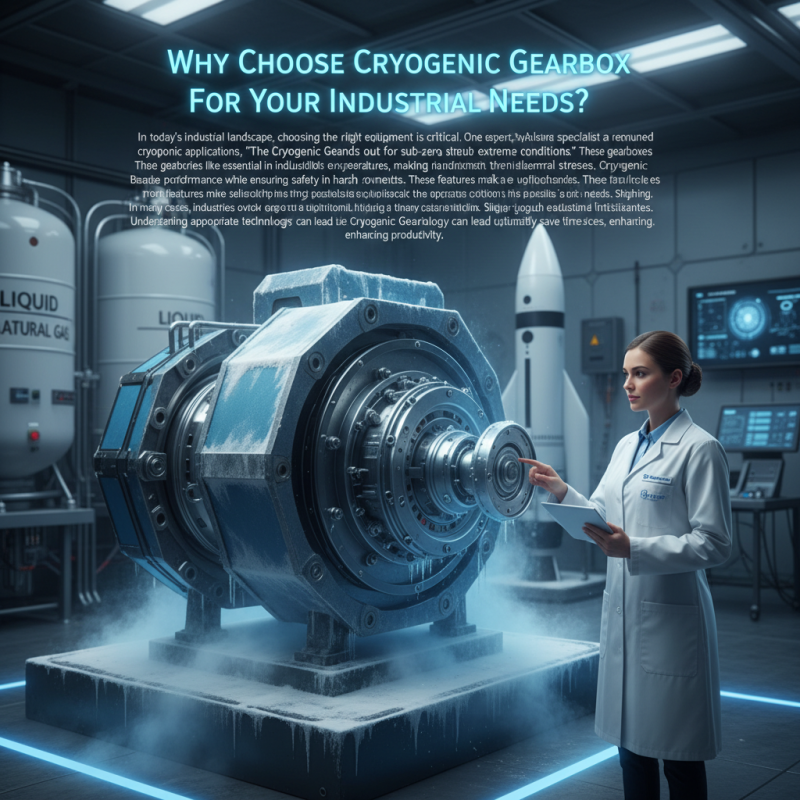
In today's industrial landscape, choosing the right equipment is critical. One expert, Dr. Alice Thompson, a renowned specialist in cryogenic applications, emphasizes, "The Cryogenic Gearbox stands out for its reliability in extreme conditions." These gearboxes operate efficiently at sub-zero temperatures, making them essential in industries like liquefied natural gas and aerospace.
Cryogenic Gearboxes are designed to handle significant thermal stresses. They maintain performance while ensuring safety in harsh environments. These features make them attractive for various industrial applications. However, selecting the right gearbox requires careful consideration of specific needs. It is essential to assess both the operating conditions and the gearbox's unique specifications.
In many cases, industries overlook the importance of this specialized equipment. Skipping a thorough evaluation might lead to operational inefficiencies. Understanding the intricacies of Cryogenic Gearboxes can lead to better decision-making. Investing in appropriate technology can ultimately save time and resources, enhancing overall productivity.
What is a Cryogenic Gearbox and How Does It Work?
A cryogenic gearbox operates at extremely low temperatures, often below -150°C. These specialized gearboxes play a crucial role in applications such as liquefied natural gas (LNG) production and space exploration. They ensure efficient torque transmission while maintaining mechanical integrity in harsh conditions. Key components often use materials like titanium or advanced plastics, which retain strength when exposed to extreme cold.
In designing cryogenic gearboxes, engineers face unique challenges. For instance, thermal contraction can affect gear alignment and lubrication. According to the American Society of Mechanical Engineers (ASME), failures linked to improper materials can result in downtime and increased operational costs. Detailed analysis reveals that selecting the right lubricant is essential, as traditional greases may not perform well at low temperatures.
Data from industry reports indicate that demand for cryogenic gearboxes is expected to grow by over 15% annually. This growth reflects an increasing reliance on natural gas and innovative applications in various sectors. Users must prioritize reliability and performance, especially in mission-critical environments.
Key Advantages of Using Cryogenic Gearboxes in Industries
Cryogenic gearboxes offer unique benefits for industrial applications. Their design is tailored to operate in extremely low temperatures. This capability is crucial for industries like aerospace, LNG processing, and cryogenic storage. With these applications, performance and reliability are non-negotiable.
One significant advantage is the efficient power transmission at low temperatures. Cryogenic gearboxes minimize energy loss, enhancing system efficiency. Furthermore, their materials can withstand thermal cycling without degrading. This resilience leads to longer service life and less frequent replacements.
However, there are challenges. The initial cost of cryogenic gearboxes may be higher than traditional options. Users must weigh the costs against long-term benefits. Proper maintenance is also essential to ensure performance. Keeping these factors in mind is vital for making informed decisions.
Applications of Cryogenic Gearboxes Across Various Sectors
Cryogenic gearboxes have gained traction across various sectors due to their efficiency under extreme temperatures. Industries like aerospace and medical cryogenics often work in low-temperature environments. A report from the International Journal of Refrigeration highlights that cryogenic equipment is essential in preserving samples and components in the aerospace field, ensuring operational reliability.
In the oil and gas sector, cryogenic gearboxes are crucial for liquefied natural gas (LNG) processes. They operate efficiently at temperatures below -162°C. According to the U.S. Energy Information Administration, LNG production is projected to increase by 30% over the next five years. This growth directly correlates with the demand for reliable gearboxes capable of handling intense cold.
However, selecting cryogenic systems can be complex. Not all industrial applications may require such specialized gear. Some may fail to recognize the cost-saving benefits they offer in the long term. Proper evaluation and understanding of each application's unique requirements are essential for achieving optimal performance. In summary, while cryogenic gearboxes are indispensable in specific sectors, their use must be thoughtfully considered.
Why Choose Cryogenic Gearbox for Your Industrial Needs? - Applications of Cryogenic Gearboxes Across Various Sectors
| Sector | Application | Performance Advantages | Temperature Range |
| Aerospace | Engine components and cooling systems | High reliability, lightweight | -253°C to -196°C |
| Medical | Cryogenic storage and transportation | Consistent performance, energy efficiency | -196°C |
| Energy | Natural gas liquefaction | Enhanced efficiency, reduced downtime | -162°C |
| Manufacturing | Cryogenic grinding and processing | Precision, improved material properties | -200°C to -150°C |
| Food Preservation | Freeze preservation technology | Extended shelf life, quality retention | -196°C |
Factors to Consider When Selecting a Cryogenic Gearbox
Selecting the right cryogenic gearbox for industrial applications requires careful consideration of several factors. First, assess the operational temperature ranges. Gearboxes must perform reliably in extreme cold, often between -196 °C and -253 °C. According to the Cryogenic Society of America, proper material selection is fundamental to avoid brittle failure.
Next, consider the gearbox's efficiency. An efficient gearbox reduces energy consumption and operational costs. Some reports indicate that over 30% of industrial energy losses can be attributed to inefficient gearboxes. Materials that retain their mechanical properties at low temperatures also contribute to performance. Research shows that aluminum and certain steel alloys are optimal choices.
**Tips**: Always review technical specifications. Coordinate with suppliers to ensure compatibility with your systems.
Finally, installation and maintenance are also crucial. Ensure that your team can manage the complexities of handling cryogenic gearboxes. Regular maintenance is essential for optimal performance. Reports indicate that poorly maintained systems face a 15% higher failure rate. Don't ignore guidelines from industry experts to increase reliability.
**Tips**: Invest in training for staff. Understanding the operational nuances is key.
Maintenance and Care Tips for Cryogenic Gearboxes
Cryogenic gearboxes function in extreme conditions where temperatures drop below -150°C. Their materials must resist embrittlement and thermal stress. Regular maintenance ensures operational efficiency. According to industry studies, failure rates can drop by 40% with proper care.
Check your gearbox regularly. Inspect for unusual vibrations and noises. These can indicate misalignment or wear. Clean seals and gaskets to prevent contamination. Use appropriate lubricants that perform well in cryogenic environments. This is critical for avoiding fluid degradation and ensuring proper function.
Use thermal insulation wherever possible. This helps maintain optimal temperatures around the gearbox. Regular inspections can identify issues before they escalate. Data shows that proactive maintenance can extend service life by 30%. Keep records of all maintenance activities. This builds a reliable history for future reference and aids in troubleshooting.