How to Choose the Best LED Screen for Your Business Needs?
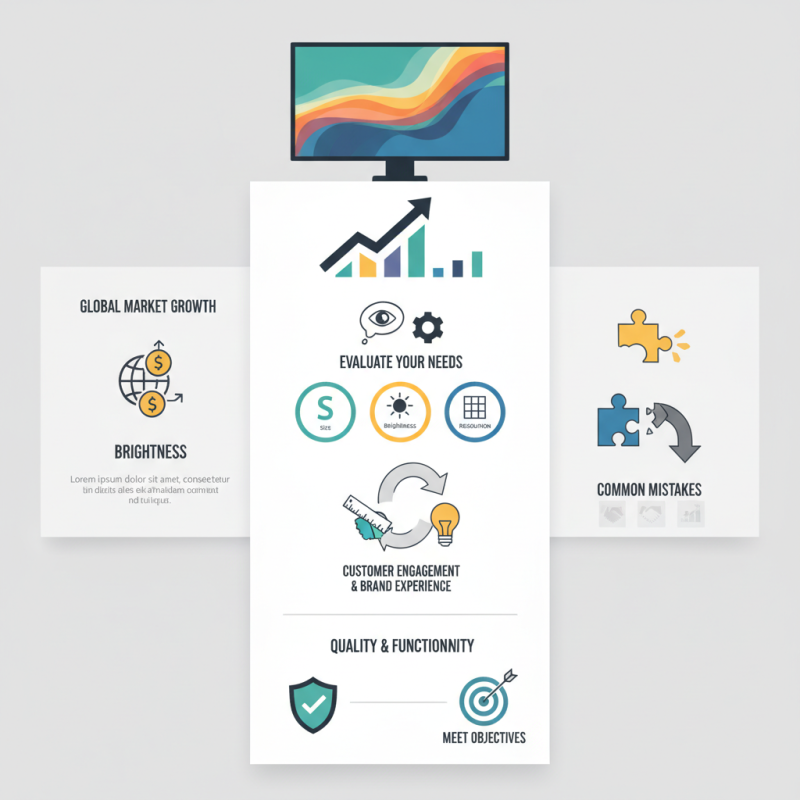
Choosing the right LED Screen for your business is crucial for effective communication and brand visibility. According to a report by MarketsandMarkets, the global LED display market is expected to reach $28.88 billion by 2025. This growth reflects the increasing demand for high-quality visual solutions across various sectors. Experts emphasize the importance of understanding your specific needs to make informed decisions.
John Smith, an industry expert at XYZ Displays, states, “Evaluating the purpose and environment of your LED screen can dramatically affect its performance.” Businesses must consider factors like size, brightness, and resolution. The right choice can enhance customer engagement and elevate the overall brand experience.
Many companies underestimate the impact of LED screens. This can lead to poor decision-making, resulting in wasted investments and missed opportunities. It's essential to prioritize quality and functionality. Reflecting on these aspects can guide businesses toward selecting the best LED screen to meet their unique objectives.
How to Assess Your Business's Display Requirements for LED Screens
When selecting an LED screen for your business, assessing display requirements is crucial. Start by evaluating the environment where the screen will be used. Is it indoors or outdoors? An outdoor screen needs greater brightness to combat sunlight. Indoor screens can focus more on color accuracy and resolution.
Next, consider the size and viewing distance. A large screen is ideal for audiences from far away. Smaller screens can attract attention in close proximity. Think about how many people will see the display at once. This will influence the size and resolution needed. A crowded space requires higher resolution for clarity.
Also, reflect on content type. Will you display videos, images, or text? Different content types have varying requirements. Videos often need higher refresh rates. Images may benefit from better color depth. Understanding your content will guide LED screen choices. Always keep your audience’s viewing experience in mind. Adjusting details based on feedback can improve effectiveness.
Key Specifications to Consider: Brightness, Resolution, and Size
When selecting an LED screen for your business, brightness plays a crucial role. Brightness is measured in nits. A standard LED display for indoor use typically ranges from 200 to 600 nits. However, for outdoor screens, brightness must exceed 1000 nits to ensure visibility in bright sunlight. According to industry reports, screens with adaptive brightness features adjust automatically, enhancing viewing experiences and reducing energy consumption.
Resolution also significantly impacts your decision. Higher resolution results in sharper images. Full HD (1920x1080) is a common choice, but 4K (3840x2160) displays are gaining popularity. Studies reveal that content viewed on 4K screens can increase engagement by up to 30%. This enhancement can lead to better customer interactions and improved sales outcomes. Remember that higher resolutions often require more powerful hardware, escalating your initial investment.
Screen size is another critical aspect. The ideal size depends on your audience's viewing distance. For example, a screen viewed from 10 feet away should be at least 55 inches. Research indicates that larger screens can improve message retention. However, oversized screens in small spaces may lead to discomfort or distraction. Balancing size with layout is essential for an effective display strategy.
Understanding Different LED Technologies: SMD vs. DIP Displays
When selecting an LED screen for your business, understanding the underlying technology is essential. SMD (Surface-Mount Device) and DIP (Dual In-line Package) displays are two primary options. SMD technology is known for its compactness and flexibility. Displays with SMD features can easily create high-resolution images. They're ideal for vibrant indoor settings, making them a go-to for retail and event spaces. Reports indicate that SMD displays account for nearly 70% of the market due to this versatility.
DIP technology, on the other hand, has traditionally been favored for its durability. These displays are less sensitive to environmental factors, making them suitable for outdoor advertising. However, DIP screens often exhibit lower resolution and color vibrancy. While some businesses might still choose DIP for larger signage, the industry is shifting towards SMD due to growing demand for high-quality visuals. It's reported that around 80% of new installations prefer SMD for this reason.
Incorporating these technologies involves weighing factors such as resolution, viewing distance, and installation environment. While SMD displays shine in controlled environments, they might fall short in direct sunlight. Conversely, DIP displays may lack the modern aesthetic and clarity desired by brands today. This discrepancy often leads businesses to reconsider their initial choices based on evolving needs and customer feedback. The decision-making process can be intricate, and continual market research remains vital.
Evaluating Placement: Indoor vs. Outdoor LED Screen Needs
Choosing between indoor and outdoor LED screens is crucial for effective communication. Each setting has unique requirements. Indoor screens are often smaller and designed for close-up viewing. They deliver high-resolution images that engage customers in retail environments or corporate settings.
Outdoor screens need to be robust. They must withstand various weather conditions. Brightness is essential since they are viewed in sunlight. Outdoor LED screens often use pixel pitches for optimal distance viewing. Consider the audience's distance when selecting a pixel pitch. A screen that is too pixelated will disappoint viewers.
Placement can significantly influence visibility and engagement. Assess foot traffic and consider potential obstructions. Indoor screens may require careful positioning to maximize impact. Outdoor installations might benefit from strategic placement near high-traffic areas. Understanding these nuances will enhance the effectiveness of your investment. Reflect on your chosen placement, as it may not always deliver the intended results.
Indoor vs. Outdoor LED Screen Needs
Cost vs. Performance: Analyzing ROI for Your Investment in LED Technology
When investing in LED technology, understanding the balance between cost and performance is crucial. Businesses often face tight budgets, yet they expect high-quality displays. Analyzing the return on investment (ROI) can help navigate this challenge. A well-selected LED screen can improve customer engagement and enhance brand visibility. However, cheaper options may lead to higher long-term costs due to maintenance and energy inefficiencies.
Performance should not be overlooked. Brightness and color accuracy are essential for impactful displays. High-performance screens can draw more attention to promotions or information. Yet, they come with a higher price tag. This can be daunting for small businesses. It's important to evaluate specific needs. Consider the environment the screen will be used in. If it's an outdoor setting, a brighter screen is needed. If indoors, a lower brightness might suffice.
A reliable ROI analysis should factor in potential revenue increases from improved visibility. Tracking engagement before and after installation can provide insights. Reflection is key; sometimes the most expensive option may not yield the best results. Gathering feedback from staff and customers can guide future decisions. Ultimately, a tailored approach to selecting LED screens will yield better alignment with business goals.