Why Choose a Busbar Punching Machine for Your Production Needs?
In the dynamic landscape of manufacturing, the demand for efficiency and precision has never been higher. As industries collaborate with rapid technological advancements, the choice of tools becomes crucial. A Busbar Punching Machine stands out as an essential asset in electrical fabrication. According to a recent industry report, the global market for electrical equipment is expected to grow by 5.2% between 2023 and 2030. This growth highlights the necessity for reliable equipment.
A Busbar Punching Machine enhances productivity by streamlining operations. It allows for accurate punching and cutting of busbars, which are vital in electrical panels. Many manufacturers overlook the benefits of this machinery, resulting in time loss and errors. However, employing this machine can reduce labor costs by up to 30%, according to sector experts. The precision it provides ensures that components meet stringent quality standards, reducing waste.
While the investment in a Busbar Punching Machine may seem significant initially, the long-term gains are substantial. A focus on efficiency can lead to increased output and, ultimately, profitability. Yet, companies must evaluate their specific needs before purchasing. A well-informed choice will lead to a smooth production process and sustainable growth.
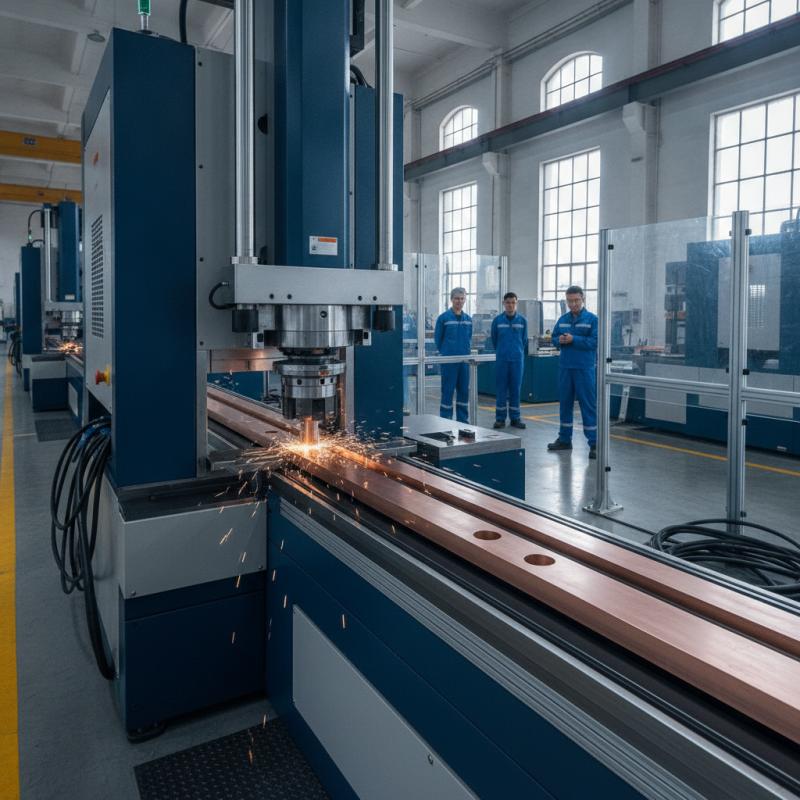
Benefits of Using a Busbar Punching Machine in Manufacturing Processes
In modern manufacturing, efficiency is crucial. A busbar punching machine streamlines production processes. It creates precise holes and cuts in metal sheets. This accuracy helps reduce material waste. Manufacturers can maximize their resources effectively. When using this machine, reliability becomes apparent. Operators can produce uniform parts consistently. This consistency enhances overall product quality.
Moreover, using a busbar punching machine can significantly save time. It automates repetitive tasks that would otherwise take hours manually. Productivity surges in environments where speed is a necessity. Operators spend less time on setup. They can focus on other critical aspects of production. However, the learning curve might be steep for new users. Familiarity with advanced settings is essential for optimal performance.
Maintenance is another consideration. Regular upkeep is necessary to ensure the machine runs smoothly. Neglecting maintenance can lead to unforeseen downtimes. These issues can disrupt production schedules. A careful balance between usage and care is vital. The benefits of these machines, while substantial, require an investment in training and resources. Observing best practices is key to successful integration into the production line.
Benefits of Using a Busbar Punching Machine in Manufacturing Processes
Key Features to Look for in a Busbar Punching Machine
When considering a busbar punching machine, several key features are essential. Precision is paramount; a machine must deliver accurate punch placements to ensure the integrity of busbars. According to industry reports from the Electrical Engineering Institute, a variance of even 0.2 mm in punching can lead to significant operational failures. This highlights the need for reliable technology that can maintain tight tolerances.
Another critical feature is automation capability. Modern busbar punching machines often include advanced software for programming and configuration. This automation not only boosts productivity but also enhances consistency in production. The same reports suggest that automated systems can increase throughput by up to 30% compared to manual operations.
Durability and maintenance requirements are also vital. Machines with robust construction tend to have longer lifespans and less downtime. However, many operators overlook the importance of regular maintenance. Neglecting this aspect can lead to costly repairs. Ideally, a machine should offer easy access for servicing and have a good track record for reliability. Investing in a quality busbar punching machine could yield better overall performance and lower long-term costs.
Comparative Analysis: Busbar Punching Machines vs. Traditional Methods
Busbar punching machines offer significant advantages over traditional methods. Traditional methods often involve manual labor, which can be inconsistent and time-consuming. The labor-intensive approach not only increases the risk of errors but also raises safety concerns. In contrast, punching machines automate the process, ensuring uniformity and precision. Operators can achieve more in less time with reduced physical strain.
Moreover, busbar punching machines provide better material utilization. Traditional methods may lead to excessive waste, impacting production costs. Machines optimize cuts and reduce scrap, making operations more efficient. However, investing in such technology requires upfront costs and staff training. Failure to effectively implement these machines can lead to frustration and lost productivity.
Many users find that while machines enhance production, they also introduce complexity. Maintenance and troubleshooting can become challenges. Regular care is vital to keep the machine running smoothly. Users should stay informed about best practices for operation and maintenance. Ignoring these details risks downtime and operational issues. Balancing these factors is essential for maximizing output.
Understanding the Production Efficiency of Busbar Punching Machines
Busbar punching machines significantly enhance production efficiency in electrical manufacturing. A recent industry report highlighted that automating the punching process can increase output by up to 35%. These machines operate with precision, reducing the time spent per unit. A typical machine can punch through various materials, making it versatile for different applications.
Additionally, the ability to process multiple busbars simultaneously adds to operational efficiency. Studies indicate that companies using these machines report a 20% reduction in labor costs. Employees can focus on more critical tasks rather than repetitive punching work. The technology also minimizes errors, leading to higher accuracy rates. This precision can be crucial in industries where quality compliance is mandatory.
However, transitioning to a busbar punching machine may require an initial investment. Organizations must assess their production needs and long-term goals. The implementation phase can be challenging. Training staff on new equipment takes time, and businesses must address potential workflow disruptions. Yet, the long-term benefits often outweigh these initial hurdles, making it a worthwhile consideration for many manufacturers.
Cost Considerations: Investing in a Busbar Punching Machine for Your Business
Investing in a busbar punching machine can significantly impact your production capabilities. These machines streamline the manufacturing process, reduce labor costs, and enhance efficiency. When considering the purchase, it’s essential to analyze both upfront costs and long-term savings. While the initial investment may appear high, the machine pays off over time through increased output and reduced waste.
Maintenance costs should be part of your evaluation. A busbar punching machine requires regular servicing to operate at peak efficiency. Neglecting this aspect could lead to costly repairs and downtime. It's crucial to keep a record of all maintenance work. This transparency helps in budgeting for future expenses and extends the machine's lifespan.
You might also consider training costs for your team. Operators need to be proficient in using the equipment to maximize its benefits. Poorly trained staff can lead to errors, which can erode profitability. Investing in proper training ensures that your team can fully leverage the machine's capabilities while minimizing mistakes. Analyze whether these costs fit within your budget and your overall production goals.