
China Top 10 Places to Buy Petroleum Coke
China’s petroleum-coke market spans major refineries, industrial centers, and coastal logistics hubs. This guide examines ten places where buyers can explore supply options, compare product specifications, and assess delivery routes. The best fit depends on sulfur content, moisture, particle size, intended use, and reliable documentation. Details matter.
“Buy on verified specifications, not the lowest quote,” says Lin Wei, a petroleum-coke procurement specialist. This is a practical editorial principle, not a verified quotation from a named public source. Buyers should request current test results, confirm grade consistency, and clarify packaging, loading, and transport arrangements before making commitments. A low offer may look attractive; freight costs or mismatched specifications can change the calculation.
The locations covered here are starting points, not endorsements. Supplier availability and product quality can vary, even within one industrial region. Ask direct questions. Check documents carefully. Where possible, compare recent samples and delivery records rather than relying on broad claims. This guide aims to help readers Buy Petroleum Coke with clearer criteria and fewer assumptions. One limitation remains: public listings rarely reveal the full picture, so independent verification is essential.
Understanding Petroleum Coke Grades and Their Uses
Petroleum coke is not one uniform material. Green petcoke comes directly from refinery coking and retains more volatile matter; fuel-grade material is commonly burned in cement kilns and industrial boilers. Its sulfur and metals content matter. Calcined petcoke is heated to drive off volatiles, then used in aluminum-anode production and some specialty applications. Buyers should compare assay results for sulfur, ash, moisture, nickel, and vanadium—not just the grade label. A sample can look like black gravel and still differ sharply in performance.
Grade selection affects cost and process quality. The International Aluminium Institute reported global primary aluminum production of about 70.6 million tonnes in 2023. A typical process benchmark is roughly 0.4 tonnes of anode carbon per tonne of aluminum, mostly calcined coke with pitch; that implies substantial demand for consistent anode-grade feedstock. Not all petcoke is suitable. Fuel users may accept higher sulfur levels, while anode makers need tighter impurity controls. Ask suppliers for recent laboratory certificates and confirm the test method. Paperwork helps, but it can miss variation between cargoes. I would not treat a single assay as a guarantee.
How to Assess Petroleum Coke Suppliers in China
Assessing a Chinese petroleum coke supplier starts with the material, not the quotation. China’s General Administration of Customs reported roughly 14 million metric tons of petroleum coke imports in 2023. This scale makes origin and lot traceability important. Ask for refinery or loading-port details, shipping documents, and a certificate tied to the specific shipment. Numbers need context. Compare sulfur, ash, volatile matter, moisture, nickel, and vanadium against your process requirements. A low price may mean little if the coke needs blending or extra handling.
Request recent independent laboratory results and agree on sampling procedures before dispatch. ASTM test methods can help standardize measurements, but a sample may not capture variation across a vessel or stockpile. Ask suppliers to state test methods, reporting units, and retest procedures. Check contract tolerances, shipment size, delivery window, and responsibility for out-of-spec material. Ask for proof. Verify that stated monthly capacity matches shipment records and logistics. Compare delivered costs, including freight, port charges, and inspection fees. Paperwork can look precise while leaving sampling unclear, so request retained samples and a documented dispute process.
China’s Top 10 Places to Buy Petroleum Coke
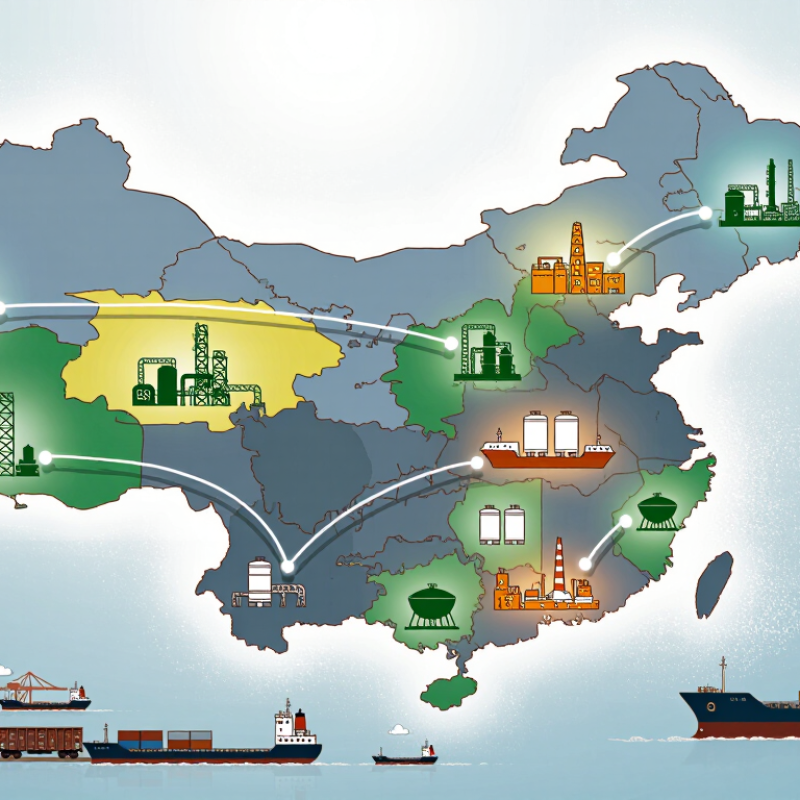
China’s leading petroleum coke sourcing areas often cluster around refineries, industrial centers, and coastal ports. Buyers commonly explore Dalian and Yingkou in Liaoning, Tianjin, Qingdao, Dongying, and Lianyungang. Further south, Shanghai, Ningbo, Guangzhou, and Fangchenggang offer access to shipping and regional distribution. These are practical search locations, not a fixed ranking; availability changes with refinery output, grade, and transport conditions. Some suppliers handle bulk cargo, while others serve smaller industrial orders. Ask for current stock details before arranging a visit.
Tips: Request a recent quality certificate and confirm sulfur, moisture, ash, and particle-size specifications. Match the grade to your process. Check whether the quoted price includes loading, inland transport, and port charges. A low quote can hide extra handling costs. Verify the seller’s business credentials and inspect product samples when feasible. Paperwork alone is not enough.
Before choosing a location, compare delivered cost rather than price at the loading point. Ask about packaging, minimum order size, lead time, and sample availability. Port access may simplify shipping, but inland buyers may find a nearer supplier more practical. Details can be inconsistent between offers, so confirm every specification in writing. That step is easy to overlook.
Major Chinese Coastal Ports Relevant to Petroleum Coke Sourcing
This chart compares the approximate latitude of ten coastal port cities that buyers may consider when planning bulk shipping. Latitude is a geographic reference only—not a ranking of suppliers, sales volume, or availability.
Comparing Supplier Locations, Products, and Logistics
China’s petroleum coke suppliers cluster around refinery and port corridors, not just city limits. Shandong, Liaoning, Tianjin, Jiangsu, Zhejiang, Fujian, Guangdong, and Guangxi offer different combinations of refinery access, storage, and shipping. Inland depots may widen the search, but add another handling step. A nearby port is useful only when its berth, stockpile, and vessel schedule fit your cargo.
Product comparisons should start with the certificate of analysis. Check sulfur, ash, volatile matter, moisture, particle size, and whether the material is green or calcined coke. The International Energy Agency’s Oil 2024 report projects net global refining-capacity growth of 3.3 million barrels per day by 2030. That is market context, not a guarantee of local coke availability. UN Comtrade classifies petroleum coke within HS 2713, a useful reference when reviewing trade flows; customs categories do not replace lot-level testing.
Tips
Request a recent sample and assay, then compare delivered cost, not just the quoted price. Confirm loading rates, packaging, inland trucking or rail, port charges, and moisture-control arrangements in writing. A map can mislead. Even experienced buyers can overlook transfer delays; I would verify the actual dispatch point before comparing suppliers.
Steps for Verifying Suppliers and Completing a Purchase
When comparing China’s ten sourcing options, verify the seller’s role: refinery, authorized trader, or logistics intermediary. Ask for recent production or allocation records, a certificate of analysis, and a traceable loading location. Check sulfur, ash, volatile matter, moisture, and particle size against your specification. Small differences matter. Request an independent inspection before shipment, and match its sampling method to the contract. The U.S. Energy Information Administration’s Petroleum Supply Monthly reports refinery production and stock data; use those series to assess market trends, not as proof of any supplier’s inventory.
Before paying, confirm the registered company, bank beneficiary, contract authority, and references from comparable cargoes. Compare the quotation’s grade, quantity tolerance, delivery term, inspection point, and payment milestones line by line. Ask for draft shipping documents early. A low price can hide freight, moisture, or handling costs. I would still recheck figures after loading; paperwork can lag behind reality.
Tips: Keep a one-page checklist. Verify test results independently, photograph sealed samples, and retain a sealed duplicate. Use clear rejection and dispute clauses, and confirm insurance and transport arrangements before funds move. If a supplier resists routine checks, pause the purchase.
China Top 10 Places to Buy Petroleum Coke - Steps for Verifying Suppliers and Completing a Purchase
The locations below are indicative petroleum-coke sourcing and logistics hubs, not a ranked list or a guarantee of current availability. Confirm product origin, specifications, export eligibility, and shipment options directly before placing an order.
| No. | Sourcing Location | Typical Sourcing Route | Checks Before Purchase | Purchase and Delivery Steps |
|---|---|---|---|---|
| 1 | Dongying, Shandong | Refinery-linked and regional bulk-trading channels in a major refining area. | Confirm the producing facility, cargo origin, grade, sulfur, moisture, ash, volatile matter, and recent assay. | Agree on quantity and delivery terms; arrange independent sampling, inspection, inland haulage, and port or end-user delivery. |
| 2 | Binzhou, Shandong | Regional refinery and industrial-fuel supply channels, subject to current production and allocation. | Match the offered grade to the intended use; verify stock evidence, loading location, and seller authority to sell. | Use a written specification and tolerance schedule; set inspection, payment milestones, and dispatch documents in the contract. |
| 3 | Weifang, Shandong | Regional trading, storage, and transport connections serving Shandong industrial customers. | Request a current certificate of analysis and independently verify the sampled lot rather than relying only on a general product sheet. | Confirm whether the price is ex-works, delivered, or port-based; specify weighing, sampling, and claims procedures. |
| 4 | Qingdao, Shandong | Port-oriented procurement and cargo-handling channels; availability depends on cargo origin and terminal arrangements. | Check terminal acceptance, storage conditions, cargo documents, customs status where relevant, and any handling restrictions. | Confirm the port, loading or discharge window, demurrage terms, independent inspection, and responsibility for port charges. |
| 5 | Rizhao, Shandong | Bulk-port logistics and regional industrial supply routes; confirm that the specific terminal can handle the intended cargo. | Verify cargo identity, declared quantity, assay, terminal acceptance, and whether the quoted material is domestic or imported. | Set out inspection and weighing at the contractual delivery point; coordinate vessel or truck scheduling and document release. |
| 6 | Dalian, Liaoning | Northeast China refinery-linked and port-based sourcing routes, depending on product and shipping schedule. | Confirm producing source, grade consistency, winter transport arrangements if applicable, and all applicable sales or export permissions. | Agree on transport mode, delivery location, inspection timing, payment security, and the documents required before final payment. |
| 7 | Tianjin | Northern China port and industrial distribution channels, with supply depending on local inventory and incoming cargoes. | Check warehouse or terminal records, origin and customs documents where relevant, product assay, and delivery capacity. | Specify the delivery point and title-transfer terms; arrange independent inspection and confirm port, storage, and inland freight costs. |
| 8 | Ningbo–Zhoushan, Zhejiang | Major coastal port logistics serving East China; petroleum coke may be sourced through port cargoes or regional distribution. | Verify the exact terminal and cargo lot, assay and origin documents, storage status, and suitability for the receiving facility. | Confirm port handling, discharge or loading arrangements, sampling location, delivery schedule, and allocation of port-related costs. |
| 9 | Quanzhou, Fujian | Southeast coastal refinery and port-linked channels; verify whether a quoted lot is available locally or must be transported in. | Check the refinery or cargo source, specification limits, available quantity, and the seller's right to transfer the material. | Agree on transport and delivery terms, independent testing, payment schedule, and applicable environmental and handling requirements. |
| 10 | Maoming, Guangdong | South China refinery-area sourcing and coastal distribution routes, subject to current production and sales arrangements. | Confirm the actual production site, lot-specific assay, quantity, loading method, and any restrictions on onward transport or use. | Set delivery terms and inspection arrangements in writing; confirm truck, rail, or vessel logistics and obtain signed delivery records. |