
China Top PET Clear Tape Manufacturers for Wholesale Buyers
PET Clear Tape looks simple on a sample roll: clear film, a smooth edge, and a quiet unwind. Yet wholesale buyers know that small differences in film thickness, adhesive coat weight, and roll winding can affect packing speed and finished-carton appearance. A clear tape that performs well in a cool warehouse may behave differently on dusty cartons or during a hot delivery route. Details matter.
Grand View Research estimated the global adhesive tapes market at approximately US$75.9 billion in 2023 and forecast continued growth through 2030. That figure covers many tape types, not PET Clear Tape alone, but it signals the scale of the broader sourcing market. Buyers comparing Chinese manufacturers should therefore look beyond price. Request technical data sheets, sample rolls, and consistent test results for adhesion, tensile strength, unwind, and aging. A neat product photograph proves very little.
For technical context, Dr. David Satas is a recognized authority in pressure-sensitive adhesive technology and editor of the Handbook of Pressure Sensitive Adhesive Technology. No verifiable, published quotation from him specifically about PET Clear Tape is available in the material provided, so attributing one here would be unreliable. That limitation is worth acknowledging. Supplier claims should be checked against documented specifications and repeatable trials, especially when a tape will run through automatic dispensers. This guide examines Chinese PET Clear Tape manufacturers for wholesale buyers, with attention to product consistency, customization, quality controls, and practical export experience. One detail is easy to miss: a clear roll can conceal uneven coating until the first long production run.
Understanding PET Clear Tape and Its Wholesale Applications
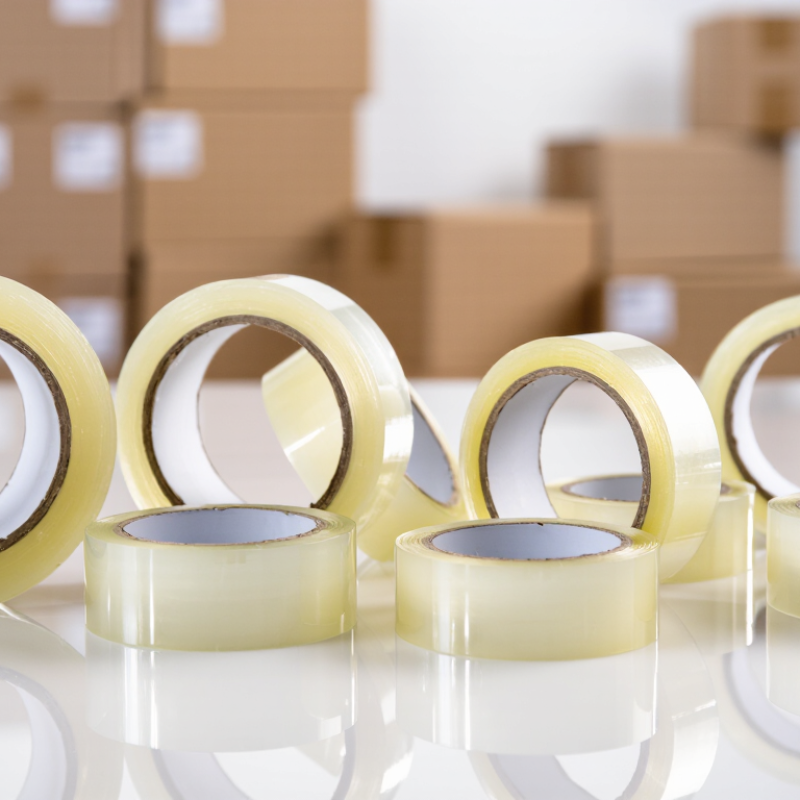
PET clear tape uses a transparent polyester film as its backing, paired with an adhesive selected for the intended task. The film resists stretching better than many thin packaging films and stays relatively stable during handling. Clear does not mean invisible: tape edges, trapped dust, and air bubbles can still show on glossy cartons.
For wholesale buyers, common applications include closing lightweight cartons, bundling small items, and securing labels or protective sheets. Performance depends on more than appearance. A buyer should check backing thickness, roll length, width, adhesive type, and unwind behavior. A roll that feeds smoothly on a packing bench can save time across a large order. Small details matter.
Not every PET tape suits every carton. Recycled surfaces, cold storage, and rough board can affect adhesion. That sounds simple. It is not always. Before placing a bulk order, test samples on the actual packaging and leave them under expected storage conditions. Check whether the tape lifts at the corners or leaves residue after removal. These results are more useful than relying on a clear finish or a single headline specification. Clear PET tape can support neat packing, but the right grade depends on the surface, workload, and handling environment.
How PET Clear Tape Is Manufactured in China
At Chinese PET clear-tape plants, production starts with PET resin chips. The chips are dried before melting; moisture can weaken the polymer during processing. A flat die forms the melt into a sheet, which is rapidly cooled, stretched lengthwise and crosswise, then heat-set. This creates the clear, dimensionally stable BOPET film used as the tape backing. Small defects matter. Operators monitor film thickness, haze, and edge quality as the web travels through the line.
The film surface is treated or primed so adhesive bonds reliably. Roll-to-roll coaters apply a controlled layer, often acrylic, before the web passes through drying and curing zones. Slitting knives then cut the jumbo roll into narrower widths, and tension-controlled winders form saleable rolls. Buyers should request test results for thickness, peel adhesion, tack, and unwind behavior; a clear appearance alone proves little. A thinner film saves resin, but may stretch unevenly, so the trade-off needs testing.
OECD’s Global Plastics Outlook (2022) estimates 460 million tonnes of plastics were produced globally in 2019, while only 9% of plastic waste was ultimately recycled.
That figure is not tape-specific, but it makes trim control and scrap handling relevant points to inspect during a factory audit.
Key Criteria for Comparing Chinese Tape Manufacturers
Comparing Chinese PET clear tape manufacturers starts with measurable consistency, not a low quote. Grand View Research estimated the global adhesive tape market at USD 72.7 billion in 2023, with projected growth of 6.1% annually through 2030. This broad estimate covers many tape types, not PET clear tape alone; market growth does not prove supplier quality. Ask for PET film thickness tolerance, adhesive type, roll length, and batch traceability. Request test results for peel adhesion under ASTM D3330 and holding power under ASTM D3654. Inspect samples for cloudy patches, uneven edges, and noisy or jerky unwinding. Small differences matter.
Tips: Test samples on the actual carton or surface you plan to use. Record the temperature, application pressure, and waiting time; otherwise, comparisons may mislead.
Check whether quoted roll width, core diameter, packaging, and lead time match your order. Ask how defects are recorded and how the supplier handles batches outside agreed limits. Price alone is tempting, but compare landed cost and repeat-order consistency too. A good sample is useful, not conclusive; production runs can reveal problems a single roll misses.
How Wholesale Buyers Can Verify Supplier Quality
Wholesale buyers should verify PET clear tape through repeatable tests, not a polished sample. ASTM International’s D3330, D3654, and D3759 methods assess peel adhesion, holding power, and tensile properties. Request test results with conditions such as surface type, dwell time, and temperature; a peel figure without these details is difficult to compare. Check film thickness, roll width, clarity, and unwind feel. Apply the tape to the cartons you actually use, then look for edge lift or adhesive transfer. Small differences show up fast.
Smithers’ The Future of Global Packaging to 2028 estimated the worldwide packaging market at US$1.17 trillion in 2023, with growth projected through 2028. This broad market estimate is not a tape-quality measure, but it underlines why buyers should document their own acceptance criteria. Ask for a batch-specific inspection report and matching lot numbers on cartons and paperwork. Test rolls from different cartons in a pilot order, and keep one sealed as a reference. Paperwork is not proof. A clean sample can still hide variation between production batches, so repeat checks before scaling up.
China Top PET Clear Tape Manufacturers for Wholesale Buyers - How Wholesale Buyers Can Verify Supplier Quality
| Evaluation Area | What to Request from the Supplier | How to Verify Quality | Wholesale Buyer Checkpoint |
|---|---|---|---|
| Product specification | A written specification covering PET film, adhesive type, total thickness, width, roll length, core size, and intended application. | Compare the specification with the purchase order and approved sample. Confirm whether thickness refers to the backing alone or the complete tape. | Require agreed tolerances in writing; these vary by product and supplier and are not universal. |
| Appearance and clarity | A production sample and the supplier’s visual inspection criteria for transparency, color, coating uniformity, and surface defects. | Inspect samples against a consistent light background for haze, streaks, bubbles, wrinkles, contamination, and uneven coating. | Approve a reference sample and define acceptable appearance limits before bulk production. |
| Adhesion performance | Peel adhesion results, test surface, dwell time, test speed, and test method used for the product. | Ask for test data using a recognized method, such as ASTM D3330, and confirm that test conditions match the intended use. | Compare results only when the substrate and test conditions are equivalent; do not rely on an unexplained “high adhesion” claim. |
| Holding power | Shear or holding-power data, including load, test surface, temperature, and test duration. | Request the method and conditions; ASTM D3654 is one recognized method for testing the holding power of pressure-sensitive tapes. | Check performance against the application, since packaging, bundling, and surface-protection uses can require different results. |
| Backing strength | PET backing thickness and tensile-strength data, with the test direction and method stated. | Request a test report using an applicable method, such as ASTM D3759, and confirm the tested sample matches the offered construction. | Assess strength and elongation together with ease of dispensing and the requirements of the intended application. |
| Roll dimensions | Declared roll width, length, core inner diameter, and the tolerance for each dimension. | Measure samples with suitable measuring tools and verify roll length using a calibrated length-measuring process or agreed sampling plan. | Specify measurement methods and allowable tolerances in the order; do not assume every supplier uses the same limits. |
| Unwind and dispensing | Information on unwind behavior, roll winding quality, and compatibility with the buyer’s dispensers or production equipment. | Test sample rolls on the actual equipment where possible; check for telescoping, edge damage, blocking, and inconsistent unwinding. | Run a production trial before placing a large repeat order, especially when changing roll size or tape construction. |
| Batch consistency | A batch-specific certificate of analysis or inspection record identifying the lot and measured properties. | Compare records from multiple lots and conduct incoming inspections using a documented sampling plan. | Match lot numbers on cartons, inspection documents, and shipping records; investigate unexplained changes in results. |
| Factory and process controls | A description of incoming-material checks, coating and slitting controls, in-process inspections, and final inspection procedures. | Review dated records, arrange a factory audit or third-party inspection, and confirm that measuring equipment is maintained and calibrated. | Verify controls with evidence rather than relying only on a general quality claim or an undated certificate. |
| Packaging and storage | Packaging details, lot identification, storage guidance, and the supplier’s stated shelf-life conditions, if applicable. | Check packaging for moisture, dust, crushing, and damaged edges. Confirm the stated storage guidance is included with the goods. | Agree carton labels and traceability requirements before shipment; storage and shelf-life guidance depend on the product construction. |
| Pre-shipment inspection | An inspection plan covering sample selection, dimensions, appearance, packaging, and any agreed performance tests. | Use an agreed sampling plan and, where appropriate, an independent inspection service before shipment. | Set acceptance criteria, inspection timing, and corrective-action steps in the purchase agreement. |
Note: Performance values and tolerances are product-specific. Buyers should agree on specifications, test methods, and acceptance limits with the supplier before ordering.
Ordering, Customization, and Shipping Considerations
For wholesale orders, specify roll width, length, film thickness, core diameter, adhesive type, and carton quantity in one written schedule. Ask for tolerances, not just target values. A 48-millimeter roll that varies in width can cause problems on an automated dispenser. Request a production sample and check clarity, edge alignment, unwind force, and adhesion on the actual carton surface. ASTM D3330 peel-adhesion and D3654 holding-power methods can help define test conditions. Small details matter. I would not treat one sample roll as proof of a full production run; that assumption can fail. Confirm approval samples and batch records before releasing a large order.
Shipping needs its own buffer. UNCTAD’s Review of Maritime Transport 2024 reports that global maritime trade grew 2.4% in 2023, reaching 12.3 billion tons. That scale makes shipment timing worth confirming, not guessing. Ask for the production lead time, port of loading, carton dimensions, gross weight, and estimated sailing schedule. Keep a buffer. Compare FOB and CIF quotations carefully, and confirm who arranges insurance, export documents, and destination charges. For clear PET tape, moisture-resistant cartons and tight pallet wrapping help protect roll edges from dust and compression. Request photos before dispatch, but remember they cannot replace an incoming inspection.