
What Is the Best Walnut Food Supplier in China?

Choosing the best Walnut Food supplier in China takes more than comparing prices. A polished product sheet can look convincing. The real test is whether each batch has a clear origin, consistent kernel quality, and records buyers can verify. Look closely at color, broken pieces, moisture control, packaging seals, and harvest details. Small clues matter.

Walnut researcher Dr. Joan Sabaté is known for evidence-based work on nuts and health. A practical sourcing principle inspired by that approach is: “Ask for evidence behind every quality claim.” This is an editorially phrased principle, not a verbatim quotation. For buyers, useful evidence may include product specifications, traceability records, recent test reports, and clear answers about storage and shipment handling. Ask how the supplier manages variation between lots. Then check whether the documents match the sample in front of you.

No supplier is automatically “best” for every buyer. A bakery may prioritize uniform pieces; a retailer may need attractive whole kernels and dependable packing. Request a representative sample, compare it with the agreed specification, and discuss how complaints are handled. Notice the details. A brief, careful review can reveal more than a bold promise. Still, paperwork cannot show everything, and one sample may not represent every future shipment. That is an imperfect part of sourcing, worth acknowledging. This guide examines the checks that help buyers assess Chinese suppliers with care, rather than relying on claims alone.
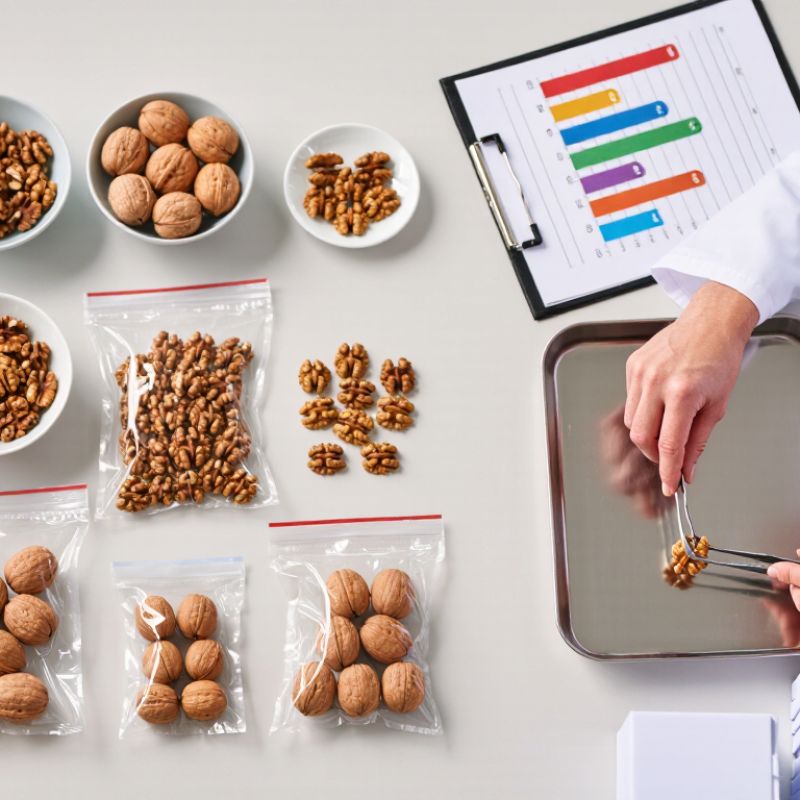
What Is the Best Walnut Food Supplier in China?

China’s Walnut Industry: About 1.4 Million Tonnes Produced in 2022 (FAOSTAT)

FAOSTAT reports that China produced about 1.4 million tonnes of walnuts in 2022. That is substantial. The figure reflects the scale of China’s walnut-growing and processing industry, but it does not tell buyers which suppliers offer the right product. It may also refer to walnuts in shell rather than edible kernels. Check the product definition before comparing production figures with supplier quotations.

The largest supplier is not automatically the best fit. Ask for the harvest year, origin details, processing records, and recent test results. Inspect a sample for kernel color, size, shell fragments, and a fresh, mild aroma. Moisture levels matter too: kernels stored poorly can lose quality, even when they look acceptable. Request documentation for relevant food-safety checks, including testing for contaminants where appropriate. One shipment can still differ from the sample, so agree on written specifications and inspect incoming lots. A clear record of batch numbers and storage conditions makes problems easier to trace. For a buyer, those practical details matter more than a headline national tonnage.

From Orchard to Processing: How Walnut Suppliers Grade Kernels

Walnut grading begins in the orchard, not at the sorting line. Harvest timing affects kernel fill, flavor, and the share of sound nuts. After collection, workers remove the green husks and separate damaged or empty shells. The nuts are dried under controlled conditions, with moisture checked before storage. Drying too quickly can affect texture; too slowly can invite mold. Small details matter.

At the processing site, walnuts are cracked and kernels sorted by size, color, and condition. Screens and optical sorters remove shell fragments, while trained staff inspect samples for shriveled pieces, insect damage, and unusual odors. Whole halves, large pieces, and smaller fragments may be graded separately because buyers use them differently. Color is not everything. A pale kernel can look appealing, but taste and freshness also matter.

Reliable suppliers record lot numbers and keep samples so a shipment can be traced back to its harvest and processing date. They should explain their grading terms clearly and share relevant moisture, foreign-matter, and food-safety test results. Buyers can request a small sample and check its aroma, crunch, and consistency before placing a larger order. Even careful grading has limits: weather and orchard conditions create natural variation, and no sorting line makes every kernel identical.

How Walnut Kernels Are Graded: An Illustrative Sample Lot

From orchard intake to processing, suppliers sort kernels by color and inspect them for defects. This example shows the distribution in a hypothetical 1,000-kernel inspection; it is not a market average or a universal grading standard.

Color categories and defect tolerances vary by buyer specification and applicable standards. A supplier’s grading report should state the inspection method, sample size, and acceptance criteria.

Food-Safety Checks: Verify HACCP, ISO 22000, and Applicable GB Standards

For a walnut supplier in China, check food-safety controls before comparing price or kernel size. WHO’s 2015 foodborne-disease assessment estimated 600 million illnesses and 420,000 deaths worldwide each year. The figure covers all foods, but it shows why documented prevention matters. Ask whether the supplier’s HACCP plan covers receiving, sorting, drying, storage, and packing. Verify that ISO 22000 certification is valid, issued by an accredited body, and covers the actual factory and product scope. Paperwork alone is not proof. A damp corner in a storage silo can still create risk.

Request recent, batch-linked test reports for aflatoxins, pesticide residues, heavy metals, and relevant pathogens. Check that results come from a competent laboratory and match the shipment’s lot number. Confirm applicable current Chinese standards, including GB 2761 for mycotoxins, GB 2762 for contaminants, GB 2763 for pesticide residues, and GB 19300 for nuts and seeds. Requirements depend on product type and intended use, so confirm the latest editions rather than relying on an old checklist.

Tips: Ask for a traceability exercise: can the supplier connect one carton to its harvest lot, processing date, and test results? Request a mock recall record, too. It is a useful check, though one exercise cannot guarantee every batch is equally controlled. Keep your own retained sample when possible.

Supplier Comparison: Assess Traceability, Capacity, Testing, and Certifications

A strong walnut supplier should make each lot traceable from orchard or collection area to finished package. Ask for harvest dates, origin records, processing locations, and batch codes that match across invoices and test reports. Compare how quickly staff can retrieve a specific lot’s documents. Traceable records matter most when a shipment needs investigation.

Capacity is more than a large production figure. Request recent output data, seasonal availability, storage conditions, and lead times for your required grade and packaging. Ask how the supplier separates different sizes and handles rejected kernels. A brief factory review can reveal whether sorting lines are clean and storage rooms stay dry. Brochures prove little.

Testing should cover relevant risks, such as moisture, aflatoxins, and pesticide residues, with results tied to the exact batch. Check the laboratory’s identity, test date, and methods; consider independent verification for trial orders. Review certificates for scope, facility address, and current validity, then confirm them with the issuing body where possible. A certificate may cover a site, not every product or process. No checklist is perfect. I would also note unclear answers, even when the paperwork looks complete.

Choosing a Supplier: Match Walnut Type, Order Volume, Lead Time, and Market

The right supplier depends on the walnut you actually sell, not just the lowest quote. Specify in-shell walnuts or kernels, then state the variety, grade, size, color, and whether halves or pieces are acceptable. For baking, broken kernels may work; retail packs often need more uniform pieces. Ask for a recent sample and compare it with the written specification. Check moisture, odor, visible defects, and packaging seals. Small details matter.

Your order volume should fit the supplier’s minimum quantity and sorting capacity. A low price on a large lot is not useful if stock sits too long or quality varies between cartons. Ask how the quote changes by volume and whether cartons can carry batch codes. Lead time needs similar scrutiny: harvest timing, cleaning, grading, testing, and port schedules all affect dispatch. Request a production window, not just an estimated shipping date. For a new supplier, allow time for sample approval. It helps. Match the product and pack size to your market, too: food-service buyers may accept bulk bags, while retailers often need smaller, shelf-ready packs. Confirm labeling details and destination-market food-safety documents before production. I would not assume last season’s timing will repeat; crop and freight conditions shift. A small trial order can reveal gaps, though it cannot guarantee every later lot.

CONTACT US