
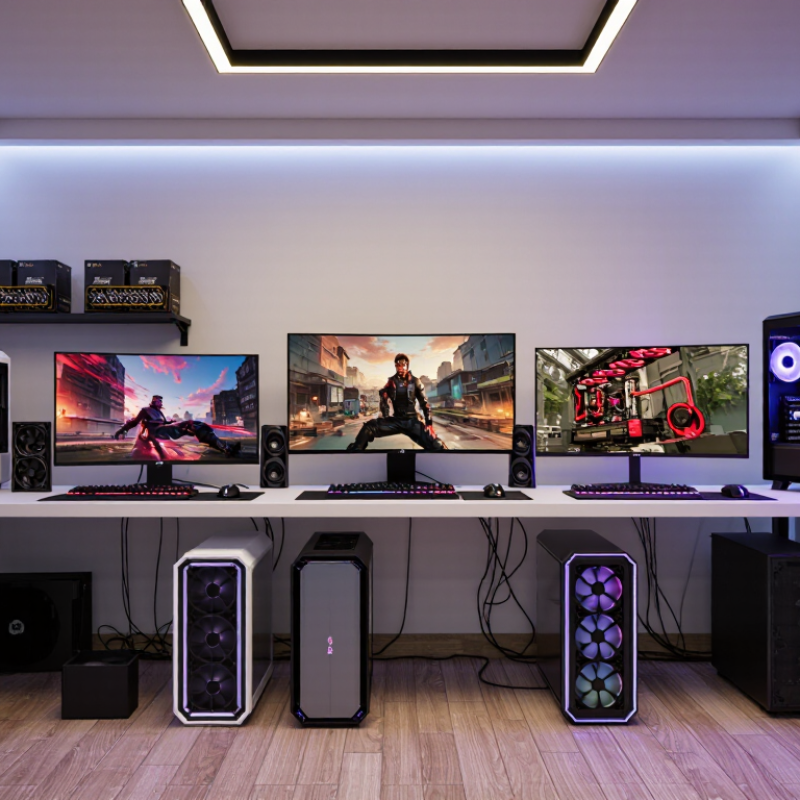
A useful 2026 gaming-rig guide should begin with evidence, not wishful specifications. Steam Hardware Survey trends show that mainstream players still use modest resolutions, mid-range memory, and older graphics hardware. The figures change monthly, so they are directional rather than permanent rules. I treat them as a practical baseline, then test each tier with real games, frame-time readings, and quiet-room temperatures.
Tier one suits esports at 1080p with a four-core processor, 16GB memory, and an entry graphics card. Tier two adds stronger 1080p performance and smoother streaming. Tier three targets high-refresh 1080p or basic 1440p gaming. It needs six processor cores and 16GB to 32GB memory.
Tier four is the balanced choice, pairing a modern six-core processor with a capable 1440p graphics card and a fast solid-state drive. Tier five serves serious 1440p players, with 32GB memory and better cooling for long sessions.
Tier six targets 4K gaming, where graphics power matters more than decorative lighting. Tier seven is the enthusiast tier, built for high-refresh 4K, recording, and demanding creative workloads. It requires generous airflow and a reliable power supply.
I would not call these tiers exact. Hardware surveys can overrepresent certain players, while regional prices change the buying decision. A cheaper tier may also feel better with a carefully tuned monitor and stable frame rates. That detail is easy to overlook. Testing matters more than impressive parts lists.