How to Source the Best Eyelash Serum for Wholesale?
Sourcing the best Eyelash Serum for wholesale requires more than comparing unit prices. Buyers must evaluate formula safety, supplier experience, documentation, and customer expectations. The opportunity is real. Circana’s 2024 U.S. Prestige Beauty report recorded strong growth across prestige categories, while NIQ’s State of Beauty 2024 research highlighted rising demand for effective, transparent products. These findings suggest that performance claims need credible evidence, not attractive packaging alone.
A reliable supplier should provide a complete INCI list, product specifications, batch records, stability results, and microbiological testing. ISO 22716 guidance can help buyers assess cosmetic manufacturing practices. For international sales, regulatory checks also matter. The U.S. FDA’s MoCRA framework and the European Union Cosmetics Regulation set important expectations for responsible manufacturing, safety information, and market compliance. Requirements may differ by destination.
Look closely.
A practical wholesale review should include sample testing, packaging inspection, lead-time verification, and communication during revisions. The serum should arrive in a clean, sealed tube, with a precise applicator and readable labeling. Suppliers should explain storage conditions and shelf life clearly. Independent testing is valuable when available, especially for sensitive eye-area products.
The cheapest quote can look efficient. It may not be.
Some suppliers provide impressive certificates but weak traceability. That is where careful buyers need to pause and ask harder questions. This guide will examine how to compare manufacturers, verify evidence, control quality, and select an Eyelash Serum that supports safe, consistent, and credible wholesale growth.
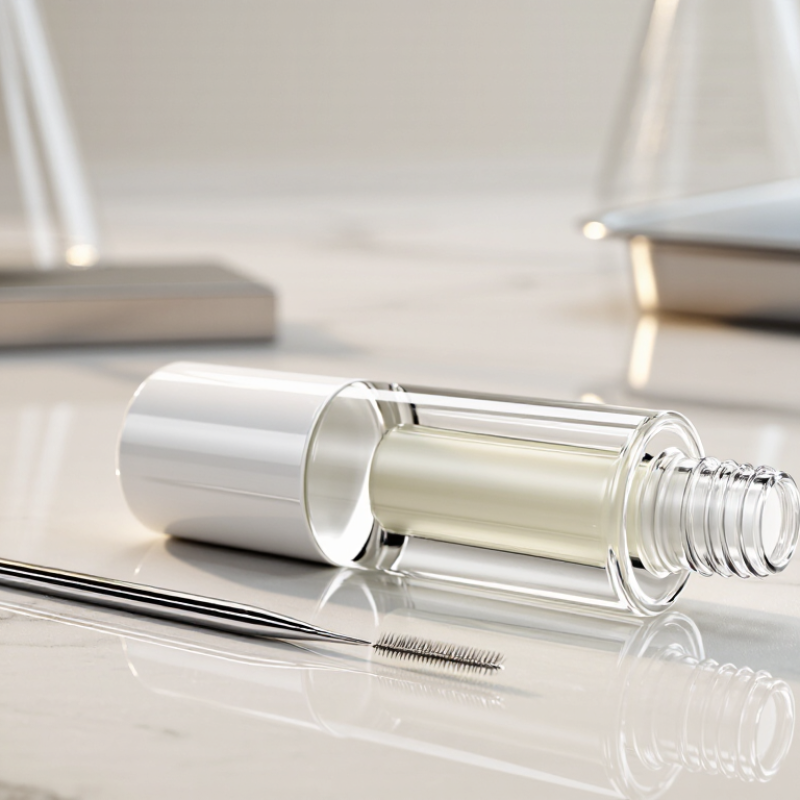
Define Wholesale Eyelash Serum Requirements and Buyer Expectations
Wholesale eyelash serum requirements should begin with the buyer, not the supplier’s catalog. McKinsey’s 2023 beauty report projects the global beauty market could reach about $580 billion by 2027. NIQ’s 2024 State of Beauty report also recorded strong global beauty growth in 2023. These figures suggest opportunity, but they do not prove demand for every serum formula.
Ask buyers to define their target user, preferred texture, scent tolerance, packaging size, and retail price. A 3–5 ml tube may suit trial purchases, while salons may need larger cartons and consistent replenishment. Confirm the INCI list, batch traceability, stability data, microbial testing, and a certificate of analysis. Claims should remain cosmetic and evidence-based. “Supports the appearance of fuller-looking lashes” is safer than promising medical growth.
Packaging expectations deserve practical attention. Buyers often inspect brush shape, wiper performance, leakage resistance, and label readability before discussing volume. Small details matter. Request samples from multiple production batches, not one perfect sample. Compare viscosity, drying time, odor, and applicator control under normal room conditions. This is where sourcing becomes less glamorous.
Grand View Research identifies personalized beauty and ingredient transparency as continuing market trends. Therefore, buyers may expect clear ingredient explanations and responsive technical support. Still, “clean” is not a complete specification. Define exclusions carefully, including fragrance, allergens, or certain preservatives. A low MOQ can look attractive, yet inconsistent replenishment may damage customer trust. No supplier fits every buyer. Recheck assumptions before signing.
Evaluate Eyelash Serum Ingredients, Safety, and Product Performance
Wholesale buyers should evaluate eyelash serum ingredients before comparing prices or packaging. Cosmetics Europe reported that Europe’s cosmetics market reached approximately €88 billion in 2023. This scale increases demand, but it also raises quality expectations. Review the full ingredient list, not only front-label claims. Peptides, panthenol, amino acids, and conditioning polymers may support a healthier-looking lash area. However, evidence for dramatic growth remains limited. Treat impressive claims carefully.
Safety requires more than a clean-looking formula. Ask suppliers for stability data, preservative challenge testing, microbiological results, and irritation assessments. The Cosmetic Ingredient Review evaluates ingredient safety according to available toxicological evidence, but its assessments do not prove every finished formula is safe. Eye-area products need stricter screening. Check fragrance allergens, strong solvents, and pharmacologically active growth analogues. Require documented regulatory reviews for each target market.
Performance testing should measure visible changes under controlled conditions. A useful protocol records lash length, fullness, breakage, and user discomfort over 8–16 weeks. Standardized photographs matter. So does a control group. One clinical study reported measurable lash improvement after 16 weeks, but that evidence cannot automatically support every cosmetic serum. I would reject suppliers offering only testimonials. My own screening can still miss long-term sensitivity, especially with frequent use. Wholesale samples deserve independent testing before large orders.
Verify Supplier Credentials, Manufacturing Standards, and Compliance
Wholesale eyelash serum sourcing begins with supplier verification, not attractive packaging. McKinsey’s 2023 beauty market report projects global beauty sales near $580 billion by 2027. It also expects online channels to exceed 30% of sales. This growth increases pressure to launch quickly, but rushed checks can create costly quality problems. Request the company registration, factory address, GMP evidence, ISO 22716 procedures, insurance, and recent third-party audit reports. Confirm that documents match the legal manufacturer, not only the trading company.
Manufacturing standards need practical proof. Ask for batch records, raw-material specifications, stability testing, microbial results, and preservation-challenge testing. Eyelash products touch sensitive skin and may approach the eye area. Packaging should protect the formula from air, heat, and repeated fingertip contact. Verify ingredient names against the destination market’s cosmetic rules, then review claims with a qualified regulatory professional. The FDA’s MoCRA framework also shows why responsible-person details, safety substantiation, and adverse-event procedures matter for US distribution. Certificates alone are not enough. I once trusted a polished audit file too quickly; the production photos were outdated. That mistake still influences my checklist.
Tips: Order pilot samples from separate batches. Compare color, odor, viscosity, and applicator performance. Visit the facility when possible. Check whether test reports show batch numbers and laboratory accreditation. Keep written approval records for every formula and label revision. A low quotation deserves extra questions, not automatic rejection. Suppliers should answer clearly, even when the answer is inconvenient.
Compare Wholesale Pricing, Minimum Orders, and Customization Options
How to Source the Best Eyelash Serum for Wholesale?
Wholesale eyelash serum sourcing starts with comparable numbers, not attractive samples. McKinsey’s 2023 beauty-market report projects global beauty sales to reach about $580 billion by 2027, with roughly 6% annual growth. Demand looks promising, but supplier quotes can hide important costs. Compare unit pricing at 500, 1,000, and 5,000 pieces. Request landed costs, including packaging, testing, freight, and labeling. A low factory price is not automatically better. The cheapest option may use a weaker applicator or require expensive upgrades later.
Minimum order quantities deserve equal attention. Some suppliers offer low MOQs for standard formulas, while custom formulas, brush shapes, and packaging usually require larger commitments. Ask whether the MOQ applies per shade, formula, or total order. This detail changes your real investment. Grand View Research’s eyelash serum market analysis identifies product innovation and premium positioning as major growth factors. Customization can support those goals, but only when the added cost matches your sales forecast. A beautiful box cannot rescue slow inventory.
Tips: Build a comparison sheet with six columns: unit cost, MOQ, lead time, sample fee, customization charge, and compliance documents. Check stability data and ingredient specifications before approving samples. Do not rely on verbal promises. Get every revision in writing. One sourcing mistake is assuming a sample represents mass production. Request a pilot batch first, then inspect fill weight, brush consistency, seal quality, and print alignment. Perfect results are unlikely on the first attempt, so leave time and budget for corrections.
How to Source the Best Eyelash Serum for Wholesale? – Compare Wholesale Pricing, Minimum Orders, and Customization Options
| Product Profile | Typical Formula | Common Size | Indicative Wholesale Price
(USD per Unit) | Typical MOQ | Private Label | Custom Formula | Estimated Lead Time | Best Fit |
| Entry-Level Conditioning Serum | Peptides, panthenol, biotin, botanical extracts; typically prostaglandin-free | 3–5 ml | $1.20–$2.50 | 500–1,000 units | Usually available | Limited | 4–8 weeks | First-time buyers and test launches |
| Mid-Range Peptide Serum | Multi-peptide complex, amino acids, hyaluronic acid, conditioning agents | 3–5 ml | $2.50–$4.80 | 500–2,000 units | Available | Possible with development fee | 6–10 weeks | Beauty retailers and online stores |
| Premium Botanical Serum | Peptides combined with plant extracts, vitamins, panthenol, and specialty conditioning ingredients | 4–6 ml | $4.50–$8.50 | 1,000–3,000 units | Available | Available | 8–12 weeks | Premium positioning and salon distribution |
| Sensitive-Eye Serum | Fragrance-free, alcohol-free, ophthalmologist-tested positioning; gentle conditioning ingredients | 3–5 ml | $3.00–$6.50 | 1,000–3,000 units | Available | Subject to testing | 8–14 weeks | Sensitive-skin customers and professional use |
| Custom-Developed Serum | Buyer-selected active ingredients, texture, preservative system, and product claims | 3–8 ml | $5.00–$12.00+ | 2,000–5,000 units | Available | Fully customizable | 12–20 weeks | Established brands seeking differentiation |
| Eco-Packaging Serum | Standard conditioning serum paired with recyclable, refillable, or reduced-plastic packaging | 3–5 ml | $3.50–$7.50 | 1,000–3,000 units | Available | Usually not included | 8–14 weeks | Sustainability-focused retail programs |
| Professional Back-Bar Format | Larger-volume conditioning formula designed for salon or lash-extension services | 10–30 ml | $4.00–$9.00 | 500–1,500 units | Available | Limited to approved base formulas | 6–10 weeks | Lash studios, salons, and training centers |
Wholesale comparison notes: Prices are indicative ranges for bulk orders and may change according to ingredients, packaging, testing, printing, shipping terms, and order volume. Confirm the final quotation, cosmetic regulatory documents, ingredient list, stability data, microbial testing, and packaging specifications before placing an order.
Test Samples and Finalize a Reliable Eyelash Serum Supplier
How to Source the Best Eyelash Serum for Wholesale?
Test samples before discussing large-volume pricing. Grand View Research estimates the global eyelash serum market reached approximately USD 1.1 billion in 2023. This growth attracts many new suppliers. Not every sample deserves a purchase order.
Request three production samples from different batches. Check the texture, scent, brush control, drying time, and comfort after application. Test the serum on suitable volunteers under controlled conditions. Record redness, stinging, flaking, and visible lash changes.
A clean result matters more than dramatic marketing claims. It is easy to overlook packaging. Observe leakage after shaking, heat exposure, and one week of daily opening. Small failures become expensive wholesale complaints.
Ask each supplier for a complete ingredient list, certificate of analysis, microbiological results, stability data, and batch-traceability records. ISO 22716-based manufacturing controls can indicate stronger process discipline, but certification alone proves little. Verify the certificate with the issuing body.
Statista Market Insights projected global beauty and personal care revenue above USD 600 billion in 2024, showing the scale of competition.
However, broad market growth does not guarantee repeat purchases for your product. Compare lead times, minimum order quantities, replacement policies, and testing support in writing. A low quotation can hide weak quality control.
I have learned this the hard way. Do not rush the final supplier decision. One more sample may reveal what the first inspection missed.