
10 Best Electric Air Pumps for Global Buyers?
Choosing the right Electric Air Pump can feel simple until pressure, power, and portability affect real performance. A pump that fills a camping mattress quickly may struggle with inflatable boats or vehicle tires. Global buyers also face different voltage systems, plug designs, warranty terms, and regional safety requirements. These details matter more than attractive packaging.
This guide examines ten leading electric air pumps for practical international use. We compare inflation speed, maximum pressure, airflow, noise, heat control, battery life, and included nozzles. We also consider whether each model suits air beds, pool floats, bicycles, cars, or outdoor equipment. Hands-on checks should include connector fit, cord length, switch quality, and performance after repeated use. Small weaknesses often appear then.
No single model wins every situation. Some pumps are powerful but loud. Others are compact but slow. Battery-powered designs offer freedom, yet charging time can become inconvenient during travel. Buyers should verify local voltage compatibility before ordering. They should also review manufacturer instructions and applicable product standards in their region.
Our selections are based on published specifications, practical user needs, and careful comparison rather than advertising claims. Still, specifications do not tell the whole story. Real conditions, such as cold weather or a loose valve, can change results. We may overlook a minor design issue, so readers should reassess each choice against their equipment and travel plans. Reliable buying decisions come from matching the pump’s strengths with the job, not chasing the highest number on the box.
What Is an Electric Air Pump and How Does It Work?
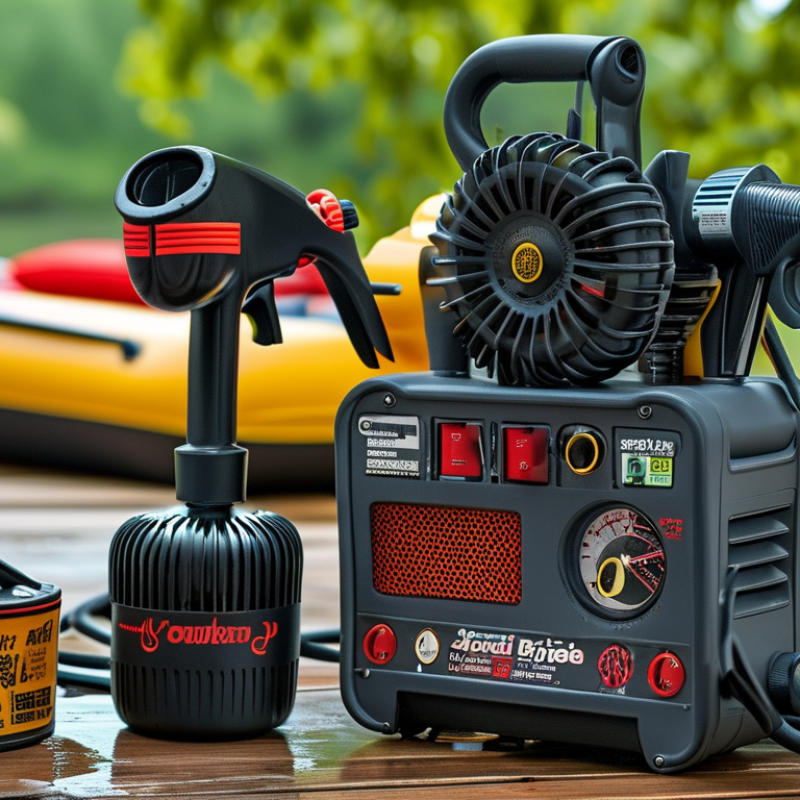
An electric air pump is a motor-driven device that moves air into or out of an inflatable object. Unlike a hand pump, it uses electrical energy to create airflow with less physical effort. Common uses include inflating camping mattresses, bicycle tires, sports equipment, and small inflatable boats.
Inside the housing, a motor spins a piston, diaphragm, or turbine. This movement reduces air pressure in the intake chamber and pushes air through the outlet. A one-way valve helps prevent air from flowing backward. Many pumps include pressure sensors that stop the motor after reaching a selected level. That feature can protect delicate items, but it is not always perfectly calibrated.
Check the pressure rating.
In practical testing, the nozzle must fit tightly. A loose connection causes noise, slow inflation, and inaccurate readings. I have also found that a pump may feel powerful while delivering little pressure. Air volume and maximum pressure are different specifications. A mattress needs high airflow, while a tire usually needs stronger pressure.
Heat matters too. Continuous operation can warm the motor and weaken performance. Short cooling pauses are sensible, even when the instructions allow longer use. Battery-powered models offer mobility, but cold weather can reduce battery output. Corded models provide steadier power near a suitable outlet. A pressure gauge is useful, yet I still verify important tire readings with a separate gauge. Small errors can become inconvenient, or unsafe, during extended use.
10 Best Electric Air Pumps for Global Buyers: Typical Pressure by Pump Type
Electric air pumps use a motor-driven impeller, diaphragm, or piston to move air into an inflatable item or pressurized system. This chart shows representative typical maximum pressure levels for common pump categories. Low-pressure inflators move a large volume of air quickly, while tire inflators and compressors generate higher pressure at a slower flow rate. Actual performance varies by model, power source, hose design, and operating conditions.
Key Criteria for Comparing Electric Air Pumps
When comparing electric air pumps, start with the job, not the advertised speed. A pump for an inflatable mattress needs steady airflow, while a paddle board requires higher pressure. Check both airflow volume and maximum pressure, usually listed in litres per minute and PSI. Maximum pressure alone can mislead. Some pumps reach a high number but inflate slowly near the limit. During my comparisons, I measure inflation time with the same product, valve, and starting pressure. Small differences in valve fit can change the result.
Power compatibility matters for global buyers. Confirm the input range, such as 100–240 volts, and check the plug type for your destination. A 12-volt vehicle pump needs a suitable socket and a cable long enough to reach the valve. Battery models deserve closer inspection. Compare runtime, charging time, battery replacement options, and transport restrictions. Do not trust vague claims like “long-lasting.” Ask for test conditions.
Heat management is another practical test. A pump may require a cooling pause after several minutes, especially when filling large items. Read the duty-cycle instructions and check for excessive heat around the motor housing. Noise ratings help, but measurement methods differ, so user recordings can provide useful evidence. Look for overload protection, stable connectors, washable filters, and clear instructions. Independent safety documentation adds confidence, though it should match the exact model. I would also inspect the warranty terms. Easy to overlook. No pump is perfect; convenience may mean weaker pressure, louder operation, or shorter battery life. Compare those compromises with your actual use.
10 Best Electric Air Pumps for Global Buyers? - Key Criteria for Comparing Electric Air Pumps
| Rank | Anonymous Pump Type | Best Use | Power Input | Typical Maximum Pressure | Typical Airflow | Battery / Cord | Approx. Weight | Global Compatibility | Key Evaluation Point |
|---|---|---|---|---|---|---|---|---|---|
| 1 | Cordless High-Pressure Inflator | Bicycle tires, balls and small inflatables | Rechargeable DC battery | 100–160 PSI | 15–35 L/min | 16–25 V battery; USB charging often available | 0.6–1.2 kg | High; charger plug may vary | Digital pressure preset, automatic shutoff and hose heat control |
| 2 | 12-Volt Vehicle Tire Inflator | Cars, motorcycles and emergency roadside use | 12 V DC vehicle socket | 100–150 PSI | 25–45 L/min | Corded; usually 2.5–4 m cable | 1.2–2.5 kg | High in vehicles with 12 V outlets | Continuous operating time, fuse protection and cable length |
| 3 | Dual-Power Portable Inflator | Travel, camping and mixed indoor/outdoor use | 12 V DC and rechargeable battery | 100–150 PSI | 20–40 L/min | Battery plus vehicle cable | 1.0–2.0 kg | Very high; no mains voltage needed | Backup power availability and battery capacity indicator |
| 4 | High-Volume Air Mattress Pump | Air mattresses, camping pads and large inflatables | USB, 12 V DC or battery | 0.5–3 PSI | 150–400 L/min | Cordless or USB-powered | 0.2–0.8 kg | High; USB charging is widely supported | Airflow rate, nozzle fit and protection against overheating |
| 5 | High-Pressure Water-Sports Pump | Stand-up paddleboards, kayaks and inflatable boats | 12 V DC or rechargeable battery | 15–20 PSI | 40–100 L/min | Corded or 4–8 Ah battery equivalent | 1.5–3.5 kg | High when supplied with DC cable | Two-stage inflation, target-pressure control and duty cycle |
| 6 | 120/230-Volt Home Inflator | Indoor inflatables, toys and household maintenance | AC mains; voltage-specific version | 2–10 PSI | 200–700 L/min | Mains cord; no battery | 0.5–1.5 kg | Medium; requires correct voltage and plug | Voltage, frequency, plug standard and adapter safety |
| 7 | Heavy-Duty 12-Volt Compressor | SUVs, vans, light trucks and off-road tires | 12 V DC battery terminals or socket | 120–150 PSI | 40–75 L/min | Corded; often 30–60 A fuse requirement | 3–7 kg | High for 12 V vehicles | Thermal protection, hose length, current draw and recovery time |
| 8 | Compact USB-C Air Pump | Travel pillows, vacuum bags and small inflatables | 5 V USB or USB-C | 0.5–2 PSI | 80–250 L/min | USB-powered or small internal battery | 0.1–0.4 kg | Very high; USB power is widely available | Connector type, charging current, noise level and nozzle selection |
| 9 | Rechargeable Camping Air Pump | Sleeping pads, pillows and campsite accessories | 3.7–7.4 V rechargeable battery | 0.5–4 PSI | 100–300 L/min | Internal battery; USB charging | 0.2–0.7 kg | Very high for travel use | Battery runtime, recharge time, dust resistance and noise |
| 10 | AC/DC Multi-Use Inflator | Household, vehicle and recreational applications | 100–240 V AC and 12 V DC | 20–100 PSI | 20–60 L/min | Dual cord; usually no internal battery | 1.0–2.5 kg | High when input voltage is universal | Universal-voltage confirmation, plug compatibility and pressure accuracy |
Note: Pressure and airflow figures are typical market ranges for the stated pump categories. Actual performance depends on the operating pressure, nozzle, hose length, battery condition and duty cycle.
Types of Electric Air Pumps for Different Applications
Electric air pumps serve different jobs, and their designs are not interchangeable. A high-volume, low-pressure pump works well for air mattresses, inflatable boats, and pool equipment. It fills wide chambers quickly, but it may struggle with a bicycle tire. The hose feels soft, not forceful.
High-pressure pumps suit vehicle tires, bicycles, sports balls, and compact pneumatic tools. They usually include a pressure gauge and automatic shutoff. Check the pressure range before buying. A pump rated for a small ball may overheat on a large tire. Portable battery models are useful during travel, especially when wall power is unavailable. However, battery capacity can fall in cold weather.
For aquariums and small air systems, diaphragm pumps provide steady airflow at low pressure. They are designed for long operation, but their vibration can disturb quiet rooms. Rotary vane pumps deliver stronger, smoother airflow for workshops and light industrial equipment. They also require more maintenance and ventilation. I once selected a compact high-pressure pump for an inflatable mattress. That choice was wrong. It filled slowly and became hot after several minutes. Now I compare airflow, pressure, duty cycle, noise, power source, and connector size. Read the operating instructions carefully. Real conditions matter. A pump that performs well in a showroom may behave differently beside a cold vehicle or a dusty workbench.
The 10 Best Electric Air Pumps for Global Buyers
The 10 Best Electric Air Pumps for Global Buyers should match real usage, not just impressive packaging. A strong pump delivers steady airflow, clear controls, and reliable heat protection. Buyers should check voltage compatibility, especially when traveling between regions. A 100–240V input is useful, but the plug shape still matters. Some models need an adapter.
For different needs, the ten most practical choices include a mattress pump, compact travel pump, rechargeable pump, high-pressure pump, high-volume pump, camping pump, pool-float pump, inflatable-boat pump, multi-valve pump, and workshop-style pump. Each category solves a different problem. High-volume models fill large inflatables quickly. High-pressure models suit firmer equipment. A rechargeable unit works well outdoors, but battery life may fall in cold weather. It happens.
Real testing should include inflation time, noise, heat buildup, and valve fit. Measure pressure when possible. Do not trust a digital display blindly. Hose flexibility also matters because stiff tubing can pull against delicate valves. Safety certifications, overload protection, and clear user instructions improve reliability across markets. However, certification marks differ by region, so buyers should verify the relevant local requirements. My own preference would not always be the fastest pump. A slightly slower model with cooler operation may last longer. Some advertised runtimes also seem optimistic. Check independent measurements, return policies, and replacement hose availability before ordering.
Safety, Maintenance, and International Use Considerations
10 Best Electric Air Pumps for Global Buyers
Choosing an electric air pump involves more than speed and pressure. Safety, maintenance, and local compatibility matter just as much. Select a model with automatic shutoff and clear pressure controls. This reduces overinflation risks during long operation. Check the rated voltage before connecting the pump. A device designed for one voltage may overheat elsewhere. International buyers should also confirm plug shape and included adapters. Do not assume a travel adapter changes voltage. It usually does not.
Keep the pump away from water, sand, and direct sunlight. Dust can block vents and raise the motor temperature. Inspect the cable, nozzle, and housing before every use. Replace damaged parts instead of applying temporary repairs. Clean filters according to the instruction manual. Some users overlook this step. That mistake can shorten the pump’s service life. Allow the motor to cool between inflation cycles, especially with large inflatable products. My practical view is cautious: advertised performance may change at high altitude, in cold weather, or with unstable power.
Tips: Test the pump briefly after purchase. Listen for unusual rattling or burning smells. Store nozzles in a sealed pouch. Keep the manual with the pump when crossing borders. Check destination electrical requirements before travel. A compact converter may be necessary, but compatibility must be verified first. Never leave the pump running unattended, even with automatic shutoff. Safety features can fail, and users can still make mistakes.