
China Best SS Strip Coil 304 Stainless Steel Coil Supplier?
Choosing the right China supplier for Ss Strip Coil 304 Stainless Steel Coil requires more than comparing online prices. The “best” supplier depends on thickness, width, surface finish, edge quality, and delivery requirements. A reliable manufacturer should explain these details clearly, not hide them behind broad product claims.
In practical sourcing, buyers often request 304 stainless steel strip for stamping, electrical components, kitchen equipment, and precision fabrication. Each use requires different controls. A narrow strip may need stable slit width, smooth edges, and consistent coil tension. Surface options such as 2B, BA, and No. 4 should match the final application. Small defects can become visible after forming.
Ask for mill test certificates, chemical composition, mechanical data, and dimensional inspection reports. ASTM, EN, and JIS references can help, but the specification must match your purchase contract. Supplier experience matters here. An experienced team can recommend suitable annealing, slitting, packaging, and testing methods based on actual production conditions.
Look closely at packaging. Coils should have secure strapping, moisture protection, and clear identification labels. These details reduce damage during ocean transport. However, no supplier is perfect. Even a capable mill may face schedule changes, tolerance concerns, or communication gaps. Honest evaluation is essential.
This guide examines supplier capability, product consistency, certification, export experience, and after-sales support. It also considers questions buyers sometimes overlook, including trial orders, sample approval, and claim handling. The goal is practical judgment, not an exaggerated ranking. A dependable China supplier should provide evidence before asking for long-term trust.
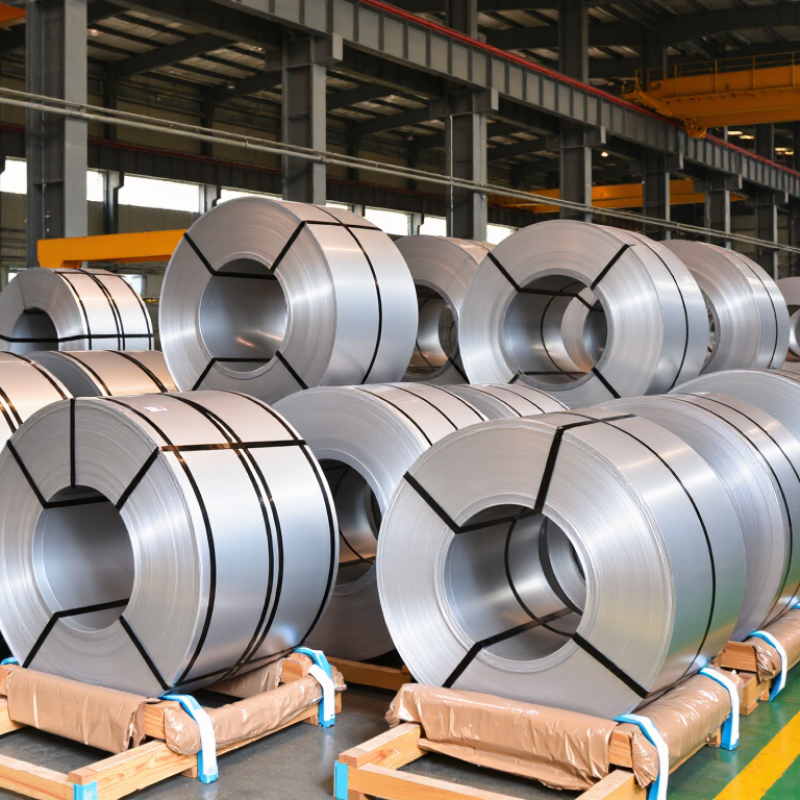
What Is 304 Stainless Steel Strip Coil?
What Is 304 Stainless Steel Strip Coil?
304 stainless steel strip coil is a narrow, continuously wound form of austenitic stainless steel. It commonly contains about 18% chromium and 8% nickel. These elements help the strip resist moisture, oxidation, and many mild chemicals. The material is usually produced by rolling stainless steel into thin, consistent gauges. It may then be slit into custom widths for fabrication.
It is not completely rust-proof. Salt spray, trapped dirt, and poor drainage can still cause staining. This detail matters in coastal equipment and food-processing areas. During practical inspection, check the surface for scratches, edge cracks, oil marks, and uneven slitting. A clean, bright surface is useful, but appearance alone cannot confirm quality. Mill certificates, thickness readings, and chemical test results provide stronger evidence.
The coil can be supplied in annealed or cold-worked conditions. Annealed strip bends more easily around small radii. Harder strip offers better spring performance and dimensional stability. Typical uses include clamps, electrical components, kitchen equipment, tubes, and precision parts. Width and thickness should match the forming process, not merely the drawing. A narrow strip may buckle during feeding if its edge quality is poor. This is an easy mistake to overlook. Careful storage also helps. Keep coils dry, separated from carbon steel, and protected from impact before processing.
| Data Dimension | 304 Stainless Steel Strip Coil Information | Technical Notes |
|---|---|---|
| Basic Material Information | ||
| Material designation | 304 stainless steel; UNS S30400 | Austenitic chromium-nickel stainless steel commonly used for strip and coil products. |
| Common European designation | 1.4301 | Often associated with the EN designation for standard 304 stainless steel. |
| Material type | Metastable austenitic stainless steel | It is generally non-magnetic in the annealed condition, but cold working can produce some magnetism. |
| Typical applications | Food-processing equipment, kitchenware, architectural trim, tanks, heat exchangers, automotive components, and general fabrication | Suitable where good corrosion resistance, formability, and clean surface appearance are required. |
| Chemical Composition, Weight Percent | ||
| Carbon (C) | Maximum 0.07% | Lower carbon versions may be selected when improved resistance to intergranular corrosion after welding is needed. |
| Chromium (Cr) | 18.00–20.00% | Provides the passive oxide film responsible for stainless corrosion resistance. |
| Nickel (Ni) | 8.00–10.50% | Stabilizes the austenitic structure and supports ductility and formability. |
| Manganese (Mn) | Maximum 2.00% | Controlled as an alloying and deoxidizing element. |
| Silicon (Si) | Maximum 1.00% | Used primarily for deoxidation during steelmaking. |
| Phosphorus (P) | Maximum 0.045% | Kept low to support ductility and welding performance. |
| Sulfur (S) | Maximum 0.030% | Low sulfur supports corrosion resistance and forming performance. |
| Nitrogen (N) | Maximum 0.10% | Actual limits may vary slightly according to the selected product specification. |
| Iron (Fe) | Balance | The remaining composition consists primarily of iron. |
| Typical Physical and Mechanical Properties | ||
| Density | Approximately 7.9–8.0 g/cm³ | Useful for estimating coil weight and material consumption. |
| Melting range | Approximately 1,400–1,450°C | The exact melting behavior depends on the final chemical composition. |
| Thermal conductivity at 20°C | Approximately 16.2 W/m·K | Lower than that of carbon steel and many copper alloys. |
| Electrical resistivity at 20°C | Approximately 0.72 µΩ·m | 304 stainless steel is not generally selected as a high-conductivity electrical material. |
| Minimum tensile strength | Approximately 515 MPa | Typical minimum value for annealed 304 sheet and strip under common specifications. |
| Minimum yield strength | Approximately 205 MPa at 0.2% offset | Cold reduction can substantially increase yield strength. |
| Minimum elongation | Approximately 40% in 50 mm | Typical annealed requirement; the value may vary with product form and thickness. |
| Hardness | Typically maximum 201 HB or approximately 92 HRB in annealed material | Cold-rolled tempers may have higher hardness and strength than annealed material. |
| Magnetic behavior | Generally non-magnetic when annealed; slight magnetism may develop after cold working | Magnetic response is not normally used as the sole method of grade identification. |
| Strip Coil Product Characteristics | ||
| Common thickness range | Approximately 0.05–3.00 mm | Actual availability depends on the rolling process, tolerance, temper, and order requirements. |
| Common width range | Approximately 3–600 mm | Narrow strip may be slit from wider coils; exact width capability varies by processing equipment. |
| Supply form | Slit coil, narrow strip coil, or master coil | Slit edges can be supplied as mill edge, trimmed edge, or deburred edge depending on requirements. |
| Rolling condition | Annealed, cold rolled, quarter hard, half hard, three-quarter hard, or full hard | Temper selection affects hardness, tensile strength, springback, and formability. |
| Typical inner diameter | Approximately 200, 300, 400, or 500 mm | Core size should be confirmed before ordering because it affects handling and decoiling equipment. |
| Typical outer diameter | Determined by thickness, width, coil weight, and inner diameter | Maximum outer diameter should be matched to the customer’s processing line. |
| Coil weight | Calculated from density × thickness × width × length | Practical coil weight also depends on the selected inner diameter, outer diameter, and packing method. |
| Surface Finishes and Processing | ||
| 2B finish | Cold rolled, heat treated, pickled, and lightly skin passed | A widely used smooth, reflective finish for general industrial and architectural applications. |
| BA finish | Bright annealed surface | Produced by controlled-atmosphere annealing to achieve a brighter appearance. |
| No. 1 finish | Hot rolled, annealed, and pickled | Typically rougher and less reflective than cold-rolled finishes. |
| Brushed or satin finish | Mechanically abraded directional surface | Commonly selected for decorative, architectural, and appliance applications. |
| Edge options | Mill edge, slit edge, trimmed edge, or deburred edge | Edge selection should be based on forming, safety, welding, and downstream cutting requirements. |
| Typical post-processing | Slitting, leveling, cut-to-length, precision cutting, deburring, polishing, and protective film application | Processing should be specified together with thickness, width, tolerance, finish, and temper. |
| Corrosion Resistance and Fabrication | ||
| General corrosion resistance | Good resistance in many atmospheric, organic chemical, food, and household environments | Performance depends on concentration, temperature, exposure time, surface condition, and contamination. |
| Chloride environments | Susceptible to pitting and crevice corrosion in high-chloride or marine conditions | A molybdenum-bearing grade may be more appropriate for severe chloride exposure. |
| Weldability | Generally excellent by common fusion and resistance welding methods | Low-carbon variants may be preferred for certain welded constructions exposed to corrosive service. |
| Formability | Very good in the annealed condition | Deep drawing and bending can cause work hardening and may require suitable tooling or intermediate annealing. |
| Heat treatment | Cannot be hardened by conventional heat treatment | Strength is increased primarily through cold working; solution annealing is used to restore ductility. |
| Recommended storage | Keep dry, clean, protected from carbon-steel dust, and separated from corrosive chemicals | Proper storage helps prevent staining, surface contamination, and handling damage before fabrication. |
| Common Selection Checklist | ||
| Required specification | Specify the applicable standard, grade, thickness, width, tolerance, finish, temper, and inspection requirements | Clear technical details reduce the risk of receiving material unsuitable for forming or processing. |
| Quality documentation | Mill test certificate, chemical analysis, mechanical test results, dimensional inspection, and surface inspection | Documentation requirements should be agreed before production or shipment. |
| Important purchasing factors | Thickness and width accuracy, flatness, edge quality, surface finish, coil weight, packaging, and delivery condition | These factors directly affect yield, production efficiency, and final product appearance. |
Note: Values shown are commonly referenced characteristics for 304 stainless steel strip coil. Final chemical limits, mechanical properties, dimensions, tolerances, and surface requirements should be confirmed against the applicable product standard and purchase specification.