10 Best Children Learning Flash Cards for Wholesale Buyers
Choosing the right Children Learning Flash Card set requires more than comparing colorful pictures. Wholesale buyers must assess educational value, product safety, supplier reliability, and long-term market demand. A bright box may attract attention, but clear printing, durable cards, and age-appropriate content matter more during daily classroom use.
This guide reviews ten strong options for retailers, schools, tutoring centers, and educational distributors. Each selection is considered through practical wholesale factors, including card thickness, rounded corners, readable typography, language accuracy, topic coverage, packaging, minimum order quantities, and customization support. Products with animals, numbers, letters, emotions, and everyday objects can serve different learning stages. Some sets also include pronunciation guides or activity suggestions, which may improve teacher confidence.
Details matter.
Experienced buyers should request samples before placing large orders. They can check whether colors remain clear after repeated handling and whether small parts create avoidable risks. Supplier communication also deserves attention. Reliable manufacturers should provide consistent specifications, transparent production information, and appropriate quality documentation for the target market. However, no ranking can fit every business perfectly. A low-cost set may sell well in discount stores but feel too basic for premium education brands. A highly specialized deck may offer better learning depth but reach fewer customers. These trade-offs deserve honest review. The following ten Children Learning Flash Card choices offer a practical starting point, while leaving room for buyer testing, customer feedback, and thoughtful improvement.
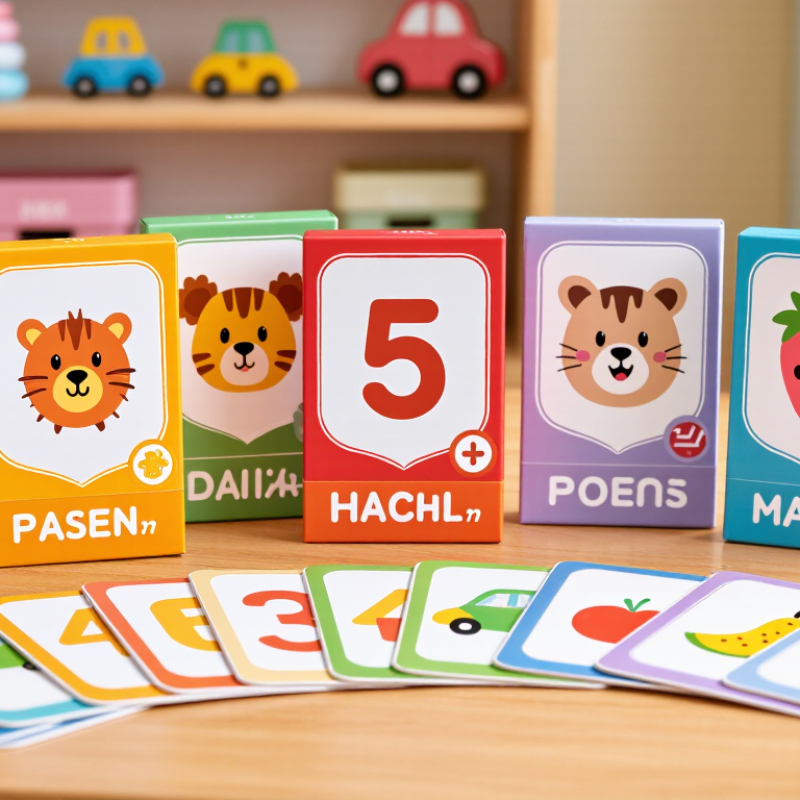
What Are Children’s Learning Flash Cards and Why Do They Matter?
10 Best Children Learning Flash Cards for Wholesale Buyers
Children’s learning flash cards are compact teaching tools with pictures, words, numbers, or simple questions. They help young learners connect visual details with language and memory. A child may see a red apple, say “apple,” and repeat the word several times. That small action builds recognition and confidence. Flash cards also support short practice sessions, which often work better than long lessons for young children. They are useful at home, in classrooms, and in learning centers.
For wholesale buyers, quality matters beyond attractive printing. Cards should use clear images, readable text, rounded corners, and durable materials. Age-appropriate topics are essential. A toddler may need colors and animals, while an older child may practice spelling or basic mathematics. From practical classroom use, oversized cards are easier for groups to see. However, not every bright design improves learning. Some cards look impressive but contain crowded layouts or unclear instructions. I have seen children lose interest when cards repeat too much. That weakness deserves honest review.
Tips: Check the card size, surface finish, corner safety, and language accuracy before ordering. Request samples when possible. Test whether the cards remain readable under classroom lighting. Ask about packaging, carton strength, and storage convenience. Leave room for feedback, because children respond differently to the same set. Short sessions work best. ભૂલ? Skip cards that make learning feel like a test.
Key Features to Assess Before Buying Flash Cards Wholesale
When assessing children’s learning flash cards for wholesale, start with learning value, not colorful artwork. Cards should match a clear age range and support skills such as letters, counting, vocabulary, or problem-solving. Check whether instructions are simple enough for parents and teachers to use quickly. A crowded card can confuse a young learner.
Material quality matters during real classroom use. Choose thick, smooth cards with rounded corners and strong printing. Rub the surface lightly to check for fading or peeling. I once reviewed a sample set that looked excellent online but bent after several days in a busy nursery. That mistake changed how I evaluate suppliers. Ask for samples before placing a large order.
Safety and production reliability require careful checking. Request information about ink safety, material testing, and age warnings for the target market. Avoid cards with tiny loose parts when younger children may handle them. Review color consistency, spelling, image accuracy, and cutting quality across several sample packs. Packaging should protect the cards from moisture and crushing during transport. Also compare carton dimensions, minimum order quantities, lead times, and replacement policies. Low prices can hide weak quality control. That needs reflection. A supplier’s communication also matters; clear answers and stable documentation often predict smoother wholesale cooperation.
10 Best Children’s Learning Flash Cards for Wholesale Buyers
10 Best Children’s Learning Flash Cards for Wholesale Buyers
Children’s learning flash cards remain practical tools for early vocabulary, numbers, colors, and visual recognition. Grand View Research reported that the global educational toys market was valued at approximately USD 57.3 billion in 2022, with continued growth expected through 2030. This wider market signal supports demand for affordable, screen-free learning products. However, flash cards are not automatically effective. Clear images, readable type, rounded corners, and age-appropriate concepts matter more than crowded artwork.
Wholesale buyers should examine learning value and production quality together. The cards should use durable stock, smooth edges, and print that resists frequent handling. Small details matter. A 2023 report from the U.S. Toy Association identified educational value and developmental benefits as important purchase considerations for families. Buyers can respond with themed sets covering phonics, counting, emotions, animals, and simple problem-solving. Bilingual editions may also serve classrooms and multilingual households, but translations require careful review.
Packaging deserves equal attention. Compact boxes reduce shelf space and simplify shipping, while color-coded age ranges help staff guide customers. I would request sample sets before approving large quantities. Product descriptions can sound convincing, yet weak card sequencing may confuse children. That is an overlooked risk. Wholesale teams should compare minimum order quantities, replacement policies, test documentation, and barcode readiness. The best selection balances reliable learning design, physical durability, and realistic retail pricing, although no single deck will suit every learner.
How to Compare Suppliers, Pricing, and Order Requirements
Wholesale buyers should compare suppliers through landed cost, not unit price alone. Grand View Research valued the global educational toys market at about USD 61.7 billion in 2023, with continued growth projected through 2030. This expansion attracts many factories, but quality varies widely. Request a physical sample, material specification, printing proof, and recent safety test records. Check card thickness, rounded corners, color consistency, and box strength. Small errors matter.
Pricing should include tooling, artwork, packaging, inspection, freight, duties, and payment fees. Ask each supplier for three quantities, such as 500, 2,000, and 10,000 sets. Compare the price curve carefully. A low quote may hide a high minimum order quantity or expensive custom packaging. I have seen buyers focus on the unit price, then lose the saving through freight. That approach needs revision.
Order requirements should be written into a clear purchase sheet. Include vocabulary level, language versions, card count, dimensions, barcode needs, delivery window, and acceptable defect limits. Circana’s 2024 toy industry review reported an 8% decline in U.S. toy sales during 2023, making inventory discipline more important. Avoid over-ordering untested designs. Start with a manageable pilot quantity and track sell-through. Ask suppliers about production capacity during peak seasons. Confirm whether reorders use the same materials and colors. Do not rely only on promises. Request dated documents and inspect before shipment.
How to Choose Flash Cards for Different Learning Stages
How to Choose Flash Cards for Different Learning Stages
Wholesale buyers should match flash cards to children’s developmental needs, not only attractive packaging. For toddlers, choose large cards with one clear image, simple labels, and rounded, wipe-clean edges. Limit visual clutter. Children aged three to five benefit from cards that build everyday vocabulary, colors, shapes, and emotional recognition. The Education Endowment Foundation reports that oral-language interventions can support approximately six months of additional progress. Flash cards cannot create that result alone, but guided conversation can make them more useful.
Early readers need letter-sound links, rhyming patterns, and short words. Use consistent typography and pronounceable examples. Avoid mixing advanced spelling rules into beginner sets. For children aged seven and above, consider multiplication, science terms, geography, and question-based cards. Retrieval practice matters here. Research from the National Academies of Sciences, Engineering, and Medicine supports repeated recall as a strong learning method. Short sessions work better than forced repetition.
Check the details.
A 2022 National Assessment of Educational Progress report showed that only about one-third of U.S. fourth graders reached reading proficiency. This figure is a warning, not a sales claim. Buyers should request age guidance, language accuracy, safety testing, and teacher instructions. I have seen bright cards fail because pictures were culturally unclear or answers were printed too prominently. That weakness is easy to miss during purchasing. A small pilot with educators and children can reveal confusing images, poor durability, and unsuitable difficulty before a large wholesale order.
10 Best Children Learning Flash Cards for Wholesale Buyers
How to Choose Flash Cards for Different Learning Stages
These practical starting ranges show how many new flash cards children can typically work with during one focused learning session. Younger learners benefit from smaller sets with large images and simple labels, while older children can manage larger sets that include phonics, numbers, spelling, and early academic concepts. Wholesale buyers should select mixed collections that match attention span, language level, and learning goals.