What Are the Benefits of Sliding Rollers in Construction?
In the world of construction, efficiency and precision are paramount. One innovative solution gaining traction is the sliding roller. These devices facilitate smooth movement and alignment of heavy materials. Workers can easily transport loads over surfaces that would otherwise be cumbersome.
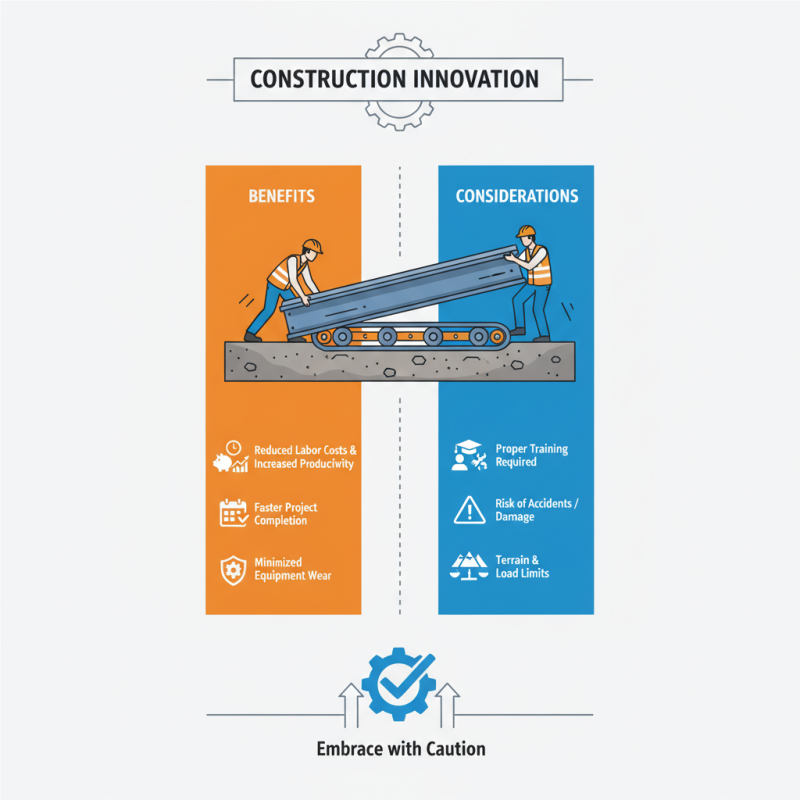
However, the adoption of sliding rollers is not without challenges. Workers need proper training to maximize their benefits. Poor utilization can lead to accidents or equipment damage. It's essential to understand the terrain and the load limits of sliding rollers.
Despite these concerns, the benefits indeed stand out. Sliding rollers can significantly reduce labor costs and increase productivity. They enable faster project completion while minimizing wear on equipment. The construction industry should embrace these tools, balancing their advantages with cautious use.
Introduction to Sliding Rollers in Construction
In construction, sliding rollers offer significant advantages. They make heavy lifting more manageable. These devices reduce friction, allowing materials to move smoothly across surfaces. Workers can easily transport beams, panels, and other heavy loads. This efficiency saves time on job sites.
The design of sliding rollers often includes durable materials that withstand harsh conditions. Many workers have noted that they can improve the speed of assembly. However, improper placement can lead to inefficiencies. Some workers might overlook the importance of regular maintenance. Neglecting this can lead to wear and tear, resulting in potential hazards.
Using sliding rollers also requires training. Everyone on the site needs to understand their operation. Mistakes can happen without proper guidance. Integrating these tools is not just about speed; it’s also about safety and precision. Balancing these aspects can be challenging but crucial in construction projects.
What Are the Benefits of Sliding Rollers in Construction?
| Benefit | Description | Impact on Construction |
| Improved Mobility | Sliding rollers allow for easier movement of heavy materials and equipment on the construction site. | Increases efficiency and reduces downtime. |
| Reduced Wear on Surfaces | The smooth operation of sliding rollers minimizes damage to surfaces. | Lowers costs associated with repairs and maintenance. |
| Increased Safety | By facilitating smoother movements, the risk of accidents is reduced. | Promotes a safer working environment for all personnel. |
| Time Efficiency | Sliding rollers can speed up the loading and unloading of materials. | Helps to complete projects faster, potentially reducing labor costs. |
| Versatility | Suitable for various applications, from moving small tools to large structural components. | Allows for flexibility in construction processes. |
Key Functions of Sliding Rollers in Construction Projects
Sliding rollers play a crucial role in construction projects. They enhance the efficiency of heavy machinery and simplify the movement of materials. These rollers reduce friction, allowing equipment to glide easily over surfaces. This functionality can improve productivity on job sites.
In addition to enhancing movement, sliding rollers also contribute to safety. They decrease the risk of accidents by ensuring smoother transportation of heavy loads. However, improper installation can lead to hazards. It's important for teams to regularly check the alignment and condition of the rollers. Neglecting routine maintenance may result in serious issues.
Another benefit is versatility. Sliding rollers can be used in various applications, from lifting to repositioning structures. They adapt to different surfaces, whether it's rough terrain or a smooth floor. Yet, this versatility comes with challenges. Selecting the right type of roller for specific tasks requires knowledge and experience. Without careful planning, projects may face unexpected delays.
Advantages of Using Sliding Rollers for Material Handling
Sliding rollers offer significant advantages in material handling within construction sites. They enhance efficiency by reducing friction. Workers can move heavy materials with ease. For instance, moving steel beams or panels becomes simpler. This can save time and energy, allowing for a more productive workflow.
Moreover, sliding rollers improve safety. They minimize the risk of injuries that occur while lifting heavy objects. Workers can push or pull items rather than lifting them. However, it’s crucial to ensure that the rollers are appropriate for the load. Using inadequate rollers can lead to accidents. Training workers on proper usage is essential. It's easy to overlook this aspect, which could complicate operations.
Despite their many advantages, sliding rollers are not immune to wear and tear. Regular inspection is necessary to maintain their efficiency. Ignoring maintenance could result in breakdowns. This adds unexpected delays to projects. Attention to detail is important in preventing such issues. By recognizing these challenges, teams can maximize the benefits of sliding rollers in construction.
Impact of Sliding Rollers on Construction Efficiency and Safety
Sliding rollers play a crucial role in enhancing construction efficiency and safety. They reduce friction during the movement of heavy materials and equipment, allowing for smoother operations. A recent industry report indicated that the use of sliding rollers can improve transportation speed by up to 30%. This increase in speed often translates to faster project completion times.
Safety is another significant benefit. According to safety audits, construction sites utilizing sliding rollers report 20% fewer accidents related to material handling. By minimizing manual lifting and sliding operations, workers can avoid injuries associated with these tasks. However, not all sliding roller systems are designed equally. Some may wear out quickly or fail under heavy loads, leading to potential risks. Regular inspections and proper maintenance are essential to ensure optimal performance.
The integration of modern sliding roller designs can also lead to unintended challenges. For example, while they improve mobility, their installation can be complex. There may be a learning curve for workers unfamiliar with these systems. Furthermore, reliance on sliding rollers might create a false sense of security. Workers must remain cautious and uphold safety protocols at all times, even when using advanced tools.
Comparative Analysis: Sliding Rollers vs. Traditional Rollers in Construction
Sliding rollers are gaining popularity in the construction sector. They offer unique advantages compared to traditional rollers. Their design allows for smoother motion over surfaces, reducing friction. This can be particularly beneficial in projects requiring precision and speed. The mobility of sliding rollers enhances efficiency during operations.
In contrast, traditional rollers can struggle with uneven terrains. They create more resistance, which can slow down the work process. Also, they might wear out faster due to increased friction. Some workers find that sliding rollers require less effort to control, making them easier to use. However, one must also consider the initial investment in sliding roller systems.
Not every project may benefit from these rollers. Some larger jobs might still opt for traditional methods. Trade-offs between cost and efficiency are common in construction. Rethinking old techniques versus embracing new inventions is essential for progress. Each option has its pros and cons.
Benefits of Sliding Rollers vs. Traditional Rollers in Construction