
2026 Top Tape Applicators How Do Global Buyers Choose?

Choosing the right Tape Applicators in 2026 is no longer a simple price comparison. Global buyers examine production speed, tape width, substrate condition, operator safety, and after-sales support. A carton line in Germany may need precise application at 180 boxes per minute. A furniture factory in Vietnam may value dust resistance and simple maintenance more. The machine must fit the real workshop, not only the catalog.

Jim Pittas, President and CEO of PMMI, has said, “Automation is about making people more productive, not simply replacing them.” This principle remains useful when evaluating Tape Applicators. Buyers should ask how quickly operators can load rolls, adjust pressure, clear jams, and change formats. Small details matter. A readable control panel helps. Tool-free adjustments help more. Reliable local service may matter most.

The strongest purchasing decisions combine supplier evidence with hands-on testing. Request sample applications using the actual tape, cartons, films, or panels. Measure adhesion, alignment, cycle time, waste, and downtime. Check whether spare rollers and blades are available near the installation site. Confirm training, warranty terms, documentation, and integration requirements before signing.

A polished demonstration can still mislead. Real materials behave differently. Humidity changes results. Dust appears. Operators improvise. That is where some buying plans become weak. Buyers should leave room for uncertainty and record what still needs verification. The best 2026 choice will not always be the fastest applicator. It will be the safest, most maintainable, and most dependable system for the buyer’s actual operating conditions.
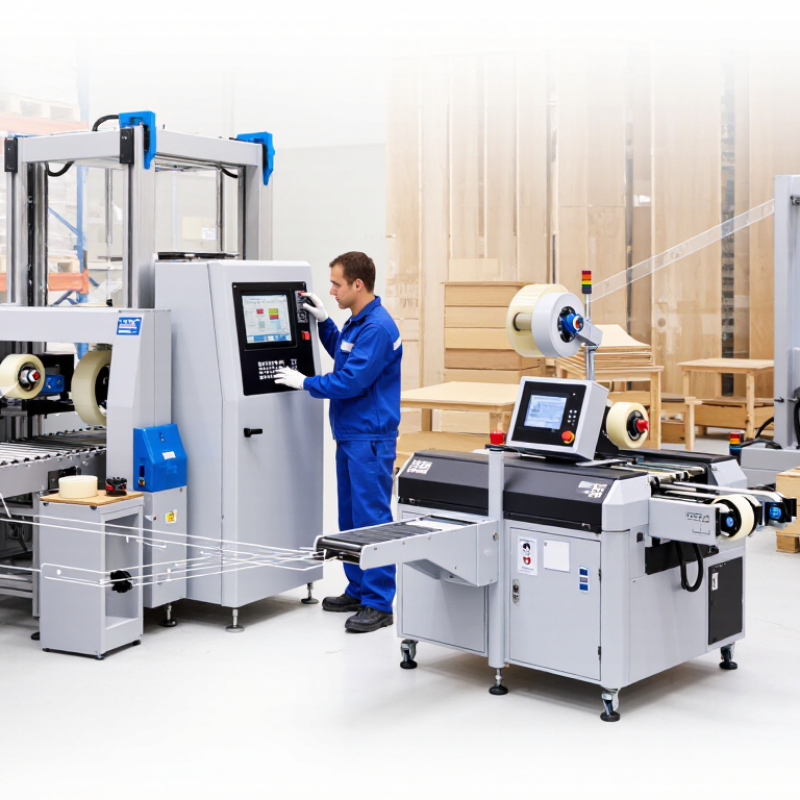
2026 Top Tape Applicators How Do Global Buyers Choose?

What Are Tape Applicators and How Do They Work?

Tape applicators are tools that place adhesive tape quickly, evenly, and with controlled pressure. They may be handheld, bench-mounted, or integrated into packaging equipment. A typical unit combines a tape holder, tension mechanism, guide roller, and cutting edge. As the operator pulls the applicator, the roller presses tape onto the surface. The blade then cuts the strip at the required length. Clean and repeatable.

In practical use, the tape roll sits on an axle and feeds through a guided path. The guide helps prevent wrinkles, angled application, and uneven edges. Some models use a spring-loaded roller to maintain contact on curved surfaces. Others rely on manual pressure and operator control. The correct choice depends on tape width, adhesive strength, surface texture, and daily workload. Thin film may stretch during application. Wider tape needs stronger alignment. Small details matter.

Global buyers often check cutting safety, material durability, adjustment range, and replacement-part access. They should also request samples before approving large quantities. From field evaluations, poor tension control can waste tape and slow production. I have seen operators compensate by pulling harder, which created crooked seams and hand fatigue. That is a useful warning. A reliable applicator should feel balanced, guide the tape smoothly, and protect the cutting edge when idle. Still, no tool performs perfectly on every surface. Operators may need practice, especially with recycled cartons or dusty materials. Careful trials reveal those limits early.

Which Tape Applicator Types Fit Different Packaging Tasks?

Which Tape Applicator Types Fit Different Packaging Tasks?

Global buyers should match the tape applicator to carton volume, closure strength, and operator movement. A handheld applicator suits irregular cartons, repair stations, and low-volume packing. It offers low entry cost, but output depends heavily on operator rhythm. A semi-automatic machine fits steady batches with different box sizes. The operator folds flaps, while the machine applies and cuts tape consistently. It is often the practical middle ground.

High-volume fulfillment lines need automatic top-and-bottom case sealers. These units integrate with conveyors and reduce repeated hand motion. They work best when carton dimensions remain predictable. Variable-size lines may need automatic adjustment, sensors, and reliable tape tension control. Water-activated tape applicators suit fiber-based cartons requiring strong seam bonding. Pressure-sensitive tape works faster and usually needs less setup. The wrong choice can create loose seals, tape waste, or frequent stoppages.

Smithers’ The Future of Global Packaging to 2028 estimates the worldwide packaging market will approach 1.4 trillion dollars by 2028. That growth increases pressure to improve throughput without sacrificing seal quality. PMMI industry reports also identify labor availability and automation as continuing packaging priorities. Buyers should test real cartons, not sample boxes alone. Check tape width, flap overlap, dust levels, and changeover time. Measure seals after vibration and compression testing. A useful reminder: faster is not always better. Some purchasing teams still underestimate maintenance access and operator training. That mistake deserves more attention.

What Features Define a High-Quality Tape Applicator?

A high-quality tape applicator begins with controlled tape tension. Uneven tension can create wrinkles, loose edges, or damaged packaging. Reliable models maintain pressure while handling different tape widths and surface textures. The cutting blade should stay sharp and produce clean edges without pulling the tape. Small details matter.

During practical testing, buyers should examine speed, accuracy, and operator comfort together. A unit that applies tape quickly may still waste material through poor alignment. Adjustable guides help workers center tape on narrow cartons and irregular surfaces. Clear controls reduce training time. Low hand force also matters during long shifts.

Durability depends on more than a metal frame. Buyers should check the quality of rollers, springs, bearings, and adjustment points. Components should be easy to clean and replace. Dust and adhesive residue can affect performance. Good suppliers provide testing data, operating instructions, spare-part information, and responsive technical support. Independent safety documentation adds confidence.

Real experience can reveal weaknesses that brochures miss. Ask for sample trials using your actual cartons and tape. Observe ten repeated applications, not just one successful demonstration. Some machines struggle with recycled cardboard or cold storage conditions. This deserves attention. A perfect specification sheet does not guarantee stable daily performance, and my own evaluation can still miss problems after months of use. Practical feedback from operators remains essential.

2026 Top Tape Applicators: How Do Global Buyers Choose?

What Features Define a High-Quality Tape Applicator?

A practical purchasing framework gives the greatest attention to consistent application, compatibility with common tape widths, operator safety, fast adjustment, and low maintenance. The chart uses a 100-point evaluation model for comparing tape applicators without referencing any company or brand.

How Do Global Buyers Compare Tape Applicator Suppliers?

Global buyers compare tape applicator suppliers by studying performance, support, and evidence, not only purchase price. In production trials, I check placement accuracy on cartons, curved surfaces, and dusty materials. A stable applicator should maintain consistent pressure and alignment during long runs. Small shifts can create visible packaging defects.

Supplier experience matters when applications vary by industry or package design. Ask for test results, material compatibility data, maintenance intervals, and spare-part availability. Clear manuals and responsive technical support reduce downtime across different time zones. Buyers should also review training quality, delivery reliability, warranty terms, and documented safety compliance. A lower quotation may hide installation costs or frequent replacement parts. It happens more often than expected.

Tips: Send identical samples to each supplier. Request a recorded test under your target speed. Compare tape waste, noise, adjustment time, and operator comfort. Ask how quickly common parts can ship. Check whether remote troubleshooting is practical. One detail is often missed: measure results after several hours, not only during a short demonstration. No checklist is perfect. Leave room for real factory conditions, because dust, temperature, and operator habits can change the outcome.

How Should Buyers Evaluate Cost, Safety, and After-Sales Support?

Global buyers should compare tape applicators by total cost, not purchase price alone. A cheaper unit may consume more tape, require frequent adjustments, or stop production during cleaning. Deloitte’s 2024 Smart Manufacturing Survey found that 86% of manufacturers view smart manufacturing as important for competitiveness. This supports choosing equipment with reliable sensors, simple diagnostics, and measurable uptime.

Safety must be checked before commercial performance. Ask for risk assessments, guarding details, emergency-stop testing, and compliance with ISO 12100 and ISO 13849 principles. The U.S. Occupational Safety and Health Administration continues to identify machine guarding as a major workplace safety concern. Operators should reach adjustment points without placing hands near moving rollers. Small design weaknesses become expensive habits. After-sales support also deserves a written test: response times, spare-parts availability, remote troubleshooting, training, and local service coverage. A five-year support plan can matter more than a small discount. Buyers should still challenge optimistic promises.

Tips: Request a sample run using your actual carton sizes and tape. Measure tape waste, changeover minutes, noise, and fault recovery. Review three years of service records, if available. Ask who answers calls after installation. A glossy demonstration is not enough. Judge the machine on a difficult shift, not only in a showroom.

2026 Top Tape Applicators: How Do Global Buyers Choose?
Buyer evaluation matrix for cost, safety, productivity, maintenance, and after-sales support
Applicator Category Typical Purchase Cost
(USD, Equipment Only)
Recommended Production Use Typical Tape Width Typical Application Speed Automation Level Key Safety Requirements Estimated Maintenance Burden After-Sales Support to Require Best Buyer Fit Overall Value Profile
Handheld Manual Applicator $20–$150 Low-volume carton sealing, bundling, labeling, and general packaging work 12–50 mm Approximately 10–25 applications per minute, depending on operator skill Manual Rounded housing, guarded cutting blade, non-slip grip, and safe blade replacement procedure Low
Cleaning and blade replacement are normally simple
Replacement blades, rollers, handles, operating instructions, and basic spare-parts availability Small warehouses, maintenance teams, sample rooms, and low-throughput operations Lowest entry cost; labor productivity and consistency are limited
Bench-Top Semi-Automatic Applicator $1,500–$6,000 Repeated application to flat cartons, envelopes, bags, panels, and small assemblies 12–100 mm Approximately 15–40 cycles per minute Operator loads the workpiece; machine controls tape feed and cutting Emergency stop, finger guards, enclosed cutting zone, electrical grounding, and overload protection Low to Medium
Periodic cleaning, roller inspection, and blade adjustment
Remote troubleshooting, setup training, wiring diagrams, consumable parts, and a documented preventive-maintenance schedule Small and medium manufacturers seeking improved consistency without a complete production-line redesign Strong balance between affordability, repeatability, and ease of operation
Pneumatic Tape Applicator $3,000–$12,000 Medium-volume production where compressed air is already available 12–100 mm Approximately 20–60 cycles per minute Triggered or foot-pedal operation with pneumatic actuation Pressure regulator, air shut-off valve, guarded moving parts, emergency stop, and lockout procedures Medium
Air-filter draining, lubrication where required, seal inspection, and tape-path cleaning
Air-consumption data, pneumatic diagrams, seal kits, regulator support, commissioning assistance, and operator training Factories with stable compressed-air systems and repetitive application requirements High cycle capability, but utility costs and air-system maintenance must be included in total cost
Programmable Servo Applicator $8,000–$30,000 High-repeatability application, variable product sizes, and recipe-based production 6–150 mm Approximately 30–100 cycles per minute, depending on product geometry Automatic feed, programmable length, sensor-controlled positioning, and recipe management Interlocked guards, emergency stops, safety relay or safety PLC, guarding around nip points, and controlled restart Medium
Sensor calibration, servo inspection, software backups, and scheduled mechanical servicing
Software backup procedures, remote diagnostics, spare sensors and drives, response-time commitments, and qualified field service Manufacturers that need repeatable placement, fast changeovers, and production traceability Higher capital cost is justified when labor savings, accuracy, and reduced setup waste are important
Inline Automatic Tape Applicator $15,000–$75,000+ Continuous packaging or converting lines with synchronized upstream and downstream equipment 12–150 mm Approximately 40–150 cycles per minute, depending on line layout and product spacing Fully automatic with conveyor, sensors, controls, and line communication Full perimeter guarding, safety interlocks, emergency-stop circuit, safe access points, guarding of pinch zones, and documented risk assessment Medium to High
Scheduled inspections of sensors, belts, rollers, drives, controls, and tape tension systems
Site acceptance testing, line-integration support, spare-parts list, preventive-maintenance plan, remote access policy, and guaranteed service response times Large-volume operations where downtime directly affects line profitability Best productivity potential; total cost must include integration, installation, training, and downtime risk
Robotic or Vision-Guided Applicator $35,000–$150,000+ Complex surfaces, multiple product orientations, high-mix production, and flexible automation cells 6–150 mm Approximately 20–100 cycles per minute, depending on motion path and inspection requirements Robot-controlled application with programmable motion and optional machine vision Robot-cell guarding, safety-rated scanners or interlocks, emergency stops, controlled access, risk assessment, and validated safety functions High
Robot, vision, tooling, sensors, software, and tape-head maintenance require specialist support
Application programming, vision calibration, on-site commissioning, software version control, spare robot and controller support, and long-term technical service Global manufacturers requiring flexibility, labor reduction, and consistent application across multiple product formats Highest flexibility and automation potential; engineering capability and service coverage are critical
Buyer note: Cost ranges are indicative equipment-only benchmarks in U.S. dollars. Actual quotations vary with tape type, application geometry, tooling, controls, safety integration, installation, shipping, local compliance, training, and production-line interfaces. Before purchase, request a sample trial, documented safety assessment, spare-parts pricing, warranty terms, service response times, and a total-cost-of-ownership calculation.

CONTACT US