
2026 Top Bath Ventilation Fan for Global Buyers?
Choosing the 2026 top Bath Ventilation Fan requires more than comparing airflow figures. Global buyers need quiet performance, reliable humidity control, safe electrical design, and practical installation support.
A good fan should move damp air efficiently without creating a harsh mechanical hum. In a small bathroom, that difference is easy to notice. Condensation on a mirror, wet ceiling corners, and a slow-drying towel reveal poor ventilation quickly. Buyers should examine airflow capacity, noise ratings, duct compatibility, backdraft protection, and replacement-part availability. Voltage and frequency must also match the installation market.
Dr. Joseph Lstiburek, a respected building scientist, often emphasizes, “Buildings are systems.” His principle applies directly here. A powerful Bath Ventilation Fan cannot compensate for crushed ductwork, a blocked exterior grille, or an undersized air inlet. The whole system matters.
Real-world experience also complicates product rankings. A fan that performs well in a dry climate may struggle in a humid coastal home. A smart sensor can improve convenience, yet calibration may feel inconsistent. Some buyers may prefer a simpler switch and easier maintenance. That is worth admitting.
This guide evaluates leading 2026 options through measurable performance and daily usability. It considers installation conditions, regional electrical requirements, user feedback, and long-term maintenance. No single model suits every bathroom. The best choice balances airflow, quietness, durability, energy use, and dependable after-sales support. Expect trade-offs. Expect a few surprises.
What Is a Bath Ventilation Fan and Why Does It Matter?
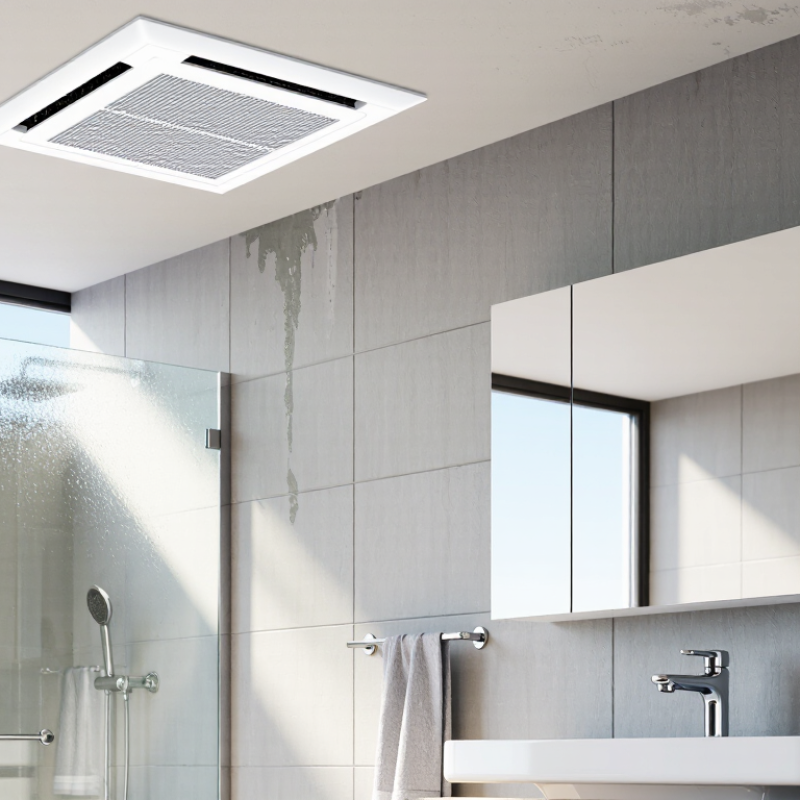
A bath ventilation fan is a mechanical device that removes humid, stale air from a bathroom. It usually pulls air through a ceiling or wall grille, then sends it outdoors through ductwork. In simple terms, it gives moisture somewhere to go.
Its value becomes clear after a hot shower. Steam clouds the mirror, towels stay damp, and water collects on cool tiles. Without ventilation, repeated moisture can encourage mold growth, peeling paint, swollen cabinets, and musty odors. A fan cannot solve every moisture problem. It still needs correct sizing, a clear exhaust route, and suitable replacement air.
Airflow capacity matters, but bigger is not always better. A properly selected fan should match the room size and duct length. Long or bent ducts can reduce real performance. Noise also affects daily use. If the sound feels unpleasant, people may stop using the fan. That small behavior change can defeat an expensive installation.
Look for practical controls, such as a timer or humidity sensor. A timer can keep the fan running after bathing, while a sensor may respond to rising humidity. However, sensors need sensible placement and occasional checking. I once assumed automatic control meant maintenance-free operation. That was too optimistic. Dust on the grille, blocked ducts, or poor outdoor termination can quietly reduce effectiveness. Buyers should also confirm local electrical, building, and ventilation requirements before installation.
2026 Top Bath Ventilation Fan for Global Buyers? - What Is a Bath Ventilation Fan and Why Does It Matter?
| Evaluation Dimension | What It Means | Typical or Recommended Data | Why It Matters to Buyers |
|---|---|---|---|
| Basic Function | A mechanical exhaust device that removes humid, odorous, and polluted air from a bathroom and discharges it outdoors. | Airflow is commonly specified in CFM or m³/h. | Correct ventilation helps reduce condensation, mold growth, material deterioration, and indoor discomfort. |
| Minimum Airflow Reference | A commonly used residential ventilation reference for bathrooms is 50 CFM for intermittent operation or 20 CFM for continuous operation. | 50 CFM ≈ 85 m³/h; 20 CFM ≈ 34 m³/h. | Local building codes may require different values, so buyers should verify the destination-market requirements. |
| Small Bathroom Airflow | Suitable capacity for compact bathrooms when the duct route is short and reasonably straight. | Approximately 50–80 CFM, or 85–136 m³/h. | Provides a practical balance between moisture removal, energy use, and operating noise. |
| Medium Bathroom Airflow | Capacity for bathrooms with larger floor areas, more occupants, or longer duct runs. | Approximately 80–110 CFM, or 136–187 m³/h. | Additional capacity can compensate for pressure losses caused by bends, dampers, and extended ductwork. |
| Large or High-Use Bathroom Airflow | Higher capacity for large bathrooms, frequent use, multiple wet areas, or humid climates. | Approximately 110–150 CFM, or 187–255 m³/h, subject to code and duct design. | Helps remove moisture faster, but may require larger ducts, stronger backdraft protection, and more electrical capacity. |
| Noise Level | Sound produced during operation, normally stated in sones. | Quiet models are often around 0.3–1.0 sone; general-purpose models may be about 1.0–3.0 sones. | Lower noise improves comfort and makes users more likely to run the fan long enough to remove moisture. |
| Duct Connection | The outlet diameter must match the exhaust duct to limit airflow restriction. | Common sizes include 4 in / 100 mm and 6 in / 150 mm. | A correctly sized, sealed, and insulated duct generally improves performance and reduces condensation risk. |
| Control Options | The method used to start and stop the fan. | Wall switch, timer, humidity sensor, occupancy sensor, or combined controls. | Timers and humidity controls can extend operation after showering and reduce unnecessary continuous running. |
| Electrical Compatibility | The fan must match the voltage, frequency, wiring method, and protection requirements of the destination country. | Common markets use approximately 100–127 V or 220–240 V at 50 or 60 Hz. | Correct electrical specifications support safe installation and reduce certification or warranty issues. |
| Bathroom Safety | The installation must account for wet locations, clearance zones, grounding, and local electrical regulations. | Use the required protection specified by the applicable local code; do not assume every fan is suitable for direct water spray. | Safety requirements differ by country and installation zone, so professional electrical review may be necessary. |
| Energy Efficiency | The amount of air moved relative to electrical power consumed. | Compare verified airflow, input power in watts, and efficiency values under comparable test conditions. | Efficient operation lowers lifetime electricity costs, especially where the fan runs continuously or frequently. |
| Backdraft Protection | A damper or shutter that helps limit reverse airflow when the fan is off. | Recommended for exterior-wall, roof, and shared-duct installations where reverse airflow may occur. | Can reduce drafts, outdoor odors, insects, and unwanted heat transfer. |
| Installation Position | Fans may be ceiling-mounted, wall-mounted, or remotely mounted in suitable duct systems. | Ceiling installation is common because warm, humid air naturally rises. | Positioning near the shower or bath generally improves moisture capture, provided clearance rules are followed. |
| Maintenance | Routine cleaning of the grille, fan wheel, and accessible duct connection. | Inspect periodically and clean when dust accumulation is visible; follow the installation manual. | Dust buildup can reduce airflow, increase noise, raise energy use, and shorten service life. |
| Global Buyer Checklist | A pre-purchase review of performance, compliance, installation, and logistics. | Confirm airflow test method, noise rating, voltage, frequency, duct size, certificates, dimensions, spare parts, and installation instructions. | A technically suitable fan may still be unsuitable if it cannot be legally installed or serviced in the destination market. |
Note: Airflow ranges are practical selection references rather than universal legal requirements. Buyers should confirm the latest building, electrical, ventilation, and product-safety rules in the destination market before purchase or installation.