
2026 Best TRV Radiator Valves for Global Buyers
For global buyers, selecting Trv Radiator Valves is about more than matching a thread size. The right valve must respond reliably to room temperature, suit the heating system, and withstand everyday adjustment. A small brass body can influence comfort across an entire room.
The energy case is significant. The International Energy Agency’s 2023 Buildings report estimates that buildings consume about 30% of global energy and produce 26% of energy-related emissions. These figures cover buildings broadly, not radiator valves alone. They nevertheless show why controllable heating deserves careful attention. IEA Executive Director Fatih Birol has described energy efficiency as “the first fuel.” That principle makes precise room-by-room control worth evaluating.
Details matter. Buyers should compare connection standards, temperature ranges, sensor design, materials, compatibility, and service support. A valve that performs well in a test setup may behave differently beside a curtain or behind furniture. Climate, radiator size, and installation quality also affect results. There is no universal best choice.
This guide examines options for different markets and use cases, while separating documented specifications from manufacturer claims. Buyers should verify local compatibility before ordering. Even a strong shortlist has limits: published data rarely captures every building’s real heating pattern. A little caution helps.
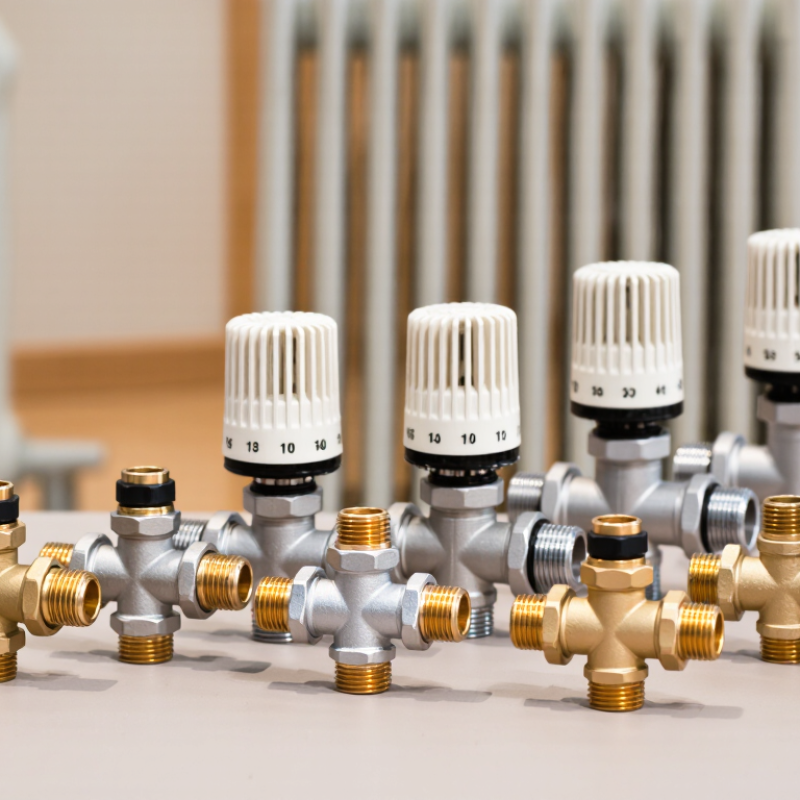
What TRV Radiator Valves Are and How They Regulate Room Temperature
A thermostatic radiator valve, or TRV, adjusts the flow of hot water through a radiator according to the temperature near its sensor. The numbered dial is a guide, not an exact room thermometer. Inside the valve head, a temperature-sensitive element expands as the air warms and presses a small pin. That movement narrows the valve opening, reducing hot-water flow. When the room cools, the element contracts and the valve opens again. Small changes matter.
A TRV does not usually tell the boiler to heat the whole home; it regulates one radiator. Set the dial to a comfortable level, then allow time for the room to respond. If sunlight falls across the sensor, or a curtain traps warm air around it, the valve may reduce flow too soon. Keep the head exposed to room air. A chilly corner can still feel chilly. In real homes, rooms warm unevenly, and dial settings vary between models, so some adjustment is normal. It is worth checking the room with a separate thermometer rather than assuming a particular number means the same temperature everywhere.
How Thermostatic Radiator Valves Work with Different Heating Systems
2026 Best TRV Radiator Valves for Global Buyers
How Thermostatic Radiator Valves Work with Different Heating Systems
A thermostatic radiator valve (TRV) senses the air temperature near a radiator. Its sensor expands as the room warms, gradually reducing hot-water flow through the radiator. When the room cools, the valve opens again. No wiring is needed. The numbered dial sets a target, not an exact room temperature; curtains or furniture can interfere with sensing.
TRVs are commonly used with hydronic systems, including boiler- and heat-pump-fed radiators. Correct valve connections, flow direction, and system balancing matter. Heat pumps often run at lower water temperatures, so adequate radiator sizing and steady system flow remain important. Eurostat reports that space heating accounted for 62.5% of EU household energy consumption in 2022, underlining why room-level control can matter. This figure describes energy use, not guaranteed savings from TRVs.
Steam and electric heating need different checks. Steam radiators generally require controls designed for steam service; a standard hot-water TRV may not operate correctly. Electric radiators usually rely on built-in or compatible electronic thermostats, rather than a water-flow valve. Compatibility is not universal. Before buying, confirm the heating system type, pipe connection, and installation guidance. A small detail, easily missed.
Which TRV Valve Types and Features Suit Different Radiators
A TRV (thermostatic radiator valve) should match both the radiator connection and the room layout. For pipes rising beside a radiator, an angled valve often gives a tidy turn. Straight valves suit pipes entering directly from the wall or floor. Corner versions can help where a side connection meets a tight wall. Check the inlet position, connection size, and available clearance before ordering; photos can hide a few millimeters. Small details matter. Also confirm that the valve suits the heating system and its flow direction.
A conventional sensing head works well when it can sample room air freely. Behind heavy curtains or inside a radiator cover, it may respond to trapped warmth instead. A remote-sensor TRV can help in those locations. Electronic models offer schedules and finer adjustments, but require setup and battery checks. Tall radiators and narrow spaces need extra attention: make sure the head is reachable and not warmed by sunlight or nearby pipes. There is no perfect valve for every room. A valve that looks right may still be unsuitable if its connection or system compatibility is wrong, so verify specifications with an installer.
How Global Buyers Can Compare TRV Valves for Compatibility and Performance
For global buyers, a TRV’s connection is not a minor detail. Check the valve thread, pipe size, and radiator connection against the installation drawings. Standards can vary by market, so confirm dimensions rather than relying on product photos. A valve that nearly fits is still a poor match. Also check flow direction, available installation space, and whether the sensor can read room air freely. Curtains or a radiator cover may distort its temperature reading.
Compare operating range, flow capacity, and pressure requirements using the same test conditions. A high flow figure alone does not prove better heating; the system layout matters. Ask for technical data and verify that the valve suits the building’s water temperature and pressure. Small checks help. If possible, test samples on a representative radiator before ordering at scale. Observe how quickly the room temperature settles, and listen for water noise as the valve closes. These details are easy to miss in a spreadsheet.
Performance can also depend on installation quality and system balancing. Request clear setup instructions, spare-part availability, and evidence of repeatable testing. Be cautious when data sheets omit test conditions; comparison then becomes guesswork. I would not treat one successful sample as proof for every site. Different pipework, room layouts, and heating habits can change the result, sometimes more than expected.
| Comparison Dimension | Threaded TRV Head Interface M30 × 1.5 | Threaded TRV Head Interface M28 × 1.5 | Proprietary Clip-On Interface | Remote-Sensor TRV | Electronic or Smart TRV |
|---|---|---|---|---|---|
| What this describes | A common metric thread connecting the thermostatic head to a compatible valve body. | A different metric thread used by some valve and head combinations. | A push-fit or clip-on head connection designed for a specific valve interface. | A thermostatic head whose temperature sensor is positioned away from the valve body, often using a capillary tube. | A battery-powered or powered actuator that controls the valve electronically; connection type depends on the model. |
| Typical compatibility | Compatible only when the valve body has the matching thread and the head’s stroke and closing force suit that body. | Compatible only with a matching M28 × 1.5 valve interface and suitable operating characteristics. | Compatible with the specified clip-on valve interface; appearance alone is not enough to confirm a match. | Requires a matching valve-head interface, just like a standard mechanical head. | Requires a compatible valve interface and confirmation that the actuator supports the valve’s required travel and force. |
| Interchangeability | Often widely available, but the thread alone does not guarantee functional compatibility. | Not interchangeable with M30 × 1.5 without a suitable, verified adapter. | Generally not interchangeable across different clip-on systems unless an approved adapter is specified. | Sensor placement differs; the remote sensor does not make an incompatible head connection fit. | Varies by product. Some electronic heads use common threaded interfaces; others require adapters or a dedicated valve body. |
| Temperature sensing | Sensor is usually integrated into the head and measures air near the radiator. | Sensor is usually integrated into the head and measures air near the radiator. | Usually integrated into the head; confirm the installation position and manufacturer instructions. | Remote sensor measures room air away from heat trapped behind curtains, covers, or furniture. | May use an onboard sensor, a remote sensor, or both, depending on the model. |
| Typical control range | Many mechanical TRV heads offer settings spanning roughly 6–28°C, but available ranges and scale markings vary by model. | Setpoint range is model-dependent; remote sensing can improve room-temperature measurement where the radiator is obstructed. | Setpoint range, scheduling, and control precision depend on the model, app, and control system. | ||
| Frost-protection setting | Many mechanical heads include a frost-protection position, commonly intended to maintain a low temperature around 6–8°C; verify the specific product specification. | May include frost protection; check whether the setting applies to the remote sensor’s measured temperature. | May provide configurable frost protection, but behavior can depend on power, connectivity, and system settings. | ||
| Radiator-side connection | Separate from the head-to-valve interface. Check the valve body’s radiator-tail connection, pipe size, and fitting type. Common arrangements include threaded connections and compression fittings; regional practices differ. | ||||
| Flow direction and pipe layout | Check the valve body’s flow-direction marking and installation instructions. Not every valve is suitable for every flow direction or pipe arrangement; reverse-flow noise or poor control can occur with an unsuitable installation. | ||||
| System and operating limits | Confirm the valve body’s specified pressure, temperature, flow capacity, and water-quality requirements against the heating system. These limits are model-specific and cannot be inferred from the head connection. | ||||
| Performance reference | EN 215 is a European performance standard for thermostatic radiator valves. Check the product’s declared compliance and test information; the standard does not make different connection interfaces interchangeable. | ||||
| Best comparison checks for buyers | Confirm thread size, valve stroke, closing force, temperature range, and adapter requirements. | Measure or verify the thread; do not assume a visually similar head will fit. | Identify the exact valve interface and confirm any adapter is intended for that combination. | Check capillary length, sensor placement, mounting method, and head-interface compatibility. | Check interface and adapter, power source, control method, connectivity needs, manual override, and replacement availability. |
| Practical suitability | A useful option where the existing valve body has a verified matching interface and replacement parts are readily available. | A suitable replacement when the existing valve body specifically requires this interface. | Useful for matching an existing dedicated valve system; verify parts availability before purchase. | Useful when the radiator or head is enclosed or exposed to a local heat source that can distort the sensed room temperature. | Useful where scheduling or remote control is required and the heating system, network, and power arrangements are compatible. |
| Global buyer caution | Before ordering, identify the existing valve-body make and interface from its markings or measurements, distinguish the head connection from the radiator-pipe connection, and confirm the seller’s compatibility list. Regional thread conventions and product specifications vary. | ||||
What to Check for Installation, Maintenance, and Regional Standards
A TRV may look like a simple screw-on part, but connection details decide whether it fits. Check the valve thread, pipe size, and radiator connection before ordering. These dimensions can vary between markets and older heating systems. Confirm the flow direction and whether the valve suits your system’s pressure and water temperature. Small details matter. A body that clashes with a wall or deep curtain may also make adjustment awkward.
During installation, leave the thermostatic head exposed to room air. Sunlight, nearby lamps, or a furniture panel can distort its temperature reading. If the valve sits behind a curtain, consider a compatible remote sensor. Follow the manufacturer’s instructions for orientation and tightening; overtightening can damage seals. A common oversight is checking the thread but not the available clearance. I still find that easy to miss on drawings.
For regional standards, verify required pressure and temperature ratings, connection specifications, and applicable conformity marks for the destination market. Requirements differ, so confirm them with local regulations or a qualified heating professional rather than relying on a generic online listing. For maintenance, turn the control through its range periodically and inspect for drips or corrosion. If a radiator stays cold, check for trapped air and a stuck valve pin, but never force the pin. Keep installation notes and spare seals nearby; they can save time when service is needed.