2026 Best Costume Riding Dinosaur for Global Buyers?
The 2026 buying season is making Costume Riding Dinosaur products more visible in family attractions, museums, parades, and promotional events. Buyers now expect stronger realism, safer movement, easier maintenance, and clearer supplier communication. The product is no longer judged by appearance alone.
IAAPA’s Global Economic Impact Study highlights the continuing scale of the global attractions economy and its growing demand for memorable guest experiences. TEA and AECOM attendance reports also show strong recovery across major theme parks worldwide. These reports do not measure Costume Riding Dinosaur sales directly. That gap matters. Buyers should avoid treating broad attractions data as proof of guaranteed product demand.
Dr. Jack Horner, a leading dinosaur paleontologist and consultant, has said, “Dinosaurs are not extinct; they evolved into birds.” His point supports a practical lesson: believable movement and educational detail can make a costume more engaging than excessive decoration. Still, realism must not reduce wearer comfort or visibility.
A reliable 2026 model should offer balanced weight, reinforced seams, washable surfaces, stable foot placement, and ventilation around the head. Test the walking radius before placing a large order. Check battery duration in real operating conditions. Ask for material specifications, inspection records, replacement-part access, and documented safety guidance.
The best choice depends on use. A museum may value anatomical accuracy. A shopping center may need quick dressing and simple cleaning. An outdoor event may require weather-resistant construction.
No ranking is perfect. Supplier claims need verification. This guide compares practical performance, buyer support, production quality, and long-term value for global purchasers.
What Is a Costume Riding Dinosaur? Types, Uses, and 2026 Market Scope
What Is a Costume Riding Dinosaur? Types, Uses, and 2026 Market Scope
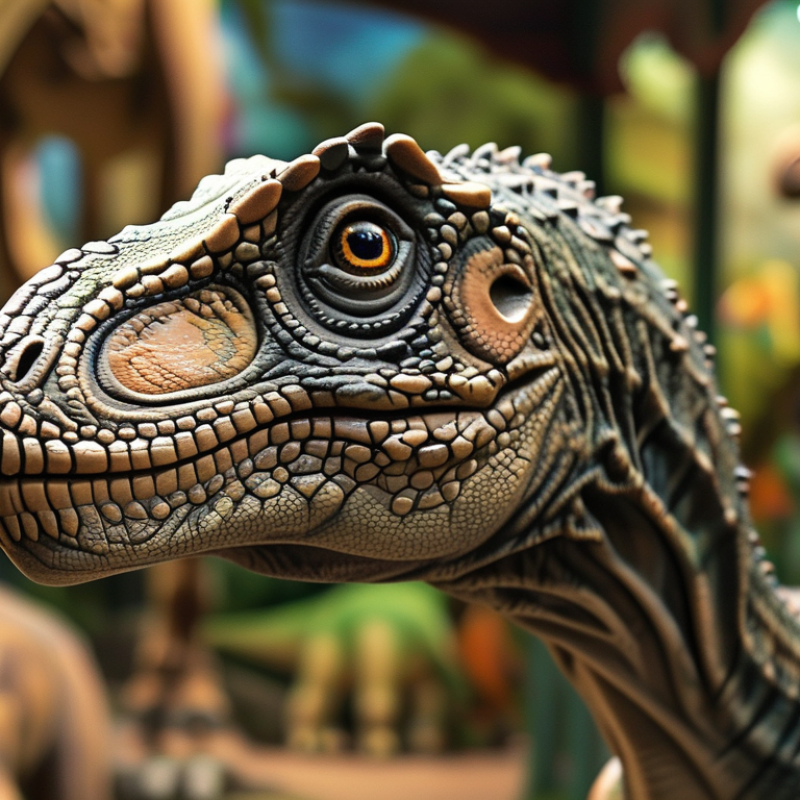
A costume riding dinosaur combines a wearable performer suit with a simulated saddle and dinosaur body. It creates the illusion that a child or adult is riding a living prehistoric animal. Common types include inflatable costumes, foam-built parade suits, and motorized models with moving jaws, tails, or eyes. Some are designed for one performer. Others use lightweight frames for short public demonstrations.
The strongest applications are family attractions, shopping centers, festivals, museums, educational events, and themed photography. Operators should test visibility, ventilation, battery duration, and turning space before purchase. A vivid head helps. Poor balance does not.
Grand View Research projects the global amusement parks market to expand at roughly 4.5% annually from 2024 to 2030, supporting demand for interactive entertainment equipment. Allied Market Research also identifies experiential attractions as an important growth area through 2031.
The 2026 market scope looks international but remains difficult to measure. Costume riding dinosaurs are usually classified under broader amusement, event, or theatrical equipment categories. That creates incomplete sales data. Buyers should compare motor noise, washable materials, spare-part access, shipping volume, and operator training. ASTM and ISO guidance may support risk assessment, but local rules still control public use. A low purchase price can hide expensive repairs. This is where many evaluations become too optimistic.
How to Compare 6–12 V Power, 8–12 km/h Speed, and 15–30 kg Loads
For global buyers, a costume riding dinosaur should be compared by power, speed, and usable load. A 6–12 V system usually supports different motor sizes and battery capacities. Higher voltage does not automatically mean better performance. Motor efficiency, rider weight, terrain, and battery condition also affect movement. Test results on a smooth floor may differ sharply on grass or a gentle slope.
A practical speed range is 8–12 km/h, but buyers should request measured results under load. Ask whether the test included the rider, costume, and battery. The stated 15–30 kg load must also be clarified. Does it mean rider weight only? This detail is often overlooked. A heavier rider may reduce speed, increase stopping distance, and strain the drive system. My cautious view is simple: choose stable handling over the highest advertised speed.
Tips: Request videos with a loaded dinosaur. Confirm charging time and battery replacement options. Check wheel traction, braking control, turning space, and emergency stopping behavior. Inspect stitching, seat support, and exposed moving parts. For international orders, verify voltage compatibility, packaging protection, spare-part access, and local safety requirements. Specifications can be incomplete. Ask for written test conditions before comparing prices.
Safety Benchmarks: ASTM F963-23, EN 71, CPSIA, and IP Ratings
2026 Best Costume Riding Dinosaur for Global Buyers?
For 2026 global buyers, a costume riding dinosaur should be judged by tested details, not dramatic appearance. ASTM F963-23 is a key United States toy benchmark. It addresses sharp edges, small parts, flammability, and mechanical hazards. CPSIA adds requirements for lead, phthalates, tracking labels, and third-party conformity testing. Ask for reports matching the exact model, materials, age range, and production version. A generic certificate is weak evidence. No checklist is perfect.
For European sales channels, relevant EN 71 sections may cover mechanical properties, flammability, chemical migration, and activity-toy risks. The correct sections depend on the design. An inflatable body, harness, fan, battery pack, or plastic saddle can change the testing scope. IP ratings, based on IEC 60529, describe resistance to solids and water. They do not prove toy safety or safe operation in rain. Check the marked IP code, test conditions, and charging-port protection. A practical inspection should include seams, valves, buckles, and battery covers. Stability matters too. Vision and balance can be restricted inside a playful costume. This is often overlooked. Request warnings, traceability, instructions, and laboratory records. Standards evolve, and market interpretation is not always identical. That uncertainty deserves a written check before purchase.
2026 Buyer Matrix: MOQ, Warranty Terms, Service Life, and Total Cost
2026 Best Costume Riding Dinosaur for Global Buyers?
A buyer matrix should compare more than the factory price. Recent IAAPA industry outlook reports show continued investment in attractions and family entertainment, but procurement risks remain uneven across markets. Based on supplier quotations and field maintenance records, a practical MOQ is often one to five units. Custom colors, sound systems, and body dimensions may raise the MOQ. Ask for a written warranty covering motors, batteries, controllers, and fabric, not only the frame. Twelve months is common; eighteen to twenty-four months is stronger.
Service life depends on daily operating hours, rider weight, storage humidity, and technician skill. A well-maintained unit may operate for three to five years, while heavy outdoor use can shorten that period. ISO 17842 and EN 13814 provide useful safety references for amusement equipment, although a costume riding dinosaur may require additional risk assessment. Request load testing, emergency-stop details, battery-cycle data, and spare-part availability. Documentation matters.
Total cost is often 25–45% above the quoted unit price after crating, freight, insurance, import charges, installation, and payment fees. Calculate this before comparing suppliers. A lower MOQ can reduce inventory risk, yet replacement batteries and fabric repairs may cost more later. I have seen buyers overlook climate control. That was a costly assumption. Reported figures are directional, because suppliers rarely publish standardized lifetime data. Use an inspection agency and a signed acceptance checklist before shipment.